 1. Tell us a little about the origins of The Racket Boys, from concept to financing.
 1Q: Tell us how you became involved with 7 LIVES OF CHANCE, and how you prepared for your role as “Narrator”. Will we also see your face in the film, or just hear your deep sexy voice?
Banks wrote the role of Chance for my wife Jodi and at some point they had a meeting and he mentioned that he had written the “Narrator” role with me in mind and asked her to see if I would be interested in auditioning for it, which I did. And yes, for better or worse, you will see me. And for the record, my voice is far from deep and sexy, its very mid atlantic (I’m from Northern Virginia) and nasal. As far as preparation goes, my role didn’t require that I act opposite anyone in the scenes I’m in…it’s just me making a comment about the situation in the scene…so really, all I had to do was learn the lines and present them in a relatively staccato manor, which is what Banks wanted.
2Q: Cinequest is proud to host the World Premiere of 7 LIVES OF CHANCE. Explain to the audience how you feel about bringing this film before audiences for the first time, and what do you think their reaction will be to your film?
I think people will find it a quirky, sweet, often funny and sometimes poignant film with a redemptive message. Also, the lead actress is really wonderful…and I would say that even if I wasn’t married to her.
3Q: What was your best and/or worst experience while making 7 LIVES OF CHANCE?
Best: Watching my wife work… because of the nature of our filming (Banks films fast! Two to three takes maximum for most scenes) the pressure on a lead character is immense (she was in almost every scene) and watching her rise to the task was thrilling for me.
Worst: First day of shooting (my opening monologue, in fact)…early morning call and there was no coffee on the set….brutal!
4Q: Festival audiences often have to make hard decisions about what to see, and the catalog descriptions sometimes run together. In your own words, why should people see your film?
I think that beyond the redemptive aspect of the story which I mentioned earlier, I think that the film illustrates that even with a very short (7-8 days) shooting schedule and a very low budget, if you have a unique voice and quality collaborators, you can make a film that’s beautiful to look at and moving.
5Q: Tell the craziest story you know about director Banks Helfrich. I know you must have several.
This isn’t so much crazy as it is odd, but, I’ve worked with Banks in several capacities since 1990 (we were both in the opening cast at Universal Studios Florida) we’ve done dozens of shows and parades and special events, etc… and until I had a small part in his film “moment:noun” in which he played the lead, I never worked with Banks in any project in which he had lines! Every character was mute! Only time I ever heard him speak was offstage.
Buy tickets to see 7 LIVES OF CHANCE at Cinequest here!
 1Q: Tell us a little about the origins of CUBAMERICAN, from concept to financing.
CUBAMERICAN was conceived after my father’s death. I felt like my Cuban roots and culture had left with him and it made me want to capture the experience of the Cuban-American exile, which had never been comprehensively captured in a film before. The financing began with some family savings, and continued from there; it was that bold and that simple.
2Q: Cinequest is proud to host the World Premiere of CUBAMERICAN. Explain to the audience how you feel about bringing this film before audiences for the first time, and what do you think their reaction will be to your film?
I’m proud and humbled to bring CUBAMERICAN to audiences at Cinequest for the first of what we hope will be many showings in the United States and beyond, in order to deliver the film’s message that all human beings need to live in freedom and be able to express themselves without restriction. My expectation is that their reaction will be affirmative. That they will feel uplifted and empowered and their faith we can make the world a better place will be renewed.
3Q: What was your best and/or worst experience while making CUBAMERICAN?
My best experiences, because I cannot narrow it down to one, were meeting and sharing with the inspiring subjects in the film.
The worst experience was the difficulty raising funding for the film; it was a constant battle.
4Q: Festival audiences often have to make hard decisions about what to see, and the catalog descriptions sometimes run together. In your own words, why should people see your film?
Because CUBAMERICAN is a life-affirming story of triumph over tragedy, of the courage and conviction necessary to overcome the loss of your homeland, an experience that applies not just to Cubamericans, but to waves of previous American immigrants that have made this country great.
5Q: The current market for independent films is fractured, to put it lightly, and existing distribution models grow more ineffective with each passing moment. What are your hopes or plans for distribution?
We plan to distribute the film ourselves, unless we are presented with a better option. We will not be deterred from spreading the message of CUBAMERICAN.
View the trailer!
Buy tickets to see CUBAMERICAN at Cinequest!
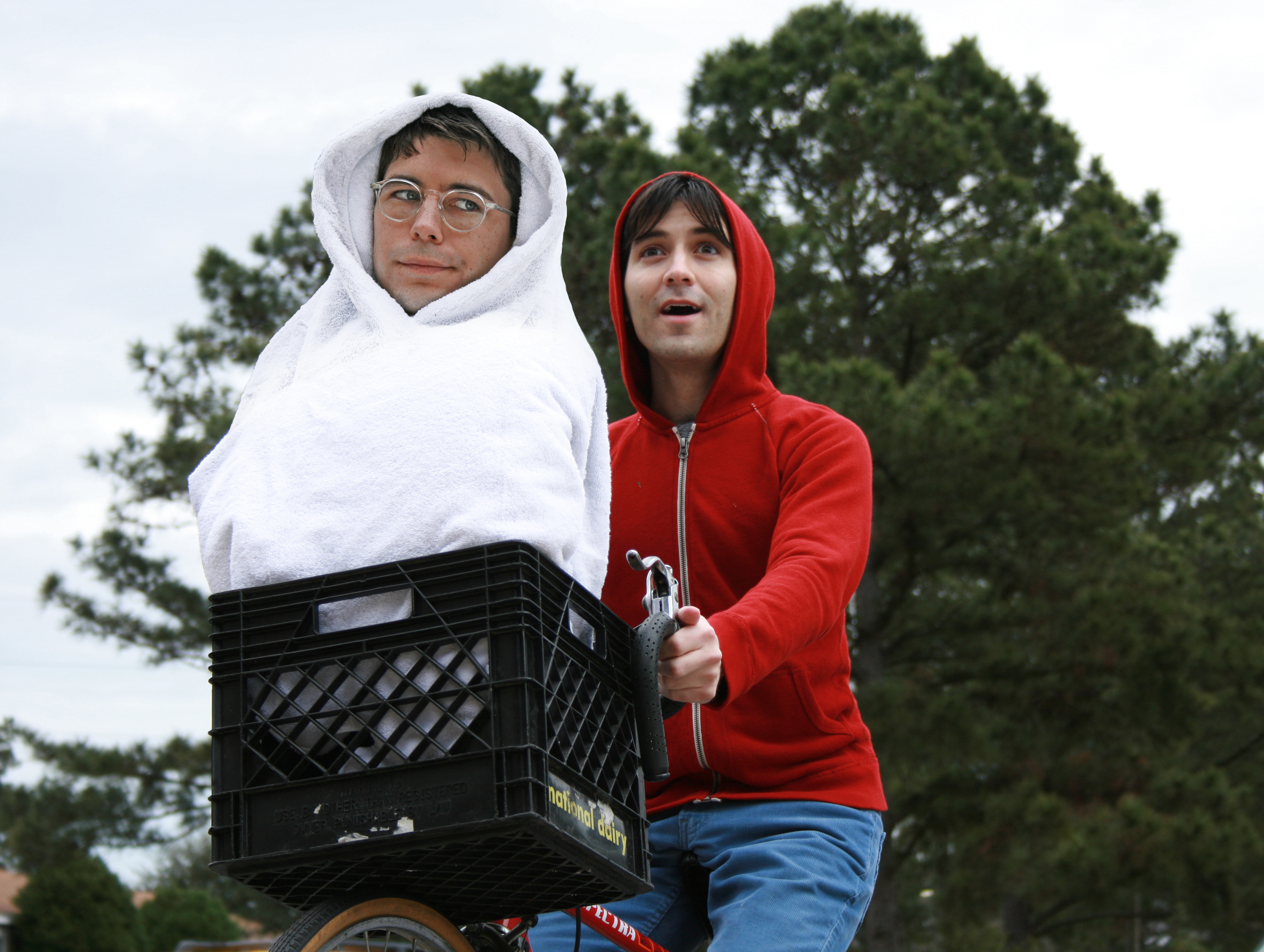
Matthew and Brian Titshaw
THE SPACE JOCKEY PURSUIT grew out of the thesis short film we made while attending the Savannah College of Art & Design. After expanding the story, we asked a classmate to help us raise the finances. We also received some support from family, friends, and online fundraising campaigns.
From the beginning, we knew we wouldn’t have the budget that was typical of such an ambitious project, but we wanted to prove that we could be resourceful and creative with a small amount of money without compromising the integrity of the story. Since we were going to be working in such an unconventional way, it was important we have a certain type of spirit on set. This is why we wanted to collaborate with fellow students and friends who were also eager to make their first feature film. Our crew’s creative energy is what kept us going.
2Q: Cinequest is proud to host the World Premiere of THE SPACE JOCKEY PURSUIT. Explain to the audience how you feel about bringing this film before audiences for the first time, and what do you think their reaction will be to your film?
We are thrilled to be premiering our film at Cinequest. Since this is the first time an audience outside of our cast and crew will experience the film, we are excited to see how it will be received. But we feel that anyone looking for a fun film about an underdog pursuing a seemingly absurd dream will not be disappointed.
3Q: What was your best and/or worst experience while making THE SPACE JOCKEY PURSUIT?
Worst: Watching the first assembly cut of the film.
Best: Watching the final film with our family, friends, cast and crew on the big screen.
4Q: Festival audiences often have to make hard decisions about what to see, and the catalog descriptions sometimes run together. In your own words, why should people see your film?
Cinequest attendees have a tough choice. There are a lot of good movies in the festival this year. But we have a lot to offer. Sure, there are other road comedies out there. There are plenty of romantic, action-packed thrill-rides with futuristic cars. We’re not the first film to feature complex characters. Star-making performances are certainly nothing new and the same goes for lively soundtracks composed by virtuoso songwriters. And it seems there are a lot of movies about spacemen, and jockeys and the various pursuits that they often entail.
But it is not often that a film comes along that contains all of the above. It is even more rare when that film is made by a ragtag group of filmmakers with the imagination to create such a film for less money than it costs to feed the cast of Ocean’s Fourteen…Oh and horses! We have two of those. You know, for the kids.
5Q: The current market for independent films is fractured, to put it lightly, and existing distribution models grow more ineffective with each passing moment. What are your hopes or plans for distribution?
Our wish is to have it screen in a theatre environment, but we are not oppose to any distribution method, so long as people can see it.
We know the best case scenario: A theatrical release on fourth of July weekend alongside the latest Men in Black and Roger Ebert gives us his first ever 5-star review after he is miraculously healed back to his youthful, healthy state during the final credit roll.
And the worst case scenario: Touring the country, setting up special screenings, and selling DVD’s out of the back of a van. But we are prepared to do whatever it takes to find the audience.
View The Space Jockey Pursuit trailer!
Buy tickets to see it at Cinequest!
 1Q: Tell us a little about the origins of SWEET TALK, from concept to financing.
The screenwriter, Peter Lefcourt, and I wanted to work together as I had directed one of his plays to great success in LA. He wrote “Sweet Talk” and it was something we felt we could do on our own. We met with Linda L. Miller, the producer and she felt she could make it happen, so we raised the money from family and friends. Thank you all!! What we lacked in funds we made up for in creativity!
2Q: Cinequest is proud to host the World Premiere of SWEET TALK. Explain to the audience how you feel about bringing this film before audiences for the first time, and what do you think their reaction will be to your film?
“Sweet Talk” is a very unique film. It’s about love, the transformative power of story telling, the imagination and connections people make. Natalie Zea (“The Following,” “Justified,” “Californication”) stars as a young woman at loose ends in her life. She meets a writer over the phone and they take a wild journey neither of them anticipated.
It’s playful, sensual and compelling. We are delighted to premiere at Cinequest because it is such a forward-thinking festival. I think the audiences will really enjoy “Sweet Talk” for that reason!
3Q: What was your best and/or worst experience while making SWEET TALK?
One of my best experiences was working with Marco Fargnoli (DP) and Celine Diano (Production Designer) trying to figure out how to create the fantasy sequences – 1914 Budapest and 1939 Vienna. How do we build a moving train circa 1914 and shoot it during a snow fall – with the two leads, Natalie Zea and Jeffrey Vincent Parise – making love between the moving cars! ? Talk about having to come up with imaginative ideas!!! But we did!
4Q: Festival audiences often have to make hard decisions about what to see, and the catalog descriptions sometimes run together. In your own words, why should people see your film?
“Sweet Talk” is sexy, smart, romantic and thought provoking. This is true for every aspect of the film from the performances to the music to the story. It’s a complex and satisfying film experience.
5Q: The current market for independent films is fractured, to put it lightly, and existing distribution models grow more ineffective with each passing moment. What are your hopes or plans for distribution?
We’d want distribution in the art house, indie film, US, European and worldwide markets. The story of these two lovers connects to all cultures in any language. It’s been called a ‘gem of a film’ and we look forward to getting it out into the world.
My review of SWEET TALK.
Watch the trailer!
Buy tickets to see SWEET TALK at Cinequest!
 1Q: Tell us how you became involved with 7 LIVES OF CHANCE, and how you prepared for your role.
3Q: What was your best and/or worst experience while making 7 LIVES OF CHANCE?
 4Q: Festival audiences often have to make hard decisions about what to see, and the catalog descriptions sometimes run together. In your own words, why should people see your film?
5Q: You have a long list of IMDb credits. Was working with director Banks Helfrich a different experience from working with other directors? Tell the craziest story you know about Banks. I know you must have at least one.
Buy tickets to see it at Cinequest here!
 1Q: Tell us how you became involved with 7 LIVES OF CHANCE, and how you prepared for your role.
2Q: Cinequest is proud to host the World Premiere of 7 LIVES OF CHANCE. Explain to the audience how you feel about bringing this film before audiences for the first time, and what do you think their reaction will be to your film?
We are so proud and honored to have been chosen to be in this fantastic festival! I’m anxious in a really good way to finally have this movie be seen on the big screen. I think people will react positively to this movie. They will absolutely feel like they have witnessed something different, fresh and innovative. Banks has an incredible imagination. I’ve always wanted to travel to places like India, Nepal and Russia. But I think the most interesting visit would be inside that guys mind.
3Q: What was your best and/or worst experience while making 7 LIVES OF CHANCE?
5Q: I know you are also an improv performer and do live theatre. How does that job differ from being in a scripted film? If you could only do one or the other, for equal pay, which would you choose and why?
 1Q: Tell us a little about the origins of SOMEWHERE SLOW, from concept to financing.
Like many stories, Somewhere Slow is inspired by actual events, specifically a relationship that I was trying to find a place for in my own personal history. Like Anna, I too, met a stranger who’s ferocity for the unknown and adventure prompted me to step out of my own self-imposed box. I wrote the first draft in a week and decided to do a staged reading of the script. This is where I found Jessalyn Gilsig. She read Anna in the reading, and from the moment the reading finished I knew I would not be able to tell this story with anyone but her as Anna. This woman, this actress is far beyond the real deal. Diving into a character who’s blemished, awkward and full of fear requires such bravery, such lack of vanity, such commitment to story, and Jessalyn had me from the moment she opened her mouth.
She partnered with me, and we brought on Michael Anderson & Christopher Sepulveda to produce the movie with us, as I developed the script into the story we would eventually shoot. Finding the right young actor to play Travis was crucial. We held auditions, saw over 100 young men both in California and Europe (via Skype!). There were so many talented young men, but when Graham Patrick Martin walked in the room and read for us, we knew we had found our Travis, and to be honest, Graham brought elements to Travis that I could not have even anticipated, and shaped our perception of who Travis could be. When David Costabile came on board as Robert, Anna’s husband it was unbelievable. While the role of Robert bookends the story, we knew we needed an actor whose presence could be felt throughout Anna’s journey away from him. David and I had many a conversation about who Robert is and how a role that could’ve easily been played as dopey and cold needed to be a filled with an undeniable love for Anna that she just couldn’t feel, or perhaps wasn’t right for her. Besides, David had just finished working with two pretty important Stevens – Spielberg (Lincoln) and Soderbergh (Side Effects) – I may have been interested a bit in what I could learn from him! The gift of having Wallace Langham, Lindsay Crouse and Robert Forster fill out the remaining supporting cast is something that I still have to pinch myself about. These actors are legends. Financing fell into place with the help of the great Bliss Katopothis, of Willow Creek, securing much of our private equity out of the Bay Area and with the dedication of a multitude of generous talents, we were able to move into production.
2Q: Cinequest is proud to host the World Premiere of SOMEWHERE SLOW. Explain to the audience how you feel about bringing this film before audiences for the first time, and what do you think their reaction will be to your film?
We could not be more pleased to hold our world premiere at Cinequest. It’s a festival I’ve wanted to be a part of for nearly a decade, so it’s actually a dream come true. The festival is about looking forward, about the future of film and technology, so to be grouped in with that idea of the future just feels amazing.
Movies aren’t movies until they interact with an audience, thus making our premiere and subsequent screenings the completion of our storytelling. I’m so eager to watch & listen to an audience experience our story. We know what it means to us, but to open it up and share it with absolute strangers who aren’t just proud of us for making a movie is out-of-this-world and the very purpose we set out for in the first place. During post-production, we had a few test screenings, and from the moment Jessalyn appears on screen she grabs the audience and they’re right with her until the credits roll. My goal in telling this story was to create characters and experiences that are universal to whomever watches — universally funny, universally romantic & universally heartbreaking. Our actors, our designers, our crew, our producers, our investors all put a piece of themselves into this film that is undeniably heartfelt and truthful — and I know an audience will connect with that.
3Q: What was your best and/or worst experience while making SOMEWHERE SLOW?
 There are a few moments that really stand out from our time shooting the film. The first has to be our rain day. The part in the beginning of our story where it really takes a turn required a thunderstorm. We were shooting in sunny SoCal at the end of the summer. There wasn’t ever going to be even a cloud in the sky. When making an independent film, as producers, we always knew we would have to concede some elements of the story in favor of others, but my producer Michael (Anderson) and my line producer, Dawn Wiercinski knew how important this rain sequence was to me and to Anna’s journey. They did the impossible, and I still remember the phone call when Dawn called me and said, “We got you your rain!” On our infamous rain shoot day, when the rain fell, tears popped into my eyes. It was magical. Movie-magical. Another favorite challenge of mine was shooting the climax of the story between Anna and Travis on a sandbar in the middle of Mt. Hope Bay off the coast of Rhode Island. The characters go out to this “island” for the afternoon, and as they are on the island, the tide changes and the island begins to disappear, leaving them running for their boat before it gets swept away. My cinematographer, Justin Talley, and I wanted to capture both the intimacy and the vitality of the moment, so we chose to actually race against nature to shoot one of the most important scenes, while chasing the sunset and the island actually disappearing! I’ll never forget the image of our 15 person crew circling in a straight line behind Justin, as we spun around Anna & Travis to capture the 360 degree shot. We were all like the second hand of a ticking clock in a literal race against time. It was incredible. It was exhilarating and we got it!
4Q: Festival audiences often have to make hard decisions about what to see, and the catalog descriptions sometimes run together. In your own words, why should people see your film?
That’s a great question. People should see Somewhere Slow because it’s an adventure in breaking free of our own perceptions of how we think we’re meant to live our lives. It’s about risk, it’s about reward and it’s about the pursuit of a better life– a life that is more full, more vital, more vivid. I couldn’t be happier with the nuance and bravery of Jessalyn Gilsig, Graham Patrick Martin, David Costabile, Wallace Langham, Lauren Schneider, Lindsay Crouse, Robert Forster and everyone else in my cast & design team. And it’s funny and sexy and romantic and provocative and will make you feel something. Those are good reasons, right?
5Q: The current market for independent films is fractured, to put it lightly, and existing distribution models grow more ineffective with each passing moment. What are your hopes or plans for distribution?
We’re really excited to launch our festival experience at Cinequest and continue on to the Omaha Film Festival, Vail Film Festival and others. For all of us, getting to share the film with an audience is our number 1 priority. I want Somewhere Slow to be released theatrically so as many people will have the opportunity to experience the film on the big screen, with others around them. Yes, the distribution model is expanding, and outlets like VOD, Netflix, etc are offering incredible opportunities for filmmakers to reach an audience that is craving strong and unique storytelling but call me old-fashioned, there is something so special about the collective viewing experience of watching a movie amongst strangers in a dark theatre, that will always, always, always be a necessary part of how we as filmmakers mirror our audiences’ own lives, hope, fears and dreams.
Buy tickets to see SOMEWHERE SLOW at Cinequest!
Watch the Trailer!
 1Q: Tell us a little about the origins of Detonator, from concept to financing.
Damon and I have been talking about writing, directing, story, and our own projects for the better part of a decade. We both had feature films we were trying to make, but we seemed to be hitting similar roadblocks. I was originally asked to turn a story idea I was developing into a screenplay in a very short amount of time for a specific director. I knew that it would be a stretch to take this job on myself, and Damon and I had talked about combining our efforts to get a first feature under out belts. We are inspired by many of the same movies, had developed a common language, were comfortable collaborating, and had already spent time talking about the story of Detonator, so it just made sense to write it together.
As we proceeded, and the director moved on to another project, it became clear very quickly that we should combine our resources, efforts, and expertise, and direct the film as a team. Neither one of us had set out with the ambition to co-direct a film, but in the case of Detonator, we had each invested so much of our selves and our experiences into the story that it just made sense. We began raising capital with some success, but in a very grassroots way. It wasn’t until my close friend from growing up in Philadelphia, David Jacovini, took the reigns as Executive Producer that things really took flight and became real. He had the perfect combination of business knowledge and the experience of choosing to leave the world of high finance to start his own venture back in Philadelphia. It just fit. After we had a real budget, it was a whirlwind of agony and joy that brought us to where we are today, our “World Premiere” at Cinequest, and we couldn’t be happier about it.
2Q: Cinequest is proud to host the World Premiere of Detonator. Explain to the audience how you feel about bringing this film before audiences for the first time, and what do you think their reaction will be to your film?
My hope is that audiences find some connection to the story, something in the character of Sully (beautifully rendered on screen by Lawrence Michael Levine) to which they can relate. Damon and I tapped our own experiences of trying to make art and have a creative voice as a “grown-up” with real responsibilities. I think some form of this notion is relevant to most human beings.
We also chose to set Detonator in a very specific world that we found compelling, the underground punk scene in Philadelphia. I’d like for audiences to lose themselves for a moment in the world we created, and go on a journey with our protagonist to a place where they might not normally have had an opportunity to go in their own lives, and hopefully be moved by it.
3Q: What was your best and/or worst experience while making Detonator?
The best experience of making Detonator was working with good friends, my partner, Damon Maulucci, our lead, Lawrence Levine, our Executive Producer, David Jacovini, to name a few. We had a great cast and crew, so it was a pleasure to get to know everyone and spend time around passionate and talented people.
The worst or most difficult experience was being away from my one-year-old (at the time) son, Lorenzo, for over two weeks. It was excruciating. That was, by far the longest time we were ever apart. Cinequest is the second longest, and now I have a 6-month-old daughter named Stella, so being apart will be doubly difficult.
4Q: Festival audiences often have to make hard decisions about what to see, and the catalog descriptions sometimes run together. In your own words, why should people see your film?
I think people should educate themselves about what’s screening, and then just see what truly intrigues them. They should trust their instinct. If Detonator does that for you, then you should absolutely check it out. It’s the kind of film I would like to see. My hope is that wonderful resources like your website will give audiences a good sense of some of the great films waiting to be seen at Cinequest 23.
5Q: The current market for independent films is fractured, to put it lightly, and existing distribution models grow more ineffective with each passing moment. What are your hopes or plans for distribution?
We hope for the best, but are realistic and very pragmatic about our plans for Detonator. We made a small-scale film, so we might just have the potential to recoup our costs, and then continue to make reasonably sized films. I think this is a sensible and sustainable approach to the business of making films outside of the system. But more than anything, we just hope a lot of people who are receptive to non-Hollywood movies will have an opportunity to see Detonator one way or another.
Though budgets and bottom lines are a reality, I think it’s a mistake to get too wrapped up in the short-term dollars and cents of it all. So, I am less concerned about shifting distribution models, and more interested in maintaining a healthy relationship with the creative process and pushing myself artistically. I think if you can focus on the bigger picture and the work you are doing, you will be okay.
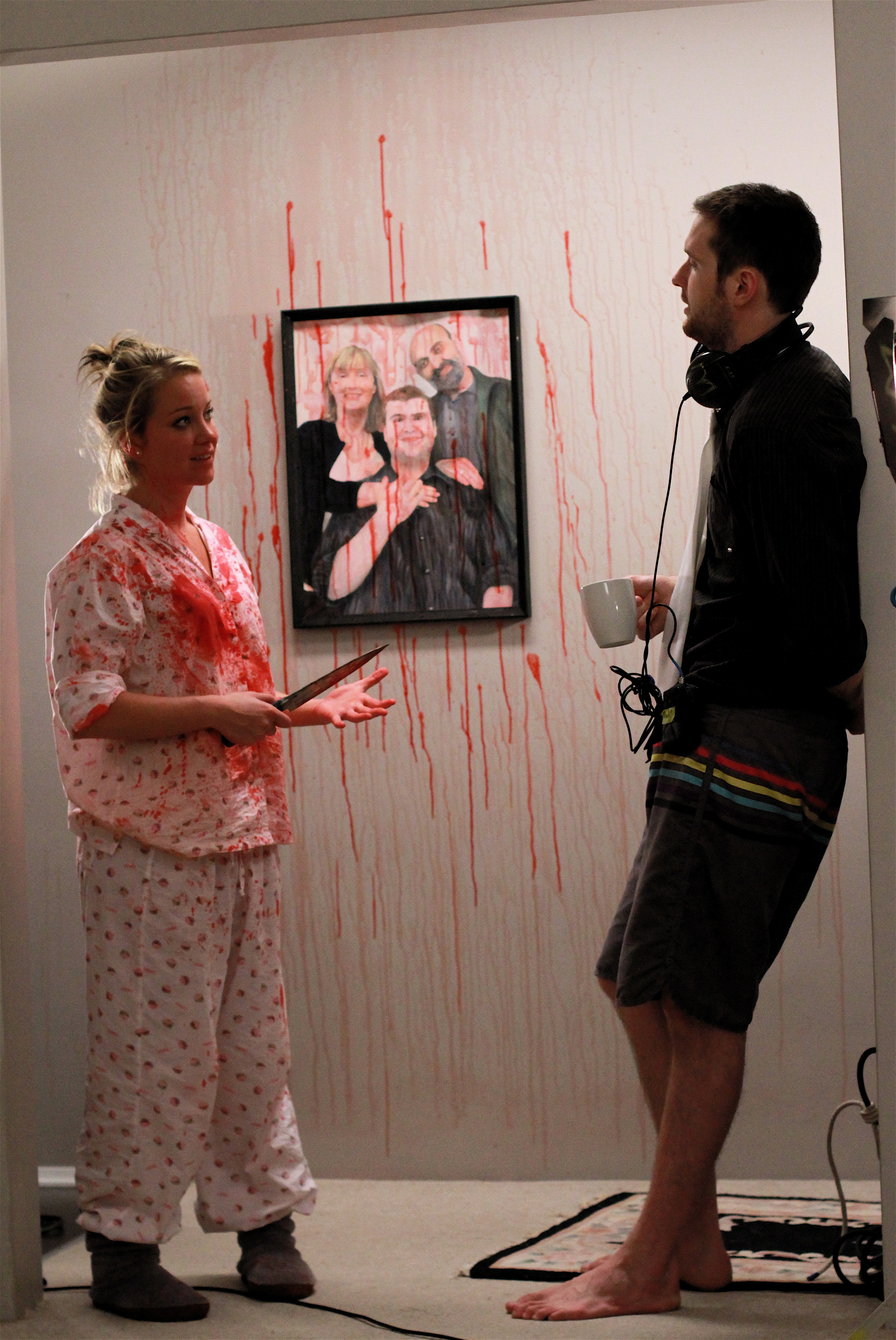
1Q: Tell us a little about the origins of MON AMI, from concept to financing.
MON AMI grew out of a curious urge to follow the villain’s side of a story. The challenge in writing it was finding a balance so that your audience would still connect or relate to these characters even though they are doing some pretty horrible things. I just saw that as a fun exercise and over a year’s worth of writing and re-writing with the True Hype team, I got it to a place we all agreed we had something interesting.
Since we had already shot our first no-budget feature YESTERDAY back in 2006-09 we had a pretty good understanding of how to shoot this feature on the cheap. And through begging our friends and family managed to raise around $10,000 as our budget. Capilano University Film Program (where we all attended at one point or another) helped out with providing our gear needed. We then used two 7D cameras and begged a ton of our old contacts to help out on set. Our crew was entirely built from friends and contacts we knew through the Capilano University. We then shot over 17 days in August while mainly using locations in and around my parents’ house while they were out of town vacationing in Greece.
 2Q: It appears that the film has been screened at other festivals. Do audiences respond differently at some festivals than they do at others? And do you ever stop being nervous?
The rest of my team doesn’t seem to have any problems with being nervous at festivals but I’m terrible at them. I get really bad anxiety, like I’m about to do public speaking. I keep getting visions of the entire audience all at once standing and boo’ing me out the building haha. Normally I’ll stay for the opening credits then sneak out the theatre and sometimes try and listen to the audience reacting from outside the doors. I don’t think I’ll ever be able to relax, but it seems to get easier as the movie plays more and more.
The most nerve racking experience was our World Premiere at Fantasia Film Festival in Montreal. We had basically spent 2 years working in a dark room editing and re-editing the movie and by the end none of us had no real perspective left on the film. I thought it was shit and was fully prepared for the audience to hate it. But from beginning to end the Montreal audience really responded to it and were laughing and cheering and gasping throughout. It was amazing. That was the first time I realized “okay, its working”. And that seems to be how the audiences react whenever I manage to stay close enough to hear them. The film really is a head-fake, people start laughing and chuckling at the silliness of the movie but then suddenly something serious will happen and you can hear a pin drop. Sometimes you even get the nervous laughter when audience members don’t know whether they should still be laughing or not. Those are my favorite moments because it means we’ve surprised them with something.
 3Q: What was your best and/or worst experience while making MON AMI?
The best experience is always, for me anyways, working with people that share the same drive for creativity. On set and even in post-production I really try and keep things as collaborative as possible. I get charged from having other people JUST as excited about making something interesting as I am. When you can cultivate that environment it becomes more like summer camp and less like work and that’s why I love doing it.
The worst experience….hmmmm…was probably the 2 weeks just prior to our World Premiere at Fantasia. We had a hard date that the movie needed to be done and ready for screening and we had a lot of problems finishing. We were still editing and making adjustments right up to the very end all while trying to finalize the sound design and color correction. We even made a print of the movie on HDCAM one week before our screening time only to find a couple of errors in the picture that I accidentally didn’t fix. I was losing my mind, I was working full time during the day and trying to edit and finish the movie at night, all the while doubting that the movie would be any good. I nearly had a meltdown. That’s the hard part, the self doubt. It’s something I can never seem to shake but I kind of appreciate it on some level because at least it keeps me questioning the material into trying to make it something better.
4Q: Festival audiences often have to make hard decisions about what to see, and the catalog descriptions sometimes run together. In your own words, why should people see your film?
How to best sell my movie hey… haha, maybe just “go see it you won’t regret it!”. No, I don’t know, at its core MON AMI is a horror movie disguised as a buddy comedy. So there’s something for everyone really. We really focused on trying to challenge the audience on whats funny and whats not, and I think our audiences so far have really to that as they never know whats about to happen next. Some screenings have people yelling at the big screen trying to guide the characters decisions, which was great. We really tried to take the viewer on an emotional roller-coaster. So if you like laughing and cringing, this is DEFINITELY the movie for you!
5Q: There are now so many different ways in which to distribute a film; each has pros and cons. What are your hopes or plans for future distribution?
Yeah definitely, the landscape for independent films is evolving. Our goal with MON AMI has just been about exposure and the best ways to go about the most people possible seeing it. The festival tour has been a great start in getting awareness for the film and through it we gained many contacts we believe can now help us get it out to the general public. We JUST signed our first digital distro deal with NEW VIDEO and are in negotiation for the rest of the territories and other World Sales with GRIMM ENTERTAINMENT. When you go about making a feature on your own without any studio backing it can be tough to navigate the distribution landscape. But luckily it seems the internet is providing direct access to the audiences now adays. This is something I intend to experiment with in future projects for sure.
Buy tickets to see MON AMI at Cinequest!
View the custom Cinequest Teaser Trailer!
More Teaser Trailer!
 Popcorn and Vodka