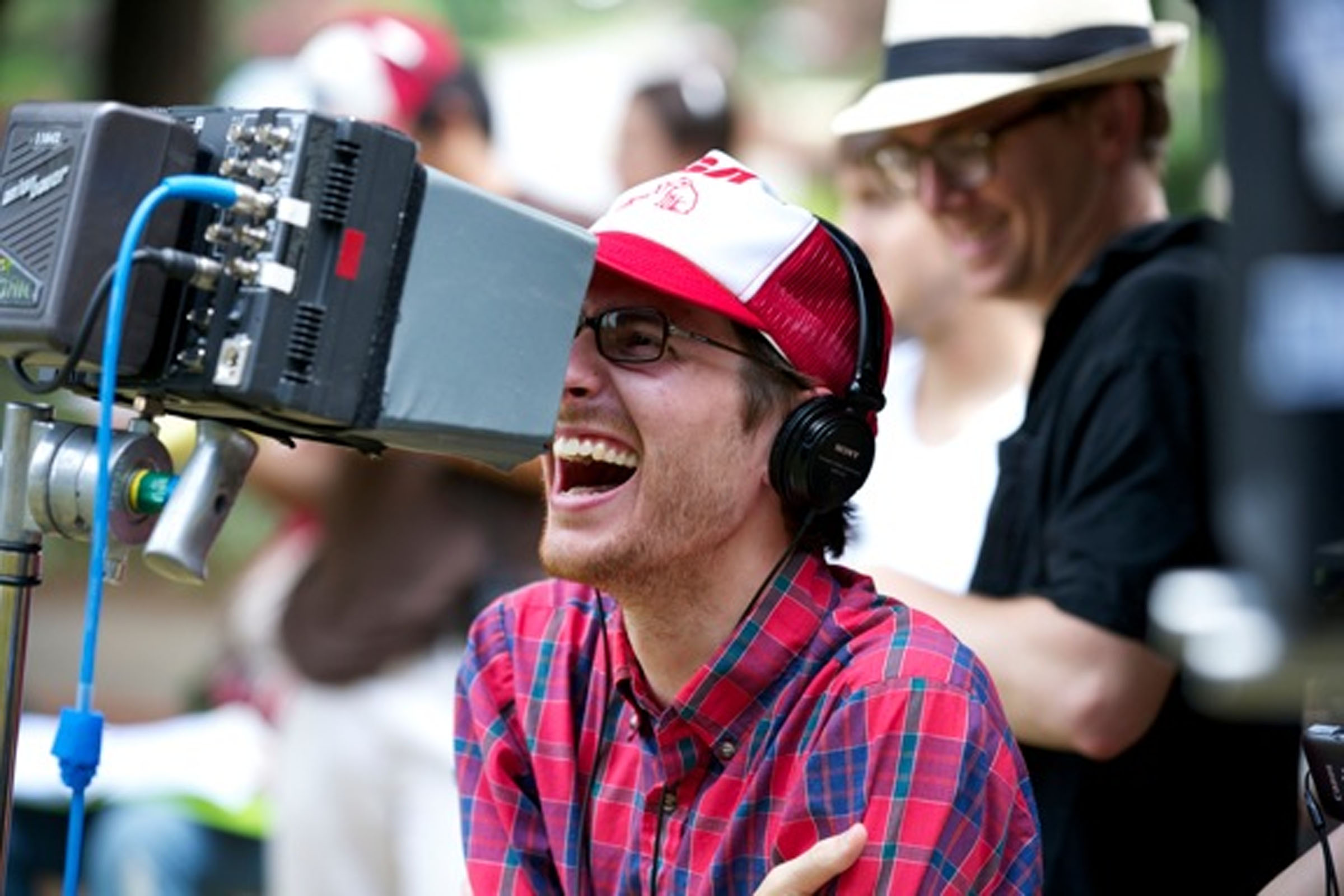
 1Q: Tell us a little about the origins of CONGRATULATIONS!, from concept to financing.
Conceptually, I wanted to make a film that was personal to me but not a biography or autobiography. So, I picked a place where I grew, which is the house you see in the film, and wrote a story for that location. The missing persons story was somewhat inspired by the Etan Patz disappearance, which has been in the news of late. However, I was mostly interested in telling the story through the eyes of a detective, who is absurdly thorough and very dedicated, almost to the point of personal detriment. I also wanted to write a film for John Curran, the actor who plays Detective Skok, who was in a short film of mine.
To help finance the film, we launched an Indiegogo campaign with the help of Fractured Atlas and raised over 17K. That was a very rewarding and inspiring experience because we had no idea what to expect when we started that process.
Production was in July of 2011 and lasted about a month. We filmed it just outside of Atlanta, GA, in a suburb where I grew up.
2Q: Cinequest is proud to host the World Premiere of CONGRATULATIONS!. Explain to the audience how you feel about bringing this film before audiences for the first time, and what do you think their reaction will be to your film?
Honestly, I’m excited and nervous. We have some cast and crew coming out to the screening as well as my parents and they’ll be seeing the film for the first time. We walk a fine line between drama and comedy in the film, so as long as audiences can roll with that, I think they’ll enjoy it.
3Q: What was your best and/or worst experience while making CONGRATULATIONS!?
The shooting of it was a blast, even though we had some tough days. Overall, I had the time of my life making it. I really enjoy working with actors and since we had a perfect cast, that aspect was fantastic. I also loved working with the art department to create the look and texture of each set in the film.
Post production was challenging as we went through quite a few ups and downs. When you sit and watch a scene and see that it doesn’t work, it can be a sobering realization. But even those moments can be great learning experiences.
4Q: Festival audiences often have to make hard decisions about what to see, and the catalog descriptions sometimes run together. In your own words, why should people see your film?
I sympathize with them there. The choices are daunting, in a good way. I think our film is funny and entertaining and very different from most other films out there. In addition, we covered the front of a two-story house in missing posters. It’s pretty neat to look at.
5Q: The current market for independent films is fractured, to put it lightly, and existing distribution models grow more ineffective with each passing moment. What are your hopes or plans for distribution?
Like many indie filmmakers, I treat a festival run almost like a theatrical run, knowing the prospects of a wide theatrical release to be slim. So, I hope to travel to as many festivals as possible to help promote the film and build a fan base for it. Then, if traditional distribution channels don’t pan out, we can take the film directly to our audience.
Ultimately, our first hope is to land a distributor or some combination of distributors to ensure the film reaches all the platforms available to movies, whether its VOD, Itunes, Netflix, foreign markets, etc., and is accessible to the widest possible audience.
Buy tickets to see CONGRATULATIONS! at Cinequest!
Buy tickets to see CONGRATULATIONS! at the Atlanta Film Festival!
 1Q: Tell us a little about the origins of DOSE OF REALITY, from concept to financing.
I have always been a fan of films that break new ground, push the envelope, and provoke and challenge me mentally and emotionally – those films that ask difficult questions, inspire discussions, and ultimately foster growth.Personally, I’m drawn to characters who are troubled and whose inner motivations are not easily understood – characters you would find in a John Cassavetes film. People are complex. As someone who practices Buddhist meditation, and has been a life-long student of psychology, human complexity is what interests me – whether it be the battle that rages inside the mind, or the stories we tell ourselves about reality, or the dysfunctional dynamics that too often suck the life out of us. These fascinations were the genesis of DOSE.My experience working as a bartender also fueled this idea forward. I became intrigued with the strange world I witnessed each evening from 10PM to 3AM. I’m not sure if it was the ‘darkness’ that seemed to permeate the late hours, or the clash of personalities, pheromones, music, alcohol and drugs…but all these elements seemed a ripe stew for an intense character-driven mystery drama.
Having the constraint of a limited budget also shaped the concept of the story. I crafted the story within an intimate setting, where there’s nowhere to run, three characters must battle each other, along with their inner demons in order to come to resolution. I soon realized, however, that what first appeared to be an independent filmmaker’s dream, inevitably brought up another level of problems and issues – from a production standpoint as well as an artistic one.
So I welcomed the challenge. Would I be able to pull off a slow-burn contained thriller that was dialogue intensive? Could I mix cinéma vérité, improvisation and noir with some of the more modern elements and techniques of storytelling? And ultimately, would the audience be drawn into this world, and stay invested?
I certainly knew what I was up against, but I believed the payoff for me and the audience would be worth the artistic risk.
Now that I have completed DOSE, I feel that my gamble paid off.
2Q: Cinequest is proud to host the World Premiere of DOSE OF REALITY. Explain to the audience how you feel about bringing this film before audiences for the first time, and what do you think their reaction will be to your film?
One part of me is very excited about our World Premiere. However, another part of me is a bit fearful. Someone once told me that fear is excitement, without breath. So I’ll be doing a lot of deep breathing in San Jose.
I think I speak for most filmmakers when I say that you want people to love your film. I believe it’s human nature to seek validation or approval on some level.
Ultimately, my hope is that the audience has some sort of reaction–No reaction is what frightens me. DOSE is an intense emotional ride and very unpredictable. My feeling is that the audience will really enjoy the ride. With that said, I’ve been doing this long enough to know you will never please everyone. And sometimes a negative reaction to your film is not necessarily a bad thing. An audience member may be triggered, for one reason or another, and unless you know that person intimately, you don’t know if they simply hated your film OR if something deeper is going on.
If the audience comes out of DOSE analyzing and debating, I think I’ve done my job.
The best experience was working with an extremely talented cast. The actors made my job so much easier, and I cannot forget to mention the amazing crew, that without their support, DOSE never would have happened. The WORST experience would be learning our location was in jeopardy a few weeks before the shoot. Since the entire film was shot inside a single location, a lounge, the ramifications of losing it would have been devastating. The tenant of the lounge was seriously behind in his rent and was about to be evicted. Fortunately, my producers quickly put out that fire.4Q: Festival audiences often have to make hard decisions about what to see, and the catalog descriptions sometimes run together. In your own words, why should people see your film?
Albeit challenging, I believe DOSE is a gripping ride that says something about the human condition and the addiction to drama. It is an emotionally raw film that I hope will provoke and inspire, creating conversation and debate.
5Q: The current market for independent films is fractured, to put it lightly, and existing distribution models grow more ineffective with each passing moment. What are your hopes or plans for distribution?
Fortunately we secured distribution about a month ago. The film will be released domestically on March 26, 2013. We are presently seeking international distribution.
Buy tickets to see DOSE OF REALITY at Cinequest.
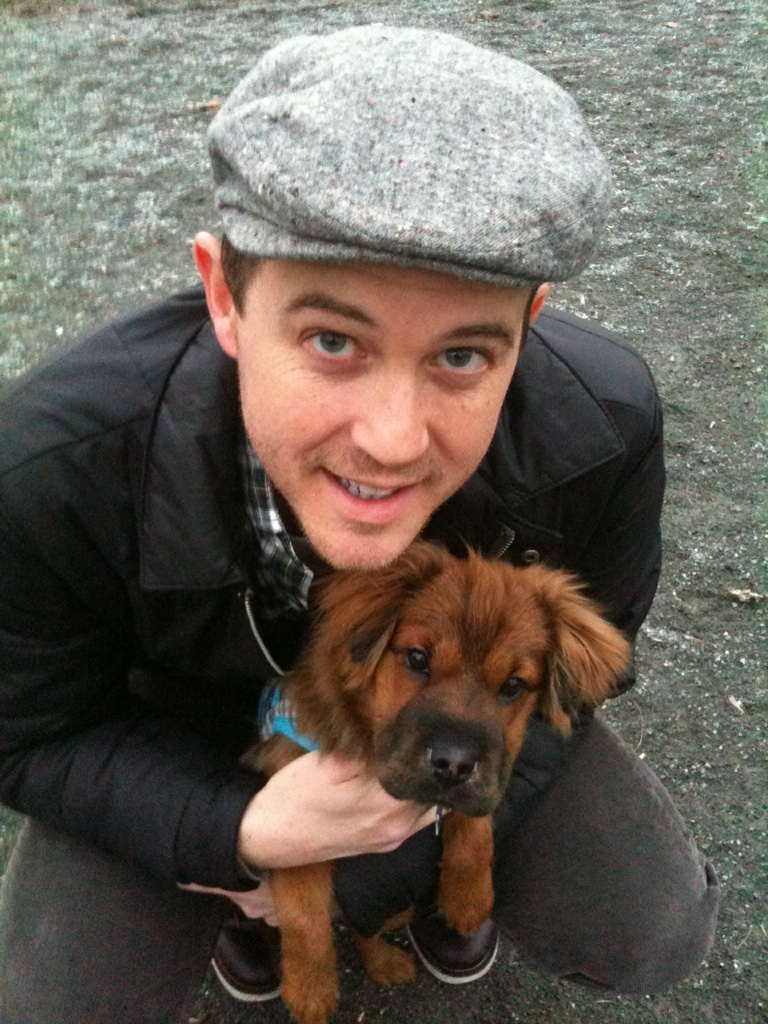 1Q: Tell us a little about the origins of TWENTY MILLION PEOPLE, from concept to financing.
I first got the idea to make a feature while working in the projection booth at TriBeCa Film Festival a few years ago. I peered through the projection window and watched the Q & A following Ed Burns’s Nice Guy Johnny and for the first time I was inspired to
make my own feature film. The following year I went to L.A. to look for work in TV writers’ rooms instead. Though I had some close calls, I ultimately came up short and headed back east. It was then that I decided to pull the trigger on doing something as undeniable as a feature film.
My girlfriend Devin and I hang out at this coffee shop in Jersey City, The Warehouse Café, an artist friendly spot, and one day I asked what they’d think about us filming something there. They were so open to it that a few weeks later they emailed to follow up with me…Hey Michael, how’s the script coming? So it was pretty easy to come up with the foundation for my screenplay: A guy works at a coffee shop.
The idea from the beginning was to make a film on “no-budget,” which in 2012 seems to be hovering around the magical number $10,000. So we took to indiegogo (Devin, myself, and Chris Prine, our friend and colleague whom we met in the web series world a few years ago), viewed crowd funding as our full-time job, and raised 30% over our original goal. We have an amazing group of family, friends, and supporters that made Twenty Million People possible.
We went from script to World Premiere at Cinequest in a little over a year.
2Q: Cinequest is proud to host the World Premiere of TWENTY MILLION PEOPLE. Explain to the audience how you feel about bringing this film before audiences for the first time, and what do you think their reaction will be to your film?
We are thrilled, nervous, jumpy, overwhelmed, and ecstatic to have our World Premiere at Cinequest, but when you see us there at the theater you won’t be able to tell because we’re so cool. I mean like, Williamsburg Brooklyn cool, like we might even show up late cause, you know, whatever.
I think that Twenty Million People will go over well with our first big audience in San Jose. It’s a comedy, it’s not too long, it’s a crowd-pleaser. Chris Prine keeps his pants on. Oh and also, spoiler alert: there’s a sex scene between Gumby and Buddha. We’re breaking boundaries.
3Q: What was your best and/or worst experience while making TWENTY MILLION PEOPLE?
When we reached and surpassed our goal of $10,000 on indiegogo, it was one of the best feelings I’ve had in a long time. As we were walking to the bar to have some Negronis to celebrate, a dog tied up outside of a Chinese restaurant bumped into my leg and came out of his harness. He ran around the block, in downtown Jersey City traffic, and I sprinted to keep up with him. But the more I ran, the more he ran. Then we spent about a half hour trying to find him. His owner didn’t seem too bothered by it, so eventually we continued our celebration. About a week into shooting the film, we saw the same owner walking the same dog around the neighborhood. On a 12-day shoot for a feature film there isn’t much time for extracurricular activity, so we just pointed them out, breathed a sigh of relief, and kept shooting.
Retelling that story, it sounds like we reached our goal on indiegogo and I went out and kicked a dog. That’s not what happened. I swear he bumped into me. Great, now everyone’s going to come to our premiere and protest. Maybe I should include a picture of me with my own dog to prove I’m not a dog kicker.
4Q: Festival audiences often have to make hard decisions about what to see, and the catalog descriptions sometimes run together. In your own words, why should people see your film?
Twenty Million People is a likable, funny romantic comedy. Yes, we shot it on virtually no budget, but we were armed with the RED Scarlet, a professional cast and crew, the Manhattan skyline, and the guy who wrote and directed it is NOT A DOG KICKER.
Do you want to see what’s possible in indie filmmaking with $10,000, a funny script, and a bunch of talented people working together? Do you wanna see what it looks like when Gumby has sex with Buddha? If you answered yes to either or both of those questions, Twenty Million People is the film to attend.
Okay, it’s not a scene, per se, just a couple of figurines on a dresser, but still.
5Q: The current market for independent films is fractured, to put it lightly, and existing distribution models grow more ineffective with each passing moment. What are your hopes or plans for distribution?
Yeah, true, it’s an interesting time for independent film. The concept I’ve really latched onto is that people will get a babysitter, pay $13 each, get a huge tub of overpriced popcorn, and see The Dark Knight Rises, but why would anyone go through all that trouble for Beasts of the Southern Wild? Both are great films, but with all the technology we have available to us, distribution has to evolve.
With Twenty Million People, we have the goal of fitting our film into that evolved state of independent film distribution somewhere. We’re open to all possibilities, obviously, but wherever people are watching low-budget indie romantic comedies, that’s where we want to be.
I’m not a dog kicker.
Buy tickets to see TWENTY MILLION PEOPLE at Cinequest.
Visit the website and watch the trailer!
Another great interview with Lawrence.
 1Q: Tell us a little about how you came to be involved in DETONATOR.
Kier, Damon and I went to film school together. We’re friends and they knew I could act so it seemed like a good idea to do this together. I love those guys.
 1Q: Tell us a little about the origins of 7 LIVES OF CHANCE, from concept to financing.
Personally, 7 is a passionate love story from a filmmaker to his first girlfriend. (origin of concept)
Kickstarter, begging and more begging financed 7. Oh, and some more begging. (origin of financing)
2Q: Cinequest is proud to host the World Premiere of 7 LIVES OF CHANCE. Explain to the audience how you feel about bringing this film before audiences for the first time, and what do you think their reaction will be to your film?
Cinequest and 7 Lives of Chance fit like what you put between two pieces of bread on a Saturday afternoon for lunch.
If the audience laughs, 7 is a comedy. If they don’t it’s a drama or worse tragedy.
As a storyteller using pictures, 7 is about that feeling of sitting in a dark room with perfect strangers oblivious to judgment or ridicule and laughing, chortling and sobbing at what makes us, us.
3Q: What was your best and/or worst experience while making 7 LIVES OF CHANCE?
We filled a house with balloons. (One of the best visual and tactile experiences.)
The director of photography had a phobia of balloons. (The worst experience for him.)
4Q: Festival audiences often have to make hard decisions about what to see, and the catalog descriptions sometimes run together. In your own words, why should people see your film?
Different.
Music.
Credits not to miss.
No names. No big budget. Just story.
And, lots of balloons.
5Q: The current market for independent films is fractured, to put it lightly, and existing distribution models grow more ineffective with each passing moment. What are your hopes or plans for distribution?
Streaming online distribution, self-distribution and Harvey W distribution would be nice too.
Watch the trailer! But not if you have a phobia of balloons!
Buy tickets to see it at Cinequest here!
 1Q: Tell us a little about the origins of FALLING OVERNIGHT, from concept to financing.
Parker, the lead of the film, and I met on a comedy pilot I was directing. Shortly after the pilot wrapped he and I discussed taking on the task of making a feature length drama. He introduced me to his writing partner Aaron. The meeting that was going to be an hour soon became an entire night, from which the seed of Falling Overnight took root. Next, was the financing which was actually pretty easy. Nobody would give us money. Therefore, we didn’t have any. I owned most of the production and post production gear which is really a Canon 5D and a laptop with final cut. So our costs were gonna be from crew and food. To keep crew costs down Elizabeth and Jed our two producers along with Parker, Aaron and myself all performed about six positions each. I don’t recommend shooting a film this way but if the alternative is gonna be not shoot one at all- well get ready to be exhausted. Once the ball is rolling the motivation to raise money starts to be noticed. In the end we managed to squeeze some cash out of a few investors as well as friends and family. Luckily the investors have seen the movie and are thrilled with what their money helped create.
2Q: Cinequest is proud to host the World Premiere of FALLING OVERNIGHT. Explain to the audience how you feel about bringing this film before audiences for the first time, and what experience do you expect from your first film festival as a feature filmmaker?
I’m thrilled and amazed. Every day of the shoot seemed like it would be the last. When you’re shooting on locations that are open to the public or in neighborhoods where the number of cars without tires is greater than ones with tires- everyday is a miracle. To now have the chance to experience this movie with an audience is truly surreal.
3Q: What was your best and/or worst experience while making FALLING OVERNIGHT?
My best experience was getting to edit a scene of the movie which took place on the top of a mountain. I was really happy with the way it came out. My worst experience was filming on top of that mountain. It was cold and grueling. Power was nonexistent. Oh yeah, and it was an hour and a half hike to the top, no roads for cars. This meant we had to carry everything up the mountain–a lot of very heavy gear, food for the cast and crew, etc… Then we had to bring it back down– in the dark, after 12 hours of shooting in the freezing cold. It’s one of those moments I don’t know if I would be able to do again.
4Q: Festival audiences often have to make hard decisions about what to see, and the catalog descriptions sometimes run together. In your own words, why should people see your film?
People should see Falling Overnight because it’s an uncompromising honest love story between a 22-year-old and a 19-year-old. With a soundtrack of over twenty seven songs including one that Aaron, Parker and I wrote– and we’ve never written a song. Brilliant!
5Q: The current market for independent films is fractured, to put it lightly, and existing distribution models grow more ineffective with each passing moment. What are your hopes or plans for distribution?
I’d like to have a theatrical release, for the old timers of hollywood, to give me a chance to direct bigger budget films. However, because of the new market place my career does not live and die by hollywood. I will definitely use all the new avenues and portals for distribution to reach out to audiences.
FALLING OVERNIGHT is one of my favorite films ever. Now available on Netflix, DVD and Instant Video.
Follow Conrad on Twitter.
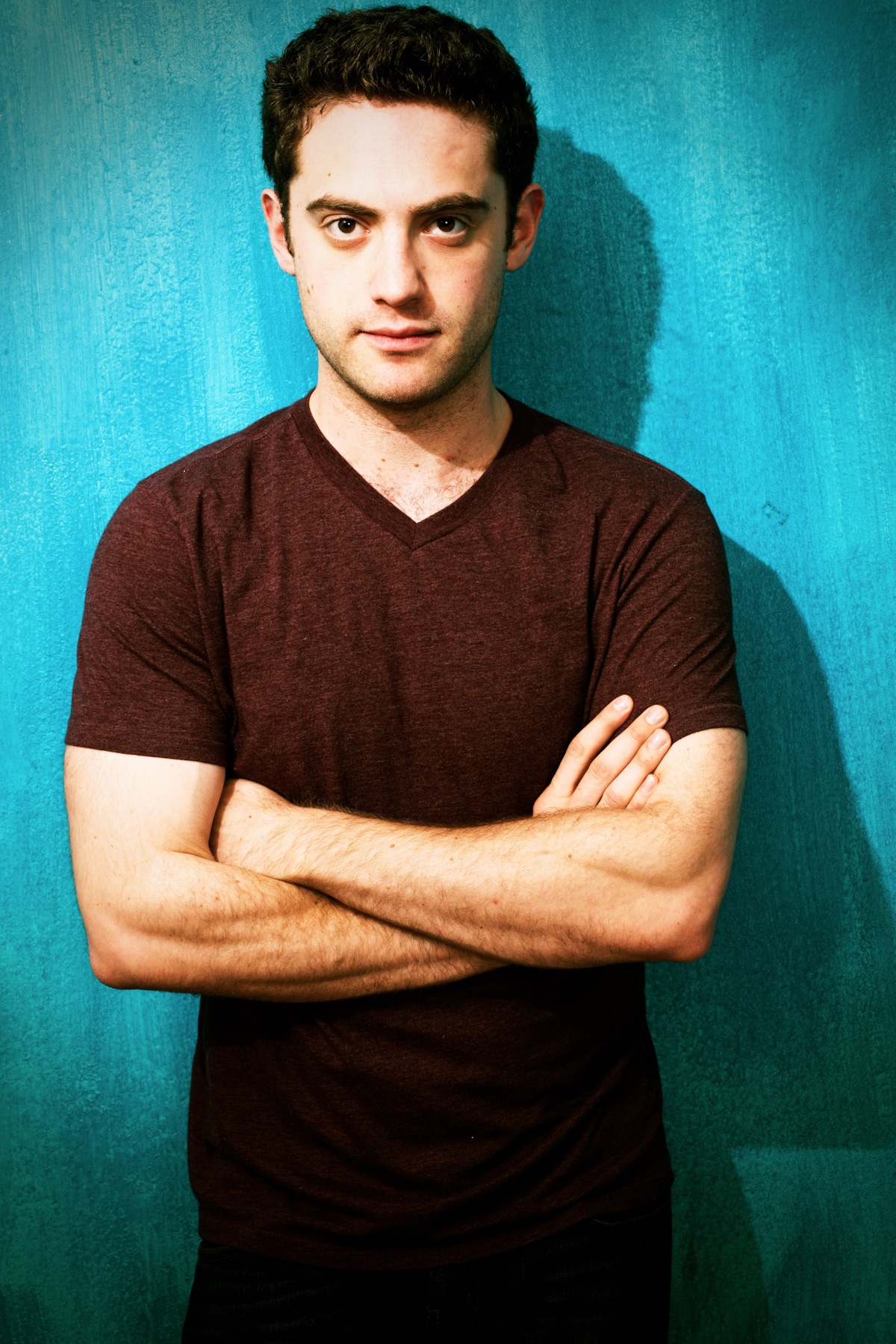
1Q: Tell us a little about the origins of FALLING OVERNIGHT, from concept
to financing.
Way back in January of ‘10, Conrad Jackson approached my good friend and producing partner Parker Croft with an idea for a feature film. The two had previously worked together on a pilot Conrad created called Adult Life, and the feature concept was an ultra low-budget time-contained love story about a young man with a brain tumor (who would be played by Parker). Conrad wanted to explore what could possibly be the last day in life of this bright young man faced with an impossibly difficult reality. With the help of certain recent technological advancements (thank you Canon 5D), the film would look and sound absolutely incredible. Parker was excited, but there was a catch: the film needed to be shot in May, an incredibly short timeline to get any sort of quality screenplay written in
time for production. On top of that, Conrad and Parker would also have to be focusing on directing, acting, raising funds, planning, producing, and everything in between…
Parker and I were already in pre-production on a short film I had written when he approached me to join the writing team. I was a little hesitant at first, as it would mean a huge commitment and I wanted to make sure the story was something new and meaningful. Also, Conrad and I didn’t know each other, or whether we’d all be able to work together. But after the three of us met, and began to develop the concept and characters, we were vibing and began writing the piece at a hectic pace.
With the help of our producers Jed Rhein and Elizabeth Jackson, we created an investment packet and got the ball rolling. The financing came from numerous generous sources, and we have many good friends and family to thank. On a movie with this tight of a budget, every penny mattered, and the film wouldn’t exist without loved ones who believed in the team.
2Q: Cinequest is proud to host the World Premiere of FALLING OVERNIGHT. Explain to the audience how you feel about bringing this film before audiences for the first time, and what experience do you expect from your first film festival as a feature filmmaker?
This is beyond exciting. We’ve worked on Falling Overnight for so long, and poured so much of ourselves in it…we can’t wait for its premiere. It does feel sort of bizarre that we’re only premiering it now…we’ve watched it so many times that it feels like an old classic to us. It will be fun to watch it in a theatre along with the fresh eyes of an audience. It is sort of scary, as well, though…the film hasn’t been shown to a big audience, just small groups and select individuals…we hope and believe people will respond to it, but as a first time filmmaker, you can’t help but have this nightmare of everybody hating it, throwing their programs at the screen in disgust, and taking to the streets with torches and pitchforks, demanding eighty-eight minutes of their lives back…
I don’t expect that to happen. It’s my hope that Cinequest will be a chance to meet other hungry, passionate filmmakers and film lovers, and I am thrilled to be able to share Falling Overnight with the San Jose community.
3Q: What was your best and/or worst experience while making FALLING OVERNIGHT?
The best feeling for me, as a writer, is watching scenes and lines you’ve written come alive in front of you…you can’t help but feel like you are this ultimate human puppeteer or even god-like figure. For in a movie, the creators are the gods for that world. It is a very powerful, emotional, and seductive experience.
The worst experiences were the times where you felt it had all collapsed…a certain scene hadn’t gone as you expected it to, a song had fallen through for a key moment, or a deadline was simply impossible to meet. Everything down the drain, movie ruined. But we were always able to rebound from these moments, and while we walk away from the process a little battered and bruised, we’re still standing, older, wiser, and hungrier than ever.
4Q: Festival audiences often have to make hard decisions about what to see, and the catalog descriptions sometimes run together. In your own words, why should people see your film?
We are snarling, barking attack dogs of truth. The first and foremost goal of this film, whether we achieved it or not, was to cut deep into the honest experience of life, death, love, and connection. Every decision we made was poured over with a fine-toothed truth comb. I believe the film is beautiful, engaging, funny, achingly happy, crushingly sad, flawed, and perfect, all at once.
5Q: The current market for independent films is fractured, to put it lightly, and existing distribution models grow more ineffective with each passing moment. What are your hopes or plans for distribution?
This is our first film, and because of the new and ever evolving channels of distribution, there are a lot of unknowns that we are dealing with. But we believe that there will always be a market for intelligent, beautiful, artistically valid films. We certainly hope to get a theatrical release, and as many eyes on Falling Overnight as possible.
FALLING OVERNIGHT is one of my favorite films ever. Now available on Netflix, DVD and Instant Video.
Follow Aaron Golden on Twitter.
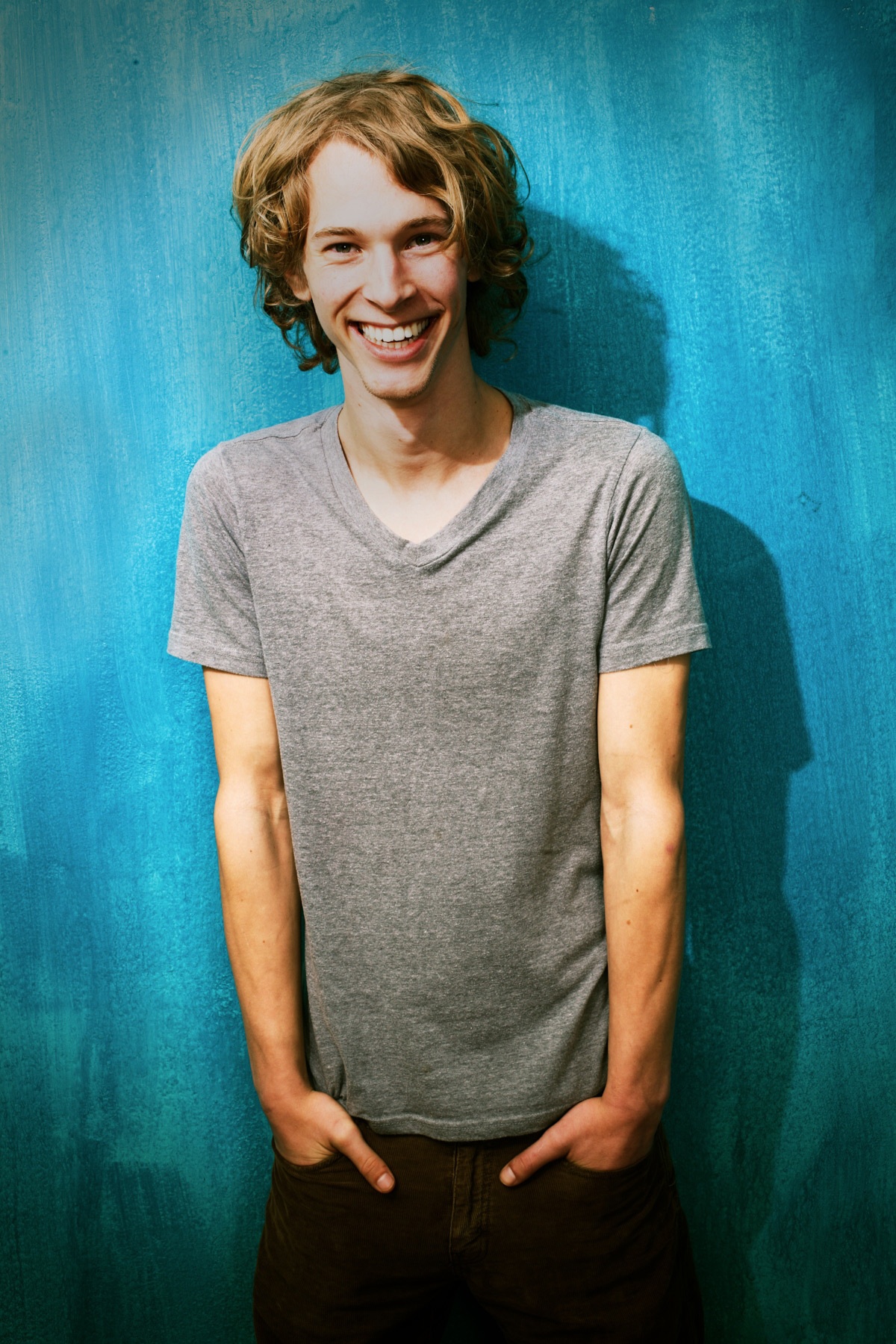
1Q: Tell us a little about the origins of FALLING OVERNIGHT, from concept
to financing.
Falling Overnight in its most embryonic form began in early 2010 when Conrad Jackson came to me with an idea for a character driven film spanning a single night. However before the film was developed further, Aaron Golden was brought onto the writing team and the three of us began creating Falling Overnight.
In creating the story of Falling Overnight, we started with the character of Elliot. We knew we wanted his life to be fading, but we wanted to avoid making the film only about sickness or death, so we decided to set him in a world that was ignorant of his condition. This is where Chloe came from. Once we discovered the character of Chloe, it was clear that the film was going to be a love story, and the rest as they say, is history.
When it came to financing the film, we raised the entirety of the budget through soliciting independent investors, getting them to believe in the project, and convincing them to take a risk.
2Q: Cinequest is proud to host the World Premiere of FALLING OVERNIGHT. Explain to the audience how you feel about bringing this film before audiences for the first time, and what experience do you expect from your first film festival as a feature filmmaker?
Imagine your son has been working on his middle school talent show routine all year, and this is the night of his performance. You’re sitting in the audience, the gym is packed with people, and he’s about to go onstage. Now of course you hope that people clap like crazy when he’s done, but no matter what happens you’re going to be proud of him. That’s what it feels like.
3Q: What was your best and/or worst experience while making FALLING OVERNIGHT?
It would be hard to select the best or the worst experience in making Falling Overnight. Would the most difficult experience be the best or the worst? Some of the toughest nights making this film are the ones I cherish most dearly. Then there are the moments I remember fondly, but they were almost insignificant in the making of this film. Would those be my best experiences simply because they were nice for me? The process of making this film was far too multi-layered to categorize my experiences into ‘best and/or worst’ moments.
4Q: Festival audiences often have to make hard decisions about what to see, and the catalog descriptions sometimes run together. In your own words, why should people see your film?
It’s really good, I promise.
5Q: The current market for independent films is fractured, to put it lightly, and existing distribution models grow more ineffective with each passing moment. What are your hopes or plans for distribution?
My distribution hopes for Falling Overnight is, like most filmmakers, absurdly high. I hope to see Falling Overnight in theaters all over the world.
FALLING OVERNIGHT is one of my favorite films ever. Now available on Netflix, DVD and Instant Video.
Follow Parker on Twitter or visit his website.
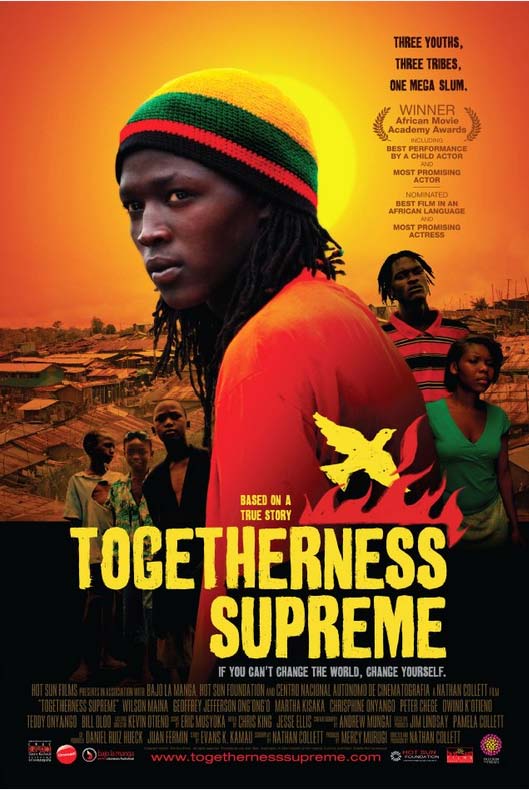
 1Q: Tell us a little about the origins of TOGETHERNESS SUPREME, from concept to financing.
I first became interested in Kenya and in Africa after a visit while I was still an undergrad at Stanford. I went on to study African History and then ventured into filmmaking. I wanted to share stories from Africa, real stories about what I saw and felt. The film started after the (unexpected) success of my short film Kibera Kid which won several awards and was shown at the Berlin Film Festival in 2007. More importantly the story of the making of Kibera Kid was picked up by BBC, and people were excited that film star could come from an African slum. On Kibera Kid, I worked closely with the community in the Kibera slums, and many pleased with what we accomplished yet yearned for more. So we started working on a feature film based on that. Then in late 2007 everything fell apart after a contested election, tribal emotions flared and Kibera went up in flames. People died. Many of my friends and collaborators were displaced. It was horrible. So we felt that we couldn’t tell the same type of story about Kibera, that we had to tell the story of how the community tore itself apart over the intersection of tribe and politics. This was the genesis of Togetherness Supreme, and the core story came from the experiences of a young man from Kibera: Evans Kangethe Kamau.
The financing was tough, though unconventional. We really got lucky because 1. we didn’t aim to have a huge budget and 2. a lot came from organizations that were inspired by the training aspect of the project and the success of the short film. Still of course the money was never enough for the scale of what we attempted…
The process was long and slow for auditions, and for crew. We wanted to do things differently than other films financed by outside groups, who often only use Kibera people in a few onscreen roles. We wanted to do something that in retrospect was a bit ambitious: use untrained people in front and behind the camera. To do this on a feature film, that often had up to 500 extras in a day, was a bit chaotic! But it worked, because we spent over 2 months rehearsing the film, preparing the crew and working through the issues with the community. The film was driven by them, with my guidance, and in the end it really is their story.
After the film concluded, we started the Kibera Film School, to continue the training. The school recently graduated its second class of students, and is taking in its third group of graduates.
 2Q: You filmed this documentary on location in Kibera, and used many locals as well. How did the community at large react to your filming, have they been able to view the film, and what are their reactions to it?
I could see how you might think it’s a documentary. Actually it is a feature film, though so much of it is grounded in reality, I might saY it’s a docu-drama… or social-realist film. [Editor: OOPS]
The vast majority of the crew were from Kibera, and all save for two actors, were also from Kibera. The other two actors came from another slum area, not much different than Kibera.
For me, the reaction, and collaboration of the community was crucial. It was a grueling experience at times, Kibera is dusty, has little electricity or running water, no proper toilets, but the spirit of the people is strong. They challenged us daily, and also gave so much of themselves, that it inspired me to keep going when others outside of Kibera looked down on our efforts. Often the picture you get from Kibera, and I say this as a filmmaker who has worked there for over five years, is one that is either too harsh and negative or too positive and avoiding the deeper issues.
After finishing the film, the first people who got to see it were the community. We held three huge open air-screenings in Kibera, and over 5,000 people attended. It was amazing. People laughed, cried and cheered. When the lead actress came out to speak to the audience, she was mobbed by her new fans. The reaction from Kibera continues to be good, as news of the film’s screening in US, and is first award at the Santa Barbara Film Festival, have become the talk of Kibera. It’s a great motivator to me, to see that the people for whom this film was made, feel so strongly about it.
3Q: What was your best and/or worst experience while making TOGETHERNESS SUPREME? Read more…
 1Q: Tell us a little about the origins of SECOND-STORY MAN, from concept to financing.
Second-Story Man was originally a short film. The script was eight pages, I think, but it was obvious pretty quickly that that wouldn’t cut it. I got a good friend of mine and fellow writer, Richard Jackson, to come onboard and co-write it with me. Sometimes – more often than not – I feel like solo writing is better, but Richard and I were just coming off of a strong collaboration (a time-traveling serial killer dark comedy) so the transition into Second-Story Man was natural.
I had a clear idea of the tone from the early stages. I knew that I wanted it to be cold and focused. Richard and I talked about films like McCabe and Mrs. Miller, Le Boucher, and even Charley Varrick, but none for plot. We were trying to strike that right tone. He and I have pretty different character voices, so marrying our styles was a great process. The hybrid voice (as I think only he and I would hear it) that resulted really works.
Financing was a long effort. We originally intended to fund an entirely different film but things changed including scripts and budget and Second-Story came out as the clear choice. In reality, we actually fundraised for something like two and a half years, though we only fundraised for Second-Story for about six months.
Luckily the time spent prepping the other project allowed us to hit the ground running on Second-Story Man when it came to everything post-development.
2Q: You have directed a few shorts, and this is your first feature. What are the pros and cons of directing short films vs. feature length?
I’m not really sure if these are actually pros and cons or just differences. I wish that making a feature meant I had more time for things like working with the actors and other creative parts, but it really didn’t. I also wish making a feature meant that I had more time to shoot per-scene. Not true either. The biggest, and probably most obvious pro of making a feature is the complete immersion in the process. It was run run run from day 1 of development with no time to come up for air. I took time off from teaching and kind of disappeared into a cave that consisted of incessant emails, undercooked pasta, film-related nightmares and lots and lots of script reading and story-boarding. This is all a pro. Loved every second of it.
I can’t really think of any cons unless the idea of having your life taken over by an entity that has a life of its own is a bad thing.
3Q: What was your best and/or worst experience while making SECOND-STORY MAN?
Best is really tough. There are plenty of generic but true answers. Certain scenes were really rewarding to see come to life, for example. Those notwithstanding, my only half-joking favorite part of the production of Second-Story Man was likely when one of the crew members said that the set food smelled like a “hobo’s armpit” not knowing that the cook was standing right next to him. And that the cook was my mother. (Note: in my experience many hobo’s armpits smell delicious. Sorry mom!)
4Q: Festival audiences often have to make hard decisions about what to see, and the catalog descriptions sometimes run together. In your own words, why should people see your film?
If you watch carefully you might find stray frames from I Spit on Your Grave, Porky’s and Ninotchka spliced in throughout.
Also, we didn’t use stage blood…
5Q: The current market for independent films is fractured, to put it lightly, and existing distribution models grow more ineffective with each passing moment. What are your hopes or plans for distribution?
Sell for $10 million USD or release a “Love Conquers All” version.
 Popcorn and Vodka