 1Q: Tell us a little about the origins of DYING TO DO LETTERMAN, from concept to financing.
This is one of the most fascinating interviews I have ever done.
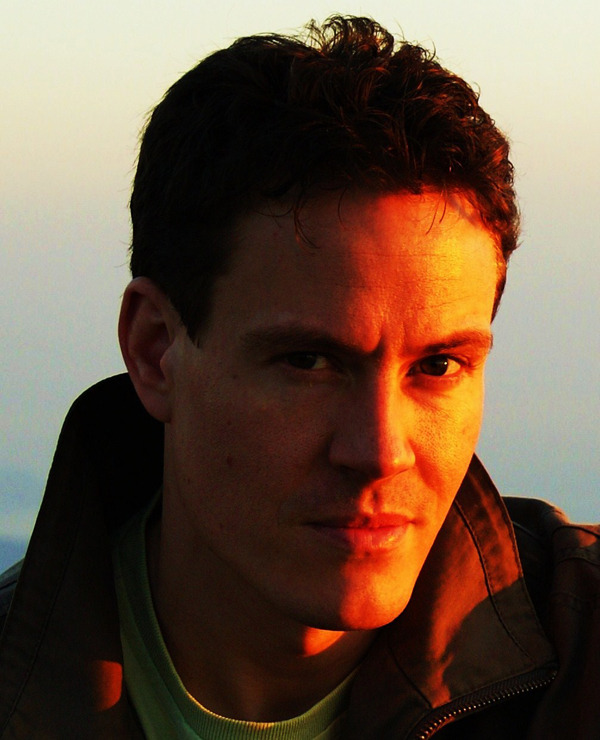 1Q: Tell us a little about the origins of THE DEAD, from concept to financing.
The original concept for The Dead has been brewing for more than 20 years. My brother Jon and I had started making short films on Super8mm not long after my 13th birthday – doing our best to hone our skills and inspired by Romero’s incredible ‘Dawn of the Dead’ which had a huge impact on us, alongside other inspirations outside of the horror genre, we simply wanted to make the Zombie movie we always wanted to see. One that would take place on a journey in a strange land – a survival story. We just didn’t know yet that Africa would be the location to draw us in…
Twenty odd years later we had never made ‘that zombie film’. The time hadn’t been right and since then I had directed, and Jon had been the Director of Photography on well over 100 TV commercials, shooting for every kind of product you could think of from Guinness to condoms to mobile phones ads… We were flying round the world shooting for large corporations and suddenly it dawned on us that we had ‘sold out’ as we thought we would never do.
Then Jon mentioned the zombie film again and I felt the fire light inside… We had been to parts of Africa a few times to shoot commercials and had seen some real potential, so once we had agreed we would do the movie in Africa I felt we had something a little different and worth risking a successful career over! At first I thought I was going to finance the whole movie but starting with my accountant Amir (now the executive producer) I realised there might be some interest in our crazy adventure as he agreed to match my finance dollar-for-dollar. So I closed the production company doors and off we trekked to West Africa to resurrected our zombies!
2Q: Zombie films are becoming very popular on the big screen these days, and horror films are always popular at Cinequest. How is THE DEAD different from the average zombie film?
It doesn’t matter if you like horror films or not. Or Zombie films either for that matter. I know for certain that ‘The Dead’ is different from every other film out there as it takes place on a journey across locations that you will have never seen before. The cast and crew literally nearly died to get this film in the can shooting in places across rural Africa never featured in movies before including villages that prior to our arrival had not been visited by anyone from the western world, let alone as a setting for a survival zombie road movie… Audiences can definitely expect to be taken on rollercoaster of a journey across beautiful lands with a good few scares on the way, but I truly hope that people who join us on this strange journey will feel it in their heart as well as the head… I want people to feel a strange mix of beauty and tragedy and even to contemplate their own lives on the way…
3Q: What was your best and/or worst experience while making THE DEAD?
Ok, lets get the worst experiences out of the way. How much time do you have? Because I could talk to you for days about the horrific time we experienced making ‘The Dead’ and even then we’d only scratch the surface…Firstly, it took 5 weeks to get our equipment into West Africa, and out of the port regardless of how much cash we seemed to part with each day! Bear in mind this is 5 weeks of an intended 6 week schedule with no equipment whatsoever – with an entire cast & crew waiting in hotels that our already tight budget had to shell out for and every day we would return from the port empty handed and much lighter in the pocket. When we did finally get the kit out and started shooting, I was mugged at knifepoint in the local city centre and all my cards, the cash-float for the crew and both my UK & local phones, cards etc taken. Soon after, we were held up by armed police with AK47’s to be taken to jail for driving one of the crew vehicles without the driving licence that had been taken during the mugging!! Luckily we were able to buy our way out of this and also the numerous times we were stopped by armed police throughout the rest of the production – I quite literally developed a bad arm from handing over cash. I am not joking. As if this and the general challenges of the shoot were not enough to deal with, soon after we got rolling, Rob Freeman our fantastic lead actor collapsed with Malaria and put on a drip. He apparently would have been dead within 2-3 days so remained on a drip in a loal Mosquito infested hospital for a further 2 weeks. Add this to the 5 weeks of no equipment and you can imagine the fun we were having…. On top of this, the entire crew were getting ill constantly and my brother Jon and I would have director/DOP type discussions in between bouts of projectile vomiting. Not surprising because we were encountering a lot of real death such as a village hut that features in the film which had pots containing the remains of dead villagers. I remember shooting a low angle shot there and having cockroaches crawling up my legs and nearly reaching places you just don’t want them to reach! These are just the highlights but I’ll reveal more gruesome details in the Q&A at Cinequest for those that come to see it.
Quite honestly the best experience was getting the heck out of there alive! Also, for all the difficulties we faced, the ordinary folk in the villages we encountered were so lovely. Ok, they might slaughter an animal to celebrate our arrival on location (which I’d have to pay for) but that aside, we were filming in and around their homes, their lives and I’ll forever be grateful for them allowing us to come into their world with our crazy concept and for their involvement in ‘The Dead’. Most of these people had never seen cameras before – they didn’t even have electricity which is why when we set a light up and night powered by our generator, hundreds of people would gather from far and wide just to huddle underneath. They had never seen their village lit up at night. Yet all of a sudden they were cast as background extras – zombies or survivors and they really tried their best – it was a surreal experience for them and us. It was an honour to be in a unique position to get cash and supplies to these people as they really needed it and we left after the shoot with a smile and a wave. It was very humbling.
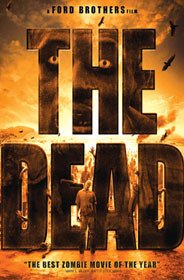 4Q: Festival audiences often have to make hard decisions about what to see, and the catalog descriptions sometimes run together. In your own words, why should people see your film?
Firstly, I want to say that if you just want a straight horror/slasher or a ‘shoot-em-up’ full of funny ‘one liners’ or wall-to-wall action, or you are just interested in seeing blood, guts n gore and not engaging the mind or heart, then you should NOT come and see ‘The Dead’… Yes it’s got some plenty of flesh eating zombies but its about so many other things. It’s a journey and you’ll need an open mind as its going to take you somewhere very different…
5Q: The current market for independent films is fractured, to put it lightly, and existing distribution models grow more ineffective with each passing moment. What are your hopes or plans for distribution?
Yes, the state of the world is sad in so many ways right now and so many markets are not what they used to be; For ‘The Dead’, having had such a tough time making it, my brother Jon and I swore we’d rather shelve the movie than give it away for peanuts and we didn’t trek across Africa shooting in never-before-seen locations lugging 35mm cameras through sweat and African dust just see ‘The Dead’ go straight to DVD either. As a result we have turned down SO many ‘deals’ I think we damn near gave our agents a coronary… Luckily some great distributors have filtered through to share the passion for our unusual movie and it’s now going to hit the big screen in numerous countries including US & UK in the next few months. So, I want to thank everyone who shows up and parts with their hard-earned cash to see ‘The Dead’ and supports independent movies, as without that, it will be dead for sure!!
In the meantime you can see behind the scenes snippets from the shoot in Africa and a trailer at www.thedead-movie.com
Happily, THE DEAD is now available on Netflix and DVD. Don’t miss it, it’s GREAT!
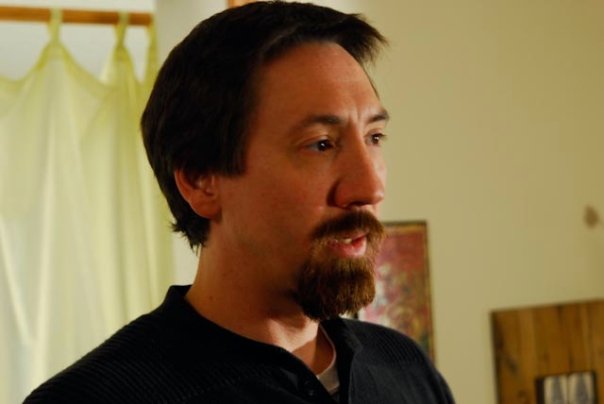 1Q: Tell us a little about the origins of MARROW, from concept to financing.
I try to think of stories that I would tell if I was on my death bed and I had only time for one last story. What would I tell someone I loved? What story would I leave them with to remember me by?
I also feel compelled to take on tough material. What am I most afraid of? What am I most embarrassed by? What would conventional, socially-disciplined people sweep under the rug and never talk about? I think the artist’s job is to lift up the rug and expose the deepest darkest secrets, regrets, embarrassments– and try to make some sense out them. I had a son when I was 22 and my father died when I was 30. When I wrote this script I thought that those two experiences really defined who I was. The overwhelming sadness I felt after my father’s gruesome death had an adverse affect on my ability to be a good parent. I saw the world through a veil of grief and it affected how I interpreted the world. I had trouble being logical because I was in so much pain. That’s what this film is about.
2Q: I hate to take the focus off your film for a moment, but the public wants to know: You work on Hoarders – What is your most memorable moment working on that show?
I love hoarders and hoarders love me! It’s such a great show and it’s really fun to be part of a talented team. When I field produce, it’s like going into battle, so there’s incredible camaraderie. We have an absolute blast. My personal favorite “Hoarders” episode is Al from Hammond, Indiana. Dumpster diving Al (“I’m like a squirrel in a bag of nuts!”) was hilarious throughout the show, but then it ended in tragedy when he couldn’t get his kid back. The Bunny Hoarder and the Rat Hoarder episodes are also really great— you can see all the episodes on A&E’s website.
3Q: Back to your film! What was your best and/or worst experience while making MARROW?
Watching Frances (Hearn) surprise me every day of the shoot. She is such a brave actress and pushed it further than I ever imagined. She made everyone around her better and she took risks that I don’t think many famous actresses would have had the freedom to take.
It was also a really special experience to get to work with my son Wiley on the film. A lot of Dad’s and 17 year olds are strangers in the night and don’t talk much, let alone analyze complex behaviors together. It was really fun to step outside the father/son role and into a role of collaborators. We rehearsed on weekends for about a year, slowly revising the script to tailor to Frances and Wiley’s skill sets. You can ask him what he thought, but I felt like during those rehearsals and the shoot, we got along better than ever. It was a big big risk, but the blend of fact and fiction makes for a really interesting film I think.
Worst thing– 22 years ago, when I was a teenager, a friend and I named the company Sisyphus Productions. So now whenever anyone gets sick on set, they say, “I got Sisyphus!” Hilarious. Plus I’m sick of spelling it for people
4Q: Festival audiences often have to make hard decisions about what to see, and the catalog descriptions sometimes run together. In your own words, why should people see your film?
Even though we had a small budget, I tried to make a brilliant film. I think the result is a film with some incredible highs, real cinematic surprises, and great emotional payoff. It’s not a perfect film– it’s a little rough around the edges, like a garage band. But if you can look around our small budget, I think you’ll see a few things that will stick with you.
5Q: The current market for independent films is fractured, to put it lightly, and existing distribution models grow more ineffective with each passing moment. What are your hopes or plans for distribution?
MARROW was funded with 2 grants from 4Culture, 2 from Artist Trust, and 1 from Seattle Mayor’s Office of Arts and Cultural Affairs. We had a few small investments from really great patrons who believed in the project and understood what kind of film we were going to make. We just want to play it as much as possible, find the people who like it, have fun, and make back as much money as possible so that I can re-borrow it and make another movie! Incidentally, the next film I make is going to be super-commercial.
Cinequest 2011
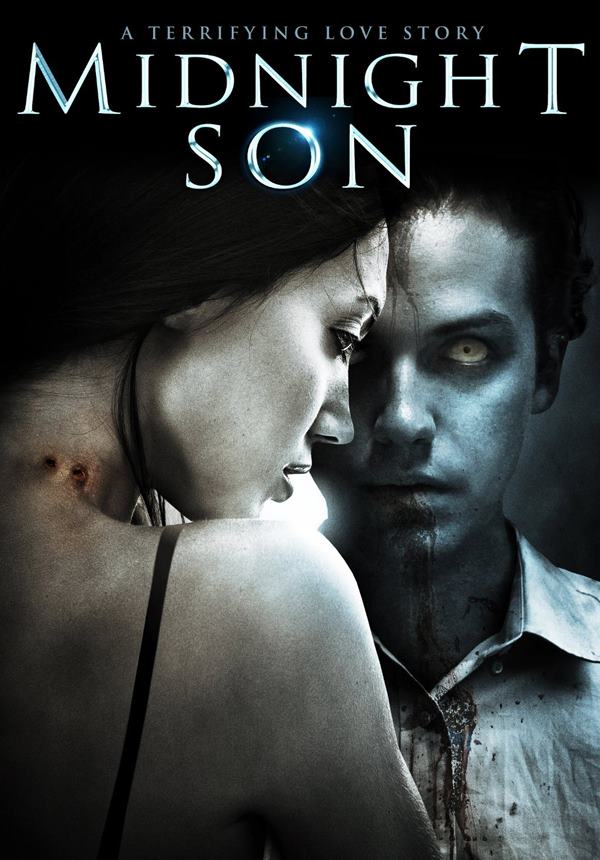 If gorgeous horror is your thing, MIDNIGHT SON is about as beautiful as you get, vampire story or not. This film follows Jacob, a young man with a skin disease which prevents him from going out in the sun, and as he gets older he also develops an insatiable thirst for blood. I don’t think the word “vampire” is ever actually used, and that is appropriate because the film is less about vampires and more about the psychological, mental and emotional effects this problem has on Jacob as he realizes what he must do in order to live. Although I doubt I’ll ever look at a Starbucks cup the same way again, the film is extraordinarily beautiful, with a final scene that is both horrific and amazingly gorgeous at the same time – you will not easily forget this film.
And I highly recommend you see it, available now on Netflix, DVD and Instant Video.
Cinequest 2011
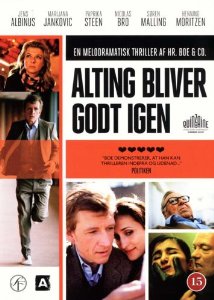
EVERYTHING WILL BE FINE: I’m not even going to TRY to explain this film, but I give it a qualified 4 out of 5 stars. It’s a conspiracy thriller that has a million twists and turns, involves political intrigue, war atrocities, filmmaking (of all things!!), adoption, and a love story. It also had a great set of opening credits. Unfortunately, exhaustion from previous night’s festivities caught up to me during the film, and I started dozing in and out for a bit. There were so many twists, turns, and questions that when I finally woke myself up I wanted to leave early because there was no way I’d catch up at that point. But the exit door was across the theater, so I stayed in my seat. Luckily, some answers started coming soon, and finally a whole lot is explained at the end. I give it 4 out of 5 because I liked the surprising ending, and I liked that I was totally stumped throughout the film. But some audience members who stayed awake were not so happy about being totally confused. Still, I say take a chance – but make sure you’re awake enough to pay attention!!
This film not yet available on US-format DVD.
Cinequest 2011

POLIGAMY: A harmless, cute little comedy about a man who is a bit hesitant about his girlfriend Lilla’s pregnancy. Soon after she gets pregnant he starts waking up to different women in his bed… only they all claim to be his girlfriend Lilla, and his best friend keeps confirming this is true. What is going on? Well, he soon figures out how to enjoy this little “problem” he has, until he realizes that he sort of misses the original Lilla. I give it 3+ out of 5 stars, only because there’s nothing terribly groundbreaking. But I did thoroughly enjoy myself, Sándor Csányi is quite charming as the confused András, and there is a bevy of beautiful women. If you’re looking for a well-made light comedy, this is it.
This film is not yet available on US-format DVD.
Cinequest 2011
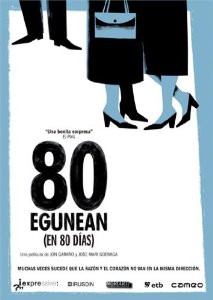 80 DAYS: FIVE STARS. This film is beautiful, poignant, heartbreaking, romantic, and awesome. If the three stars – Itziar Aizpuru (Axun), José Ramón Argoitia (Juan Mari), and Mariasun Pagoaga (Maite) – had been there at film end I am confident they would have received a standing ovation. Axun and Maite knew each other as young school girls, and had developed a close bond. But after having no contact for 50 years they suddenly meet again while visiting others in the same hospital. Maite has lived her life knowing she was a lesbian, but Axun had been married from a young age and had never considered anything else. As the feelings develop between them, it is poor Juan Mari, the husband, who will have to deal with the consequences. It was a very touching film, and should appeal to LGBTQ or straight, men or women, young or old, almost anyone can relate to something in the film. I loved it.
Film not yet available on US-format DVD.
The Documentaries are usually my favorite group of shorts at Cinequest. There were only five films in the program this year and I did love three of them, but I really hated two of them.
It started off with PERFECT WORLD, which set me off right away. Several students in an alternative school in England are asked about their version of a perfect world, and so the entire film is shots of them saying “In a perfect world…” or “A perfect world would be…” The students themselves have some disabilities such as learning problems and ADHD, so this would seem to be a great idea and it is, but it’s been DONE BEFORE. And better. It’s not an original idea, and in this case, there were no inspiring, charming, thought provoking or insightful answers from the children. I found it to be tedious and frustratingly boring.
NOTES ON THE OTHER I loved, and many others in the audience did as well. It switches between the story of Ernest Hemingway seeing an injured man on the street in Pamplona, to the story of the injured man and his still living son, and then to a group of men in Key West, Florida, who meet every year to choose the new authentic Hemingway “look-alike”. I enjoyed hearing bits about Hemingway’s life, but what struck me the most was the film about the son who still lives in Pamplona and runs the family business. Every year during the running of the bulls he shuts up the business, opens a hole in the door, and sits behind it photographing the race. The film documents him sitting behind that hole with his camera, and when the bulls and men begin running past the viewer is instantly put into the middle of this exciting event. I have never felt so close to the running of the bulls before, and it was both exhilarating and terrifying at the same time.
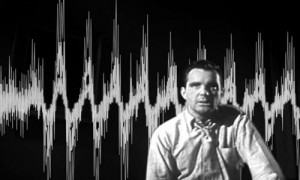 CLANDESTINE is a narrative about the filmmaker’s father who is a shortwave hobbyist, but intertwined with a documentary about the encrypted messages used by spies, and the history of what happened to some of these spies. It’s a 30 minute film and I found it to be fascinating and well told. I like when documentaries teach us something, and this doc was quite interesting.
UNDERTOW EYES was a strain for me to get through. It is about a couple named Vera and Gabriel who are around 80 years old now, and they narrate the life they have lived together since meeting when Vera was age 15. It is a beautiful film with colorful images of Vera and Gabriel now, mixed with photos and film of their lives since they were children. The problem here is there is no real conflict in this story. A few parts were interesting, but for the most part I wish some conflict had been introduced to make the story more fascinating than that of any of our own parents or grandparents. Vera and Gabriel met, got married, had many children, not a lot of money, and now they are old and happy together. The End.
HOW GREEN WAS OUR VALLEY is the story of a small village in Iran whose tenants are warned that an incoming flood from the new hydroelectric dam is about to destroy their village. The villagers refuse to leave because they do not believe their saint, whose bones are buried in a temple in the village, will let harm come to them. Of course this saint has no control over civilization’s progress in this case and they are indeed flooded. They are now faced with finding a new home, but more importantly, moving the bones of their saint. It is heartbreaking to watch and was a powerful ending to the entire shorts program.
Those films which are linked here have trailers where you can view at least a part of the films. Unfortunately I could not locate them all.
Cinequest 2010
Writer/Director Alejandro Adams returned to Cinequest for the third year in a row to astound the SJ Repertory Theater audience with the World Premiere of his film BABNIK. After last year’s controversial CANARY, many in the audience last night were not sure what to expect from Adams third film, but BABNIK is a perfect blend of suspense and Adams’s trademark confusion. BABNIK is a winner.
Adams has a great gift for infusing an intense amount of drama and fear into one simple, dialog-free shot. The closing scene of CANARY was one example of this, but in BABNIK he has given us a film chockfull of these scenes, keeping the audience on edge until the final excitement filled conclusion. If you have a preconceived idea of what Alejandro’s third film will be like, you will be taken by surprise with BABNIK.
The film is ostensibly about Russian sex traffickers, however it really focuses on one particular character who has been laid off, has no insurance, and owes a great deal of money. You see, the economy has made it difficult even for these criminals. Our main character also has no real penchant for being a tough Russian gangster, so there are frustrations between him and his employers as they try to give him training in kidnapping so he can repay his debt to them. Meanwhile we watch as the bad guys give the most simple yet terrifyingly creepy instructions to the young girls who have come for what they believe is a modeling session, and we watch and wonder what is going on with other females in the movie who appear to be well aware of the business that supports them.
The film is quietly terrifying and many scenes are overlain with an intense sound somewhat like a heartbeat which gives the viewer a feeling of horrifying dread of what is to come. The sinister Russian characters make the viewer very uncomfortable as you watch them trying to be gentle and supportive of the new girls. And yet there is also a lot of humor in this movie, and the audience laughed several times.
Adams likes to leave as much as possible up to the imagination of the viewer, and he walks a perfect line with this film. Instead of leaving the audience scratching their heads in confusion and frustration, in BABNIK he gives the audience just enough information that we can follow along and yet still draw our own conclusions. After 75 minutes of quiet terror the film suddenly shifts into high gear and hurtles the viewer through its action packed final scene.
Alejandro and his cast were there for an engaging Q&A after the film, and everyone was extremely charismatic and charming. There was much excitement and relief in the Repertory Theatre last night as the film turned out to be not 90 minutes of drawn out confusion (as with CANARY, for some) but instead an intense and enjoyable crowd-pleaser. Although Adams seems to take pride in making very complex, thought provoking films which are not suited for the average film viewer, this time he has turned in a complex, thought provoking film which anyone can enjoy. I am very confident in recommending this film, in fact I whole heartedly urge you to put it on your must-see list.
 1Q: Tell us a little about the origins of SUPER HERO PARTY CLOWN, from concept to financing.
SHPC was born out of my desire to tell a comic book-inspired story on an indie budget. The content is ripe with potential for dynamic visual storytelling and is inherently dramatic. I knew that choosing SHPC as my first attempted feature would give me plenty of opportunities to display my range as a director both visually and emotionally.
I grew up reading comic books, so the conventions of the genre speak to me very clearly. Concepts like duality, sense of purpose, conflicts between responsibility and personal desire, and knowing what’s right or wrong are easy to manipulate and relate to in a comic book setting. I think everyone struggles to balance certain aspects of their life; in SHPC, main character Eugene must reconcile the two halves of his personality – one with a clear notion of his duty as a pretend superhero (his “Arachnid-Man” persona), and the other his willingness to give or do anything to be with Emily, his love.
The film started as a short somewhere in the vicinity of four years ago now. I had a clear plan to use the completed short to market my feature-length script (at the time it was already in the works) to Barnaby Dallas. Completing the short wound up not playing too big of a role in the SJSU film department’s ultimate decision to green light the feature, but it helped me shape the concept. The feature script made the rounds at a few festivals; it was a finalist at the CSU Media Arts Festival and it won second place at the Broadcast Education Association’s international screenplay competition. By then the script was vetted enough for Barnaby and Spartan Film Studios to want to produce, particularly since the bulk of the rewriting that would shape the shooting script happened in Barnaby’s screenwriting class (which I took for a second time to ensure that he would have to read the script).
The only remaining step was financing. The bulk of the budget was provided by my brother and business partner Wes Nelson, executive producer on SHPC. The rest I raised privately, with the second largest contribution coming from Bill Marshak, the editor of the Tri-City Voice Newspaper – a publication in my home town of Fremont that I used to write movie reviews for. Once we were a few weeks into production, the grandfather of one of our young actors (James Dean, who plays Walter) offered us some additional budget because he was impressed with the production and my treatment of James.
I guess the last big hole to come together was casting. I knew from the beginning that I wanted Shelby Barnes for Emily. We had worked together before and she played the role back when we did the short. Fan-favorite Garth was cast fairly early as well. Zach Sutherland and I came through the SJSU film program together and had agreed to work on each others’ features (he went on to direct Cheap Fun, which I produced – in the festival this year as a rough cut). Pretty early on, when discussing what his involvement would be, Zach requested to play Garth and it immediately clicked for me. The villain Todd took a few rounds of casting, but once Adam Sessa came in I knew it would be him. He had the depth I was looking for and a sincerity behind even his jerkiest lines. Probably the most pivotal is the fact that he looks like Superman – which is who Todd’s alter ego Captain Tremendous is modeled after. Thanks to Adam, Todd feels motivated rather than just being a jerk for the sake of being a jerk. Lastly was casting Eugene. I saw a lot of Eugenes in casting – a lot of GOOD Eugenes. But I couldn’t help but think that there was a quality I just wasn’t seeing.
Only a few weeks out from production it struck me to call someone who I hadn’t seen or heard from in four years. In high school, I saw Randy Blair in a school production of Brighton Beach Memoirs. Randy and I had a passing friendship, and I remember shaking his hand after his incredible performance and saying “I’m going to work with you some day.” So I looked him up on Facebook and found out he was in New York pursuing an acting career. I called him up and asked if he’d come home to read for an indie feature and he said sure. When Randy came and read with Zach, Shelby, Adam and the already-cast Cynthia Abrams (who plays shop owner Marcy) it clicked. I realized then what the quality was that had been missing. In the original script, Eugene is kind of a quirky, jokey Napoleon Dynamite lite. Randy read each line like a real person, and over a few days of reading with the other actors just breathed life into the character and readjusted my entire approach. Eugene wasn’t there to be funny or off beat, I would leave that to Garth – Eugene was the emotional core of the entire experience, and Randy embodied that completely.
2Q: You screened a preview of the film at last year’s Cinequest, and are now presenting it in its final form. How helpful was the input you received the last time around, and how much of an influence did it have on your final cut? Read more…
 Popcorn and Vodka