Cinequest 2010
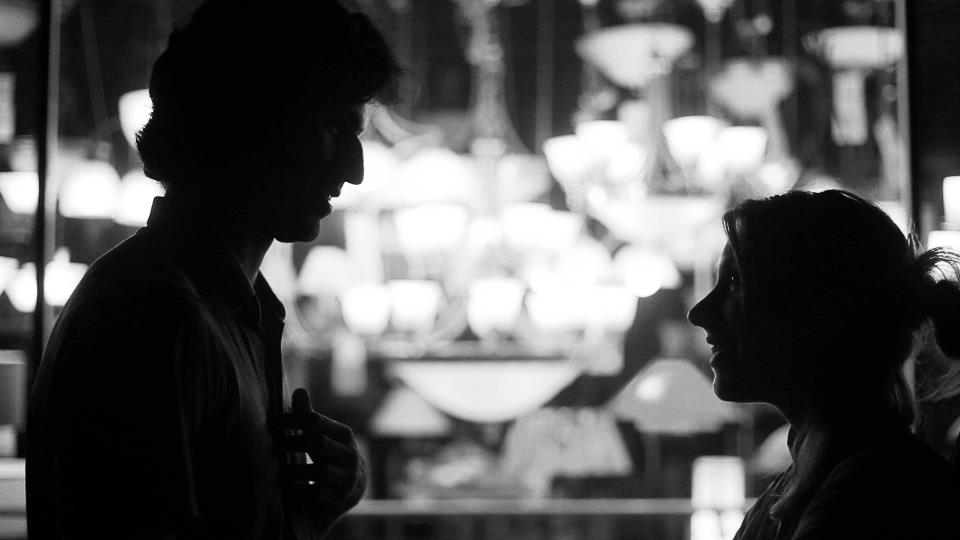
Completely filmed in black and white, BUMMER SUMMER is a beautifully shot film. I can’t say this enough. Every single scene was brightly lit and interesting and any frame could be used as a terrific advertising still for the film. There were scenes in this film that just took me unaware: a boy and girl filmed only from their mouths down making out in the back seat of a car, or a girl just running down the path in a sundress and boots. This is a black and white indie film, but it’s no Clerks… whether a shot of a couple sitting on the grass in the park, out on the porch at night, or waking across a bridge in the dark, every scene is beautifully lit and amazingly gorgeous.
The film is shot with a video DSLR camera, and though this means nothing to me, it has meant a whole lot of fantastic to my techie and photographer friends. I wish I knew if this type of camera was the reason for the beauty of the film, but unfortunately I am not that technically inclined. However, this is hands down the most gorgeous black and white film I have ever seen. If you are interested in this type of thing, you definitely need to see this film.
The amount of love I have for the appearance of this film cannot be overstated. The feelings I have for the film itself however are a bit more subdued. The main issue for me is that it is very slow. I’m going to issue a couple caveats to my opinion: 1) it is hard for me to pay attention to slower films when I watch them at home (I was given a screener) and 2) Morgan from Cinequesting liked it much more than I did and I respect his opinion.
So I’m not going to pan this movie – Very unlike me, right? But there was plenty about this film that I DID like and nothing at all that I hated. The story itself just did not hold my attention. I am going to recommend that you DO give it a try. You will be visually rewarded throughout the film and you just might enjoy the story too.
My interview with Director/Writer Zach Weintraub.
Now available on Amazon Instant Video.
Cinequest 2010

The following review is written by a person who neither knows nor cares about fast cars (or slow cars, or vehicles in general). So keep that in mind.
That said, I am not really sure what to say about LOW LIGHTS. I think I kind of liked it, even though I mostly hated it until the halfway point.
Twenty minutes in, my first note says “I have no idea what’s going on.” And it was true, there were two men who just seemed to be chatting ABOUT NOTHING, and they were driving around. Chatting. About nothing. And then there was a woman who did not speak AT ALL and kind of just hung around the gas station snack shop until she got picked up by some young punks in one of those (lame) cars with the (really stupid) doors that raise up to open. Oh sorry, did I say that in my out loud voice?
So then they were all driving around. And around and around. And they ran out of gas a LOT so they would drive to the gas station and fill up again – excuse me, they went to the gas station and put in a gallon of gas or less, because they were right BACK at the gas station just a few minutes later.
My twitter review said the following: “LOW LIGHTS: 5% pretty girl getting ogled, 10% driving around, 85% hanging out at various gas stations. NO JOKE”
 So what finally turned it around on me? The girl steals cars. In the most boring fashion ever, like there were no car chases or anything, she just kind of drives off smiling at the cars’ owners. Who mostly just stand there watching her. It was sort of funny the first time, but when she stole the second car my notes read: “She TOLD YOU SHE STEALS CARS!!!” With the unsaid “dumbass” to be implied.
And then the end brings about the twist, which I totally should have seen and understood in the beginning but which went right over my head because the beginning was so damn slow I had forgotten this one detail. I liked the twist, and I liked the end. I’m not sure whether I recommend the movie.
When it ended the theater manager came in and asked what I thought. I just shook my head “no” as I wasn’t sure how to reply yet. “The first woman out of the theater said she hated it,” the manager said.
So there you have it. It may be a girl/boy thing. It may be a car thing. Or maybe the movie just really was bad. I’m not sure. I think I enjoyed it, but I don’t think I recommend it.
Unfortunately I cannot find this video anywhere for you to watch yourself.
Cinequest 2010

RASPBERRY MAGIC is described as a “family drama” in the Cinequest program, and it certainly is a film to which you could take your preteens. I am just not sure adults will appreciate this film on their own.
It is a very well made film, with the darling Lily Javaherpour playing Monica, the very intelligent oldest child of two parents who can’t seem to get their acts together. Monica’s father loses his job and is trying to sell a children’s educational video that does not include a fun factor. Monica’s mother is having her own problems as a freelance writer and takes to bed after her unemployed husband leaves the family. This leaves 11 year old Monica to care for the home and her younger sister all by herself.
The story revolves around a science project that Monica has entered into a contest. She is raising raspberry plants and experimenting with the results of touch on the leaves. Her main competitor is a boy who created a robot that can read emotions. Monica believes that if she can win the science fair then her family could be brought back together.
Unfortunately, this film plays out as it would on the ABC Family Channel. Yes, it is a good film, it is beautiful and very well acted by both adults and children. It is not, however, a film I would have paid to see unless I was taking young teens with me. I am not quite sure there was even a lesson of any real value in this film, other than parents can act more immature than children when they are having problems. Lily Javaherpour is lovely, the story is all wrapped up nicely (if improbably) in the end, and preteens will love it. But it is a little too predictable for me as an adult, and I am not sure what place this has at a film festival vs. Nickelodeon television.
I would recommend this for adults looking for feel-good film and who also love watching family-style movies, and I would recommend taking any preteens with you. It might be a great introduction to film festivals for the younger set; however adults may wish they had chosen something with a bit more substance.
Cinequest 2010

THE TIJUANA PROJECT is a heart breaking documentary about the garbage dump villages in Tijuana and the children who live in them. It is the story of the families who live near and around the huge trash dumps, and who scour the garbage for treasures which can then be sold or turned in for money. The film focuses on the children, and their laughter and game play is a strange juxtaposition against the hopelessness and despair of their life’s backdrop.
The Cinequest program claims the film is “NOT a story of despair and hopelessness,” but I am not sure I agree with this. Methamphetamines and heroin are huge problems for the adult males in this village. Crime is so bad that the local police will not enter the town cemetery to fight the drug dealers who do business there. “This is a woman who lives in the ground,” says one of the children, pointing casually to a woman who is quite literally sitting INSIDE the trash in the dump. The boy runs away laughing as she throws something at him. Another man tells the story of his brother who was shot several times in the cemetery. Somehow he was lucky enough to get help. “God saved him,” says the man as the camera pans over to his brother… who clearly did not get away scot free and has one eye missing or rolled back into his head. I believe it could be debated whether God did this man a favor.
So while I see that the kids are full of laughter and grow up happily playing games amidst the trash in the dump, I don’t really see where their future lies. Is this what they have to look forward to? A nun who works with them explains that the families don’t understand the importance of higher education, but I don’t understand how the kids are supposed to obtain this higher education. There is a positive side in the film when a children’s theater group is organized and all the kids are encouraged to participate in the group and the parade it puts on. But there is also a downside when it is discovered that the dump is going to be moved to make room for construction, thereby removing one of the only dependable sources of income for these families.
For me, the lack of any concrete future removed any hope that I had for these children. It is still an excellent film, and I was able to obtain a really informative interview with documentarian John Sheedy. The film also promotes ResponsibilityOnline, an organization devoted to collecting money for the education of these children. This organization can supply hope, and if this film brings more attention to the problem – thereby collecting funds to end the problem – THEN I can say that this is “not a story of despair and hopelessness.” I do, regardless, recommend this film highly.
Now available on Instant Video, or visit the website to see how you can help.
 1Q: Tell us a little about the origins of THE TIJUANA PROJECT, from concept to financing.
The concept for The Tijuana Project was shared with me by Victor Villaseñor, author of Rain of Gold. I was looking for a story of hope about kids living and surviving in an inhospitable place and he told me about the kids in the Tijuana garbage dump and a school that was built for them right next to the dump. I only had $1,000 to start with, but after seeing the apocalyptic environment where these kids and their families lived and worked I knew I had to do the film.
2Q: What were the reasons for picking the specific children who you focused on? Do you know their current status in Tijuana?
I knew that I had to profile a group of kids to make the film more personal and these kids actually found me. I was filming in the dump my second day and ten year old Juan Pedro started following me because he thought I might have pizza. We goofed off and played with the camera and he ultimately invited myself and my crew back to the shack where his family lives. I loved the energy of Juan Pedro and his brothers, sisters, and cousins and chose them to profile. I also liked that fact that his mom, Valentina is such a hard worker in the dump with a positive attitude. I have stayed in touch with Valentina, Juan Pedro and the other kids and we talk every month. Juan Pedro is doing well in school and joined a soccer team. His cousin Reyna is now almost 15 and wants us to help her throw a quinceañera party.
3Q: What was your best and/or worst experience while making
THE TIJUANA PROJECT?
My best experience on the project was working with Valentina in the dump on a sunny fall day with the ground shaking like jello underneath everytime a dump truck passed. I helped her carry her bags and she got excited every time she found a treasure in the garbage. Then a truck showed up and dumped a load of fresh watermelons. We all ran and broke open the watermelons to eat together.
My worst experience is when my car was stolen out of the dump neighborhood. I was picking up Valentina and in the five minutes it took me to run down to her shack, someone broke in and hot wired my car escaping with everything in it including my cameras. We had to walk back across the border in the rain empty handed. My friends in the dump neighborhood came together to find out who stole the car, but unfortunately he had already sold it to the car crusher for $200 worth of metal.
4Q: Festival audiences often have to make hard decisions about what to see, and the catalog descriptions sometimes run together. In your own words, why should people see your film?
People should see my film because, although it addresses some very hard and depressing global themes, it shows hope and presents answers in a fun way with cool kids.
5Q: The current market for independent films is fractured, to put it lightly, and existing distribution models grow more ineffective with each passing moment. What are your hopes or plans for distribution?
We hope to get lucky and sell the film.
Our favorite director Alejandro Adams has been filming two movies at the same time. We have already told you about Amity, but he was also shooting Child of God. The final scenes were shot on Saturday, and the Metblogs crew, as well as many others, were invited to be extras on set. So what was it like to be an extra on a film set? Many in the group had expected it to be boring, but instead it was a pretty pleasant and interesting experience. The request for extras was put out by Adams through Facebook, Twitter, and word of mouth. We were requested to wear church clothing and to show up at the Foxworthy Baptist Church around 3:30pm with as many friends as we could bring. Among the group who showed up were part time actors; students and one teacher from Milpitas and Evergreen Valley high schools; Joann Landers, Gary Wiens and yours truly from Metblogs; some Cinequest fans; and even some people who had heard the call through Metblogs. There was definitely a wide range of people there.
 Our first job was to sit in the church sanctuary pretending to be the congregation while two actresses, Jennie Floyd and Marya Murphy, sang some hymns and read church announcements. This was a very easy job to perform while they shot it over and over from different angles. I’m not going to lie, it was HOT outside and we were all happy to just be sitting in the air conditioned church. Some of us agreed later that after a few takes we sort of were paying about as much attention as one usually does during church announcements and hymns, so our vaguely pleasant but bored looks should come off as very realistic (heh).
Next they asked to film us entering the church. This took several tries as we all sort of single file walked quickly through the church doors and into our seats, as if we had all been outside the church chanting “Open-Open-Open” and couldn’t wait to get in. Adams and crewmember Ali Allie patiently asked us to please walk slower and in smaller groups, and eventually we got it.
Walking around outside the church was the next scene. We were put into groups and stood in different spots on the grounds; Allie would say “Action!” and each group was asked to walk to a different spot. These scenes were harder to get through as the temperature was far into the 90s that afternoon and we were sweating up a storm. At least most of us women were wearing dresses, but most of the men had long sleeved shirts, some with jackets. My group also had to walk up several stairs to a dead end balcony about three times; a friend I had brought complained that I had not told her she would be doing cardio work! But we all survived.
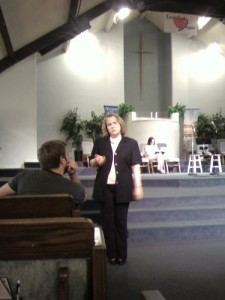 At different points during the day we were let into the Fellowship Hall where there was a bounty of snacks and drinks set out for the crew and extras. I noticed the teens especially were thrilled with all the chips, granola bars and sweets available; the adults were mostly interested in the cold water, juice and soda. All in all it was a very relaxing few hours we spent at the church and we were well taken care of. Alejandro Adams was polite and soft-spoken as usual, and the crew was professional and did their jobs as quickly as possible.
When the main shooting was over Adams explained that we were able to leave, however he did need a couple extra people to shoot one final scene. Joann Landers and I were included. About six of us plus the two actresses went into a small church room where we sat down around a conference table. We had to pretend to be discussing the “sermon” we had “just heard” and then Jennie Floyd was to pipe up with a line that was completely shocking, insensitive and inappropriate. The extras just had to go silent as Marya Murphy then had to respond in a manner that was so heartbreaking I wanted to get up and give her a hug after each take. Luckily we only had to do that scene a couple times over; I don’t think any of us could take Marya’s increasingly heartrending performance.
 We were let go after that. Jennie Floyd assured me her character was not the insensitive jerk she appeared to be in that scene, and Marya has told me the movie is not depressing; I’m not sure I believe either of them, but there are certainly 20-25 people at that church who cannot wait to see this movie when it comes out! We all would like to thank Alejandro Adams for inviting us into his movie family and letting us be a part of his film. His crew are wonderful people and those he casts are always incredibly talented. We certainly wish him much success with Child of God!
Viewed Saturday, June 12 at the Niles Essanay Silent Film Museum, along with Passion Flower (review following).
Around the Bay
 If TS Eliot came back to life reincarnated as a filmmaker, he would be Alejandro Adams. This is what I wrote on my notepad halfway through this movie, and while I firmly believe this comparison, it also makes a review of his movies very difficult. How could you write a one page review of Eliot’s The Waste Land and make the average reader understand the greatness of the work? I missed this film when it played at Cinequest 2008, so I was very happy to have this second chance to see Adams’ first feature film.
Like The Waste Land, it is difficult to adequately review an Adams film without writing an entire 10 page essay. His films defy a one or two paragraph blurb; there is far too much going on, too much you have to figure out yourself. This is the beauty of his first two films; he will never tell you what is happening, and nothing will be explained to you. You are merely an observer in the film’s world and it is up to you to decide what the story is about. While this film had more of a beginning-middle-end configuration than did Canary, his second film, it is still just a section of time in the lives of these characters.
Around the Bay is a movie with four main characters: all four are protagonists of their own story, and antagonists in another. Such is real life. The four characters are all interrelated in some way: you have a father, a daughter and a son by two different ex-wives, and a girlfriend. The truth of this plot is that none of the four characters really know any of the others as they should, and they battle through the film trying, and failing, to understand each other. I could spend time explaining the intricacies of the plot, but the experience of watching the film is much more important than the details of the story.
Little snippets of scenes spliced here, there, and everywhere; some with jarring blackout cuts, some scenes and their dialogue simply overlapping each other. An unsettling puzzle of quiet scenes that ensure you will never know for sure what is coming next. Such a quiet movie with so little written dialogue, but it also contains so much noise; there is a constant stream of crickets or train noises drowning out everything else. Adams knows how to manipulate this minimalist use of sound to create a cacophony of unrest. If you took out all background sound and dialogue, and replaced it with Stravinsky’s Rite of Spring, you would still have the same experience watching this film.
Instead of written dialogue, many scenes are spent watching the characters sit silently; it is up to us to read their thoughts. This can frustrate the average moviegoer, but is also the beauty of Adams’ films; like a great poem, the viewer must interpret what is going on in the minds of the characters. This contributes to the feeling of being a voyeur into this world. At times the screen just goes silent – often when the character of the father is almost experiencing some emotion, as if he’s trying to use silence to drown it before it surfaces.
Will Alejandro ever get rich with his films? Probably not with this film, but I don’t think he cares. He is a true artist-slash-genius such as many literary authors who were never given the fame they deserved while alive. I predict his films will be taught in film school one day, but this does not mean the average viewer should forget his name. If you ever get your hands on a DVD of Around the Bay I suggest you set aside 96 minutes of quiet time to sit and observe the entire film in one viewing. When it is over you will be happy that you gave the film the attention it deserves.
I also saw the documentary film Passion Flower, by Jarrod Whaley.
 This was a beautiful film about a woman with a double mastectomy who decides to get a passion flower tattooed around the area of her scars. The woman, Ann Law, is a dancer who has decided against being fitted with prostheses or submitting to reconstructive surgery. The entire film is set in the tattoo parlor, and Ann arrives with friends while chatting happily. Throughout the film she explains her story as tattoo artist Skip Cisto proceeds with the process. We see everything from the drawing being transferred to her skin, to the coloring in of the tattoo. Cisto treats Ann and her story with great respect, almost reverence, and appears to be aware of the part he is playing in this metamorphoses. Ann even chats happily about the rain outside. She says that the rain makes her glad she’s there in the parlor, that if it were sunny she would want to be playing outside. But of course the rain is also a symbol of rebirth, and it marks the transformation of Ann from cancer survivor to a work of art. When it is over she stands up and admires with the rest of us her perfectly smooth torso that is now a canvas for the passion flower. There is no cringing or wincing from anyone on film or in the audience as she displays her bare chest, just as there is no longer any sign of a scar. Her metamorphosis into a whole woman again is complete.
Non-Indie theater: June 2009
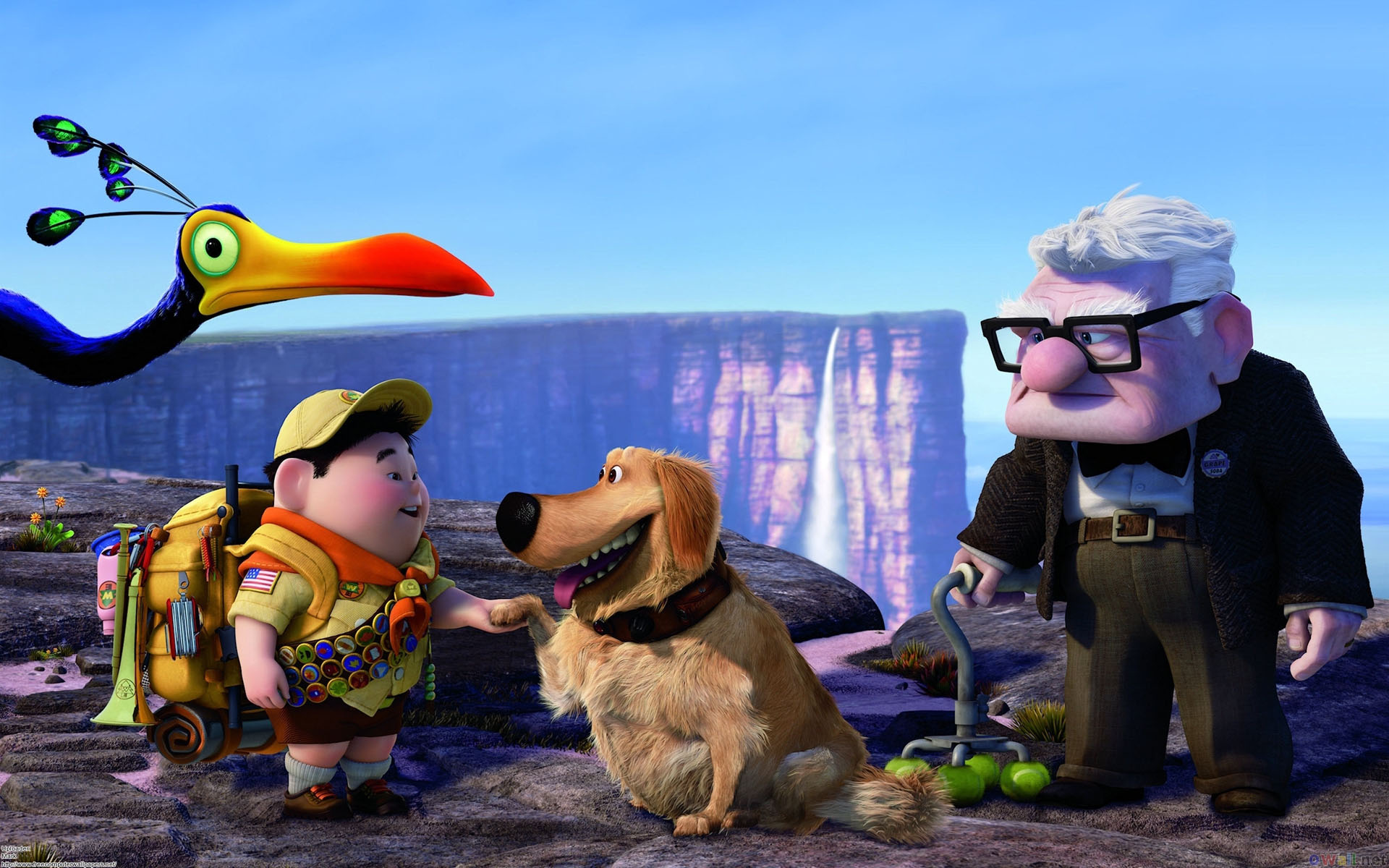
 I’m going to take a stand here and say that I, for one, do not think UP is the most amazing movie ever made. Not the best animated movie, not the best Pixar movie, not the best movie this year.
I liked it, I really did. But I’m not going to slobber all over it because it could have been better.
What I did like:
The animation was great: I loved the effects of the window reflections, though the fact that they stuck out for me may actually be a minus for animation. Still, it was beautiful. I saw it in 3D but don’t think it really added to the movie; anyone who missed 3D likely didn’t miss any experience.
The characters: When I watched the short it appeared that the old man was ornery and grouchy and was being mean to the poor little wilderness scout. I love how the movie made you instantly fall in love with the old man and made you want to drop-kick that kid across the country. Although to be fair, you end up falling in love with the kid too.
 What I didn’t like:
How they dealt with the dogs. Look, I’m all for magical realism, I’m actually a HUGE fan of magical realism. But magical realism means believing that an old man tied thousands of helium balloons to his house in one night and then flew to South America in it. Magical realism MAY even allow for a talking dog collar. Magical realism does NOT allow for dogs being able to cook dinner or fly airplanes. That is a Looney Tunes cartoon, not magical realism. There had to be a better way to drive this movie than by throwing in a hundred plane-flying gourmet meal cooking dogs – who are then reduced to stealing hot dogs off a plate instead of just making their own steak dinner back in the kitchen.
I thought the villain was terribly scary, I thought many scenes might be too scary for very young children – but as I’ve said before, kids thrive on the Scary, so the last problem with this movie is the ultra happy ending. I know this sounds wierd, but as much as I was dreading anything horrible happening to any of the main characters, I think it would have been much more emotionally cathartic to have one of them die. You have three big candidates here: the old man, Kevin or Dug. The old man’s death would have been offset by Russell growing up, Kevin’s death would have been offset by her little babies living, and Dug… well Dug would have just been sad, so we’ll nix that option.
I thought it was a great movie, especially the first half. I thought the villain was suitably scary, but I did NOT like the flying chef dogs, and I think it could have used a dose of tragedy at the end.
Of COURSE you should see it, and be careful about young, sensitive children, but I’m just not giving this 5 stars. Because it doesn’t deserve it, and if you’re honest with yourself, you’ll agree.
May 31, 2009
I met the very talented director Alejandro Adams and his brilliantly artistic wife Marya Murphy at Cinequest this year. Their second film Canary had its premiere there and had a greatly divided audience reaction. I was in the “I LOVE IT” camp and am still quite fascinated with its meaning and implications three months later. Their first film, Around the Bay, was highly regarded at a previous Cinequest and by critics everywhere, and will be showing again at the Niles Essanay Silent Film Museum on June 12. I was not able to view it at Cinequest and am quite excited to see it in June. Their third film Babnik is currently in post production.
Alejandro and Marya have kept in touch with me since the festival and I knew they were preparing to begin their fourth film, Amity. So when Marya recently asked if they could use the front of my house to shoot some scenes I jumped at the chance. I had no desire to be in the film myself, but I am a firm believer in Alejandro’s genius and was honored to be able to help. I offered to supply refreshments while they were there and just planned to stay out of the way as much as possible.
Of course, the reality of having your house in a film shoot in June means that you should finally take down the Christmas lights that are still hanging, and wash off the fake window snow (oops). Also make sure your lawn is mowed, flowers trimmed, driveway swept, porch washed and cars parked elsewhere. In addition, the cast and crew need access to a bathroom, and don’t forget you volunteered to provide snacks. It was a lot of hard, happy-to-help work getting the house prepared.

The crew arrived just before three in the afternoon on Saturday. Director/writer Alejandro Adams arrived with Production Assistant Susan Cochran and crew Sam Lopez and Ali Allie. Marya Murphy and actors Greg Cala, Michael Uimari and Peter Runyon (who also supplied the limo for the shoot) arrived a few minutes later. They immediately started setting up their equipment on the front lawn and made decisions on what else needed to be done. We moved cars away from the front of the house, we moved cars away from across the street, and we re-arranged the snack tables. Alejandro placed a chair in the middle of the lawn for a prop, and they started setting up their shots for the scene.
This is where the problems of movie making became evident. After moving all cars away from the house, including pushing a car with a dead battery out of the way, up pulled the mail carrier to the front of the house where she always parks. I ran over and asked if she could please move the truck, as we needed the area for the limo. She gave me a really irritated look, pulled the truck over across the street, and for the record, I didn’t receive any mail yesterday. Hmmm. Read more…
Cinequest 2009
 I am now officially a sucker for old people documentaries.
Gotta Dance was billed as a film about a group of senior citizens who have taken up hip-hop dancing. But it really was so much more.
It starts out with a panning shot of a line of feet, just shuffling away, not moving fast and not remotely following a beat. My first note in my book says “They’re not coordinated AT ALL. I’m not sure about this.”
My next note says, “10 minutes in and I’m going to cry off all my mascara from laughing.”
The film follows around this group of senior citizens who try out for a new New Jersey Nets dance team. But as we follow these seniors around we also get to know about their lives, and that’s what I’ve always found so incredible and satisfying about these “old people” documentaries. Fanny is an 80 year old Filipino woman who lived in the jungle with her family for two years during the war. She’s maybe four feet tall and all skin and bones, but she loves to “Boogie Woogie”. 61 year old Betsy is a kindergarten teacher who was extremely introverted but likes to dance. So she renamed herself “Betty” and talks about Betty in the third person. “Betty wants it sexy,” she says as she complains about their loose fitting costumes. Betty also brought the theater house down as she demonstrated her “sexy pole dance” for the audience.
Next note: “15 minutes in – mascara all gone.”
 While many of the seniors danced when they were younger, most had not even heard of hip-hop. But “when they started that music I was poppin, hippin, whatever!” says 60 year old Audrey. And that is exactly what they all did. Ranging in age from 60 to 83 years old, this team of twelve women and one lone man started training for their first dance routine to music they had never heard before. It was slow-going for the poor cheerleaders who had taken up this project, but they respectfully let the seniors know that they expected them to work as hard as possible to get the routine down.
Game day. All the seniors have to get their hair ready and make-up done. “I could be sexy,” says one senior, “but it takes a lot of work!! Transexuals, transvestites, why would they want to go through all this?” she complains. As the team walks through the back hallway to get to the arena they see an ambulance parked outside. “Is that for us because we’re seniors?” one of them asked.
 And finally, it’s time. The team, dressed in bright red rain slickers, takes the arena floor and the opening to “Singing in the Rain” starts. They start shuffling around like old people do and the audience claps politely. But then… “Singing in the Rain” fades out. Jay-Z fades in. The rain coats are slung off. And the team of seniors start “poppin, hippin, whatever,” to CRAZZZZY feedback from the audience. The New Jersey audience is up on their feet screaming and hollering and dancing right along with them, and when the routine was finished the theater audience broke out in spontaneous applause too.
The film continues to follow them through their five month long “15 minutes of fame” and shows them dealing with their new-found celebrity. There are Nets audience interviews that show the respect this team achieved, and interviews with happy youth dancers who got to do a routine with the seniors at the last game. It was a really FUN film, and a really inspiring film. It’s difficult to imagine your own parents hip-hop dancing out there, but really it’s difficult to even imagine ourselves out there. This team of amateurs really earns the audience’s respect, and gives everyone proof that there really is life after 60. The theater audience wildly enjoyed it, and I found it an incredible movie to watch on the last day of the festival.
Now available on DVD… Watch it!!
 Popcorn and Vodka