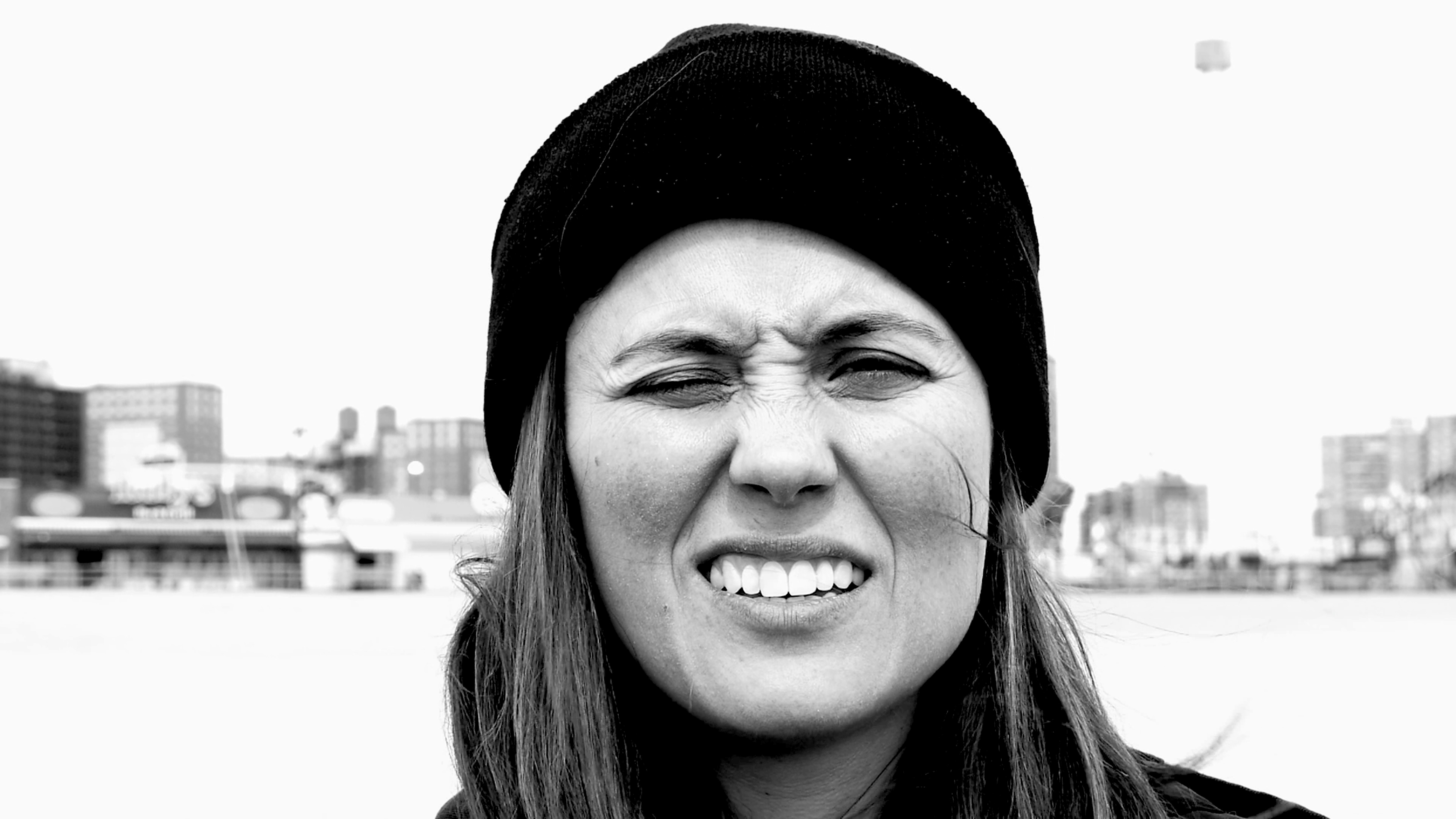
Kelly Sebastian plays Audrey in FOREVER INTO SPACE
1Q: Tell us how you became involved with Forever Into Space and how you prepared for your role.
I worked on Forever Into Space as a producer and a co-editor, but before any of that, I first got involved as an actress. While trolling New York City film acting breakdowns, I spotted a casting notice that read something like, “zero-budget indie feature film seeks actress to play an off-beat, struggling, film blogger millennial, who can also help on set.” I submitted my info and mentioned my years of work behind-the-camera and my time as a clerk at an independent video store. Then I met up with Greg, our writer/director/dp. He talked me through his precise plan to make a feature film shot in NYC with only the actors as a sort of skeleton crew and a sound man. My ears were perked, so he gave me the script to read. I fell in deep with the character of Audrey and her band of anti-heroes. I knew that guerrilla-style filming in NYC would present challenges, but my adrenaline started to bubble over at the opportunity with this script, so I jumped on-board.
Audrey’s story is made up of a series of life events that are pretty universal: money problems, roommate troubles, family conflict, the survival job, that awkward moment when a friend wants to be more than a friend. For scene prep., I would access my personal parallel experiences and influence Audrey from there. Writing out Audrey’s backstory, as well as watching films and reading books that I thought she would be drawn to, gave me tools to create her way of thinking, walking, speaking, and instill a vibration in her soul that I hope shines through her eyes on screen. Also, like Audrey, I’m a NYC transplant. I was raised in Pennsylvania and Audrey was raised in Ohio, but we were both creatives drawn to New York City with only a responsibility to try to make something of ourselves. We both also experienced that internal shift of realizing we actually “grew up” during our time living here.
2Q: Cinequest Film Festival is hosting the World Premiere of Forever Into Space. Explain to us how it feels to bring this film before audiences for the first time, and what do you think their reaction will be to your film?
I’m thrilled that Cinequest is going to be the festival to premiere Forever Into Space, as they are known for exposing emerging filmmakers. Not only are we showing up with seven nominations from the Maverick Movie Awards, but Cinequest has nominated us for their distinctive New Visions Award. Exciting stuff!
The right audience for Forever Into Space will deeply indulge in our story and the experience of the film. They will want to watch it again to dig deeper into the subtext, fall further for the characters, and get lost in the complexity of everyday conversations. I’m really looking forward to being out in San Jose with some of the other cast and Greg to begin connecting with our audiences. As an artist, the best feeling is the bond you forge with a viewer through the work.
3Q: What was your best and/or worst experience while making Forever Into Space.
The best experience for me while making Forever Into Space was the creative kinship I found working with Greg.
There’s no worst – just opportunities to learn from and focus forward.
4Q: Festival audiences often have to make hard decisions about what to see, and the catalog descriptions sometimes run together. In your own words, why should people see your film?
Our goal is to reach audiences interested in the art of film. We are an edgy, non-conventional narrative with idiosyncratic characters. Audrey is a female lead who’s rarely seen on-screen. She’s complicated, sarcastic, heavily submerged in creative culture, and for some – not easily likable. Also, Greg’s direction, cinema-verite inspired cinematography, and patient dialogue makes Forever Into Space look, feel, and sound different.
Remember the first time you saw a Van Sant, Linklater or Reichardt film – whoa, what was that? You knew you were watching a rebel.
5Q: Time to pre-plan: You just won the Oscar for Forever Into Space. Give us your acceptance speech.
Thank you to everyone that has ever said yes to me.
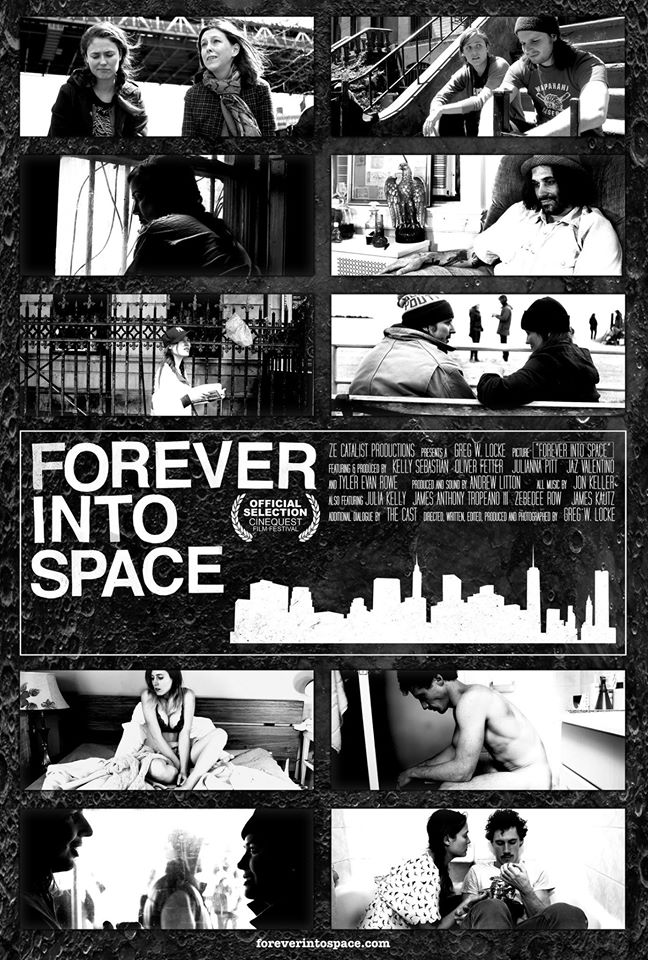 See FOREVER INTO SPACE at Cinequest!
Follow them on Facebook!
Follow Kelly on Twitter!
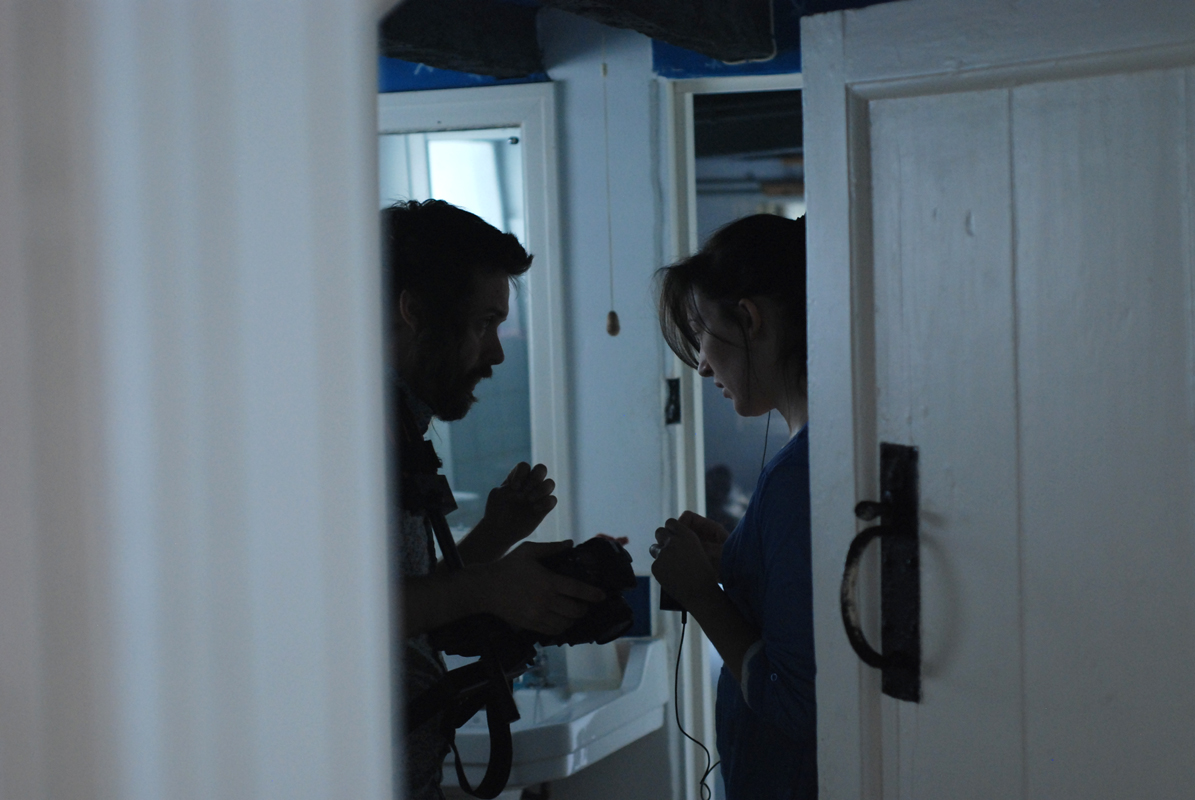
Jack James, directing MALADY
1Q: Tell us a little about the origins of MALADY, from concept to financing.
Malady was something thematically I’d been working on and researching for a very long time before the film came about. I spent a long time working in different mediums before I worked out that film was the route I really wanted to go down. Year after year i promised myself I would bring the elements together and make a film, thankfully I was introduced to [co-producer, actor] Kemal whose enthusiasm and belief in seeing me go on to write and direct was really the catalyst that gave me the confidence to go on and pursue Malady.
Raising funds for the film was incredibly difficult, especially as I had very little behind me in the way of existing work to be able to convince people I could actually make it. Thankfully there was a lot of faith by initial investors in the script and in us as people. The rest of the financing was raised as we were shooting, which was a hard situation to be in, but I think having existing footage was probably the thing we needed to help secure the rest of that financing anyway.
2Q: Cinequest Film Festival is hosting the World Premiere of MALADY. Explain to us how it feels to bring this film before audiences for the first time, and what do you think their reaction will be to your film?
It’s honestly something I’ve never felt before and something I find incredibly difficult to describe. Making Malady was always a struggle, and the people behind the scenes who knew the ins and outs of the content and subject matter were always left questioning whether someone would be brave enough to present this to other people, but were so invested in the project that they had to see it through.
Thankfully, Cinequest saw the film and believed in those subject matters and its execution and invited the film along for its World Premiere.
It feels pretty daunting, it now being put to audiences but I’m excited to see what happens. It’s difficult to guess whether the response will be positive or negative, but as long as it provokes a reaction and makes people feel something then for me the film works and is doing its job.
3Q: What was your best and/or worst experience while making MALADY.
The experience is a really difficult thing to pin down. In all honesty, as intense and gruelling as the whole process was, it was all made ten times easier by the cast and crew and their dedication to the project. Finding the right people and having them believe in the project as much as I did is without doubt the best thing about making Malady. Without that it wouldn’t be the film it is today.
Myself and Kemal experienced a few bad experiences during pre-production, but they ended up being turned into positives after the fact. What didn’t kill us made us stronger. Unless it did kill us. Which it didn’t.
4Q: Festival audiences often have to make hard decisions about what to see, and the catalog descriptions sometimes run together. In your own words, why should people see your film?
I think people should see the film because I believe they would be entering into a unique experience they wouldn’t forget in a hurry. I genuinely believe the film creates an immersive and expansive atmosphere as well as having very engaging performances that I’m incredibly proud of.
When Cinequest launched the line up, I was incredibly happy with Liva Petersone’s description of the film and think she put it best in referring to Malady as an unorthodox experience. That was something I really worked hard at trying to make happen, and if I saw a film being described in that way then I’d want to seek it out and see exactly what that entailed.
5Q: Time to pre-plan: You just won the Oscar for MALADY. Give us your acceptance speech.
Well, I’d start by thanking my cast and crew, because they were amazing and without them the film would not be the film it is today, I’d then swiftly move on to family but then I’d “pull a Kanye West” on myself and dismiss my own film from winning and endorse a completely different project.
The interesting thing about this is that I’d be playing both myself, and me as Kanye. So there would be a lot of hopping back and forth; I’d be incredibly animated and passionate about why I shouldn’t win, and I’d also be completely confused and shocked at the same time, as to why this was happening. I’m not sure this would actually work but I’d still probably do it.
See MALADY at Cinequest!
View the Teaser Trailer!
Follow them on Facebook!
Follow them on Twitter!

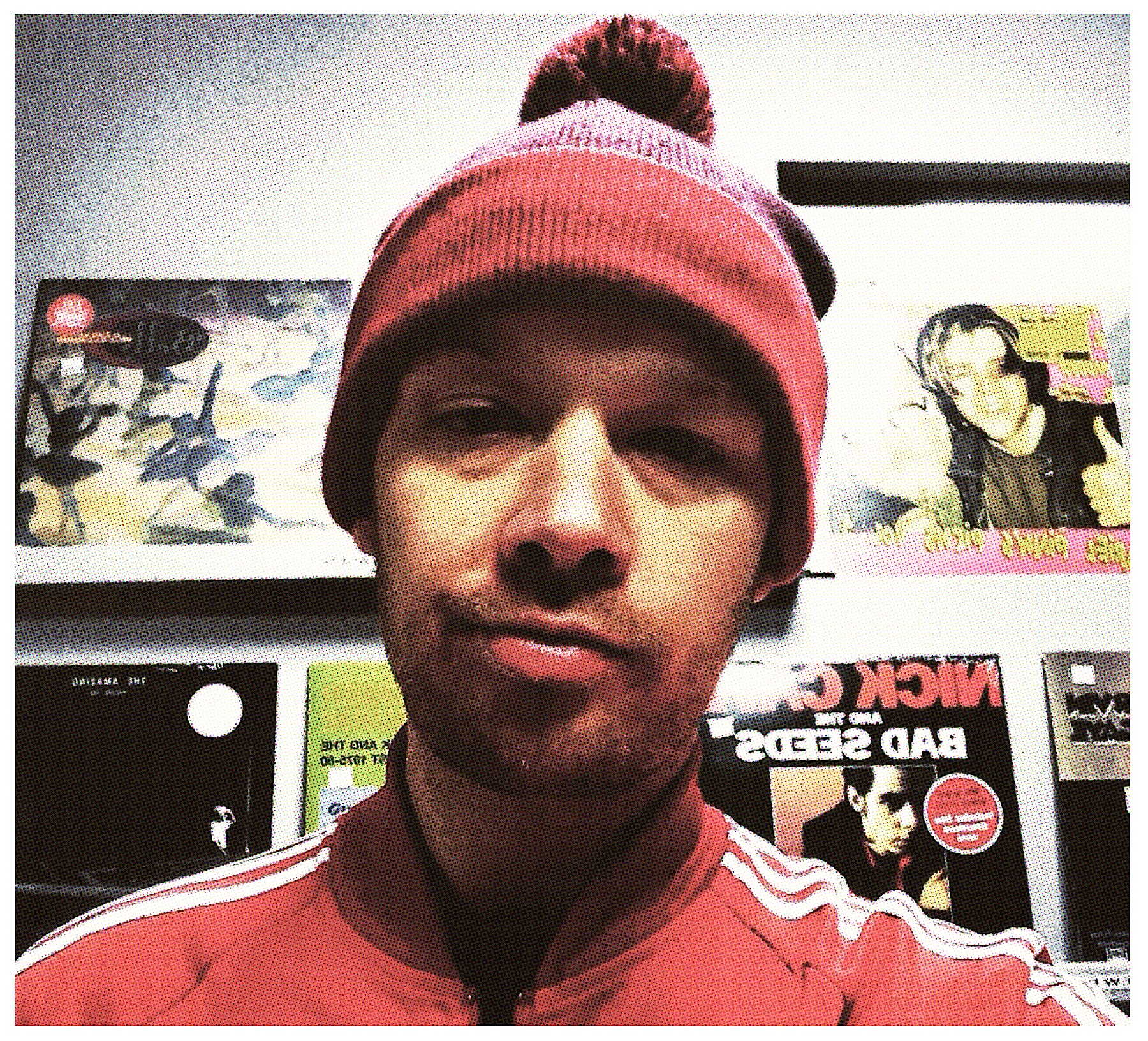
Greg W. Locke, writer/director of FOREVER INTO SPACE
1Q: Tell us a little about the origins of Forever Into Space, from concept to financing.
A few years back I made a very low budget music documentary. My goal with that one was to make a non-fiction film that could play alongside Godard‘s early 60s flicks. Artsy, free-wheeling, unconcerned with mass appeal – all that dreamy stuff that only outsiders can do these days. That film played at some small fests and was celebrated a little bit in the hometown of the subject, but that was about it. A friend of mine who works as a DP here in New York City saw it and eventually convinced me to move to New York. He wanted me to be here, to work on films, to write. I spent the better part of a year working on other people’s productions – big and small – while writing screenplays at night and on the train. The city took hold of me, it inspired me. That said, I wasn’t enjoying working on other people’s productions. It just wasn’t enough for me. To justify the insane cost of rent I needed to be doing work I believed in. I needed to run my own show. I didn’t want to get stuck in the NYC for-hire production circus, I wanted to make art. So I started brainstorming ways I could make a movie in the city. The plan was big and deeply detailed, but pretty much boils down to this: make the biggest movie possible for the smallest amount of money. I planned everything around my resources. I sold off 17 of my paintings in order to upgrade my camera and have a little money to live off of; I wrote a 22-page project proposal that I made anyone wanting to work on the film read several times and sign off on. I formed a team of seven producer/actors (and one soundman) to make the film with. We would work as a committed team. No one got paid a dime but everyone received an equal ownership over any profits the film potentially makes. No craft services, no cars, no nothing. We ended up spending $880.09 to make the film, and I’m happy to say that I think it’s a big, pretty one. Once the film was done we did a little bit of modest fundraising so we could enter festivals. Eventually we met up with Robert Hawk and screened the film for him. He gave us some input and we went to work on a second cut. Then a third cut. Eventually we showed Bob the film again and he loved it and came onboard as our festival consultant. He suggested Cinequest and here we are.
2Q: Cinequest Film Festival is hosting the World Premiere of Forever Into Space. Explain to us how it feels to bring this film before audiences for the first time, and what do you think their reaction will be to your film?
Our film is certainly not for everyone. That’s the kind of art I like to make, and I think that’s the kind of art most of my favorite artists make, so I’m okay with people being split on the movie. I’m okay with people not liking it. I think that’s just part of it. So for me that takes away the fear element that I think a lot of filmmakers experience when their movie premieres. That being said, I’m not excited about the premiere either. Making a film is a marathon, and by the time you finish you’re just exhausted and burnt out. You’ve spent so much time working on it and thinking about it and making it the best that you can that you just sort of lose track of how you feel about it. And it’s never going to be quite what you wanted it to be. I don’t know if that makes sense unless you’ve made a film or not. As for the audience reaction. I suppose I hope some people love it and connect with it. If people are paying for tickets to see Forever Into Space, I sincerely hope they enjoy their time watching the film, even if they’re just sitting there hating it, I hope they have a good time doing so. But let’s like the movie, guys! Okay?! Okay!
3Q: What was your best and/or worst experience while making Forever Into Space.
I’ll tell you about the worst part of making the film, since I’m that kind of guy. The worst part was the back-breaking part. There was nothing glamorous about the way we made the movie. I worked as the producer, writer, editor, director and DP on the film, so I had a whole lot of gear to haul around. I had no AD, no PAs, no assistant, not even a car or a cab – just me, lots of luggage and the NYC MTA system. So I got the largest suitcase I could find and the largest backpack I could find, and stuffed them both as full as could be. Oh, and then also the camera bag. I hauled all that gear around Brooklyn – up and down all the subway stairs. Up and down the stairs to our fourth floor key location. Through the endless 4th Ave. station, over and over. Down through the sand at Coney Island. Through Midtown crowds, down the broken brick streets in SoHo – you get it. And I never let anyone help me. I was stubborn. I wanted – WANTED – everything to be hard. I had been working in studio productions and was really sad about all the waste I saw. How comfort was so important to everyone. They were constantly coddling us at every turn. I wanted to do the opposite of that. I’ve seen Les Blank’s Burden of Dreams enough that my idea of filmmaking has much more to do with sweat and back pain than it does jumbo shrimp platters. The only thing I had to waste was energy. A filmmaker friend who knows me well said to me “you’re going to be the junkyard dog of Cinequest.” I thought that was funny. I hope to find some other animals while I’m in San Jose.
4Q: Festival audiences often have to make hard decisions about what to see, and the catalog descriptions sometimes run together. In your own words, why should people see your film?
I think the approach we used to make the film is simultaneously progressive and simple. I like to think our film is notable from a production standpoint for very unique reasons. I think it’s fun to look at. I think it has a beautiful score and original music. I think the actors are all babes and all gave good performances. It’s a weird film that was made in a weird way. It’s a movie about New York City made by an outsider, which I hope people find interesting. So yes, I think – I hope – Forever Into Space has some things going for it – mostly the bit about how we made the movie. The very unconventional plan we used and followed through on. The whole idea was to not just make a movie that was artistically successful, but to make a piece of art that had interesting talking points. And I think we did that. So why should people see it? I suppose people who love art and love discussing art should see it because if nothing else, it’s made to discuss. I think it’s good for that, and other things.
5Q: Time to pre-plan: You just won the Oscar for Forever Into Space. Give us your acceptance speech.
I’m not big on the concept of awards for art, but I understand why they exist and it’s a good time. And I’m nothing if not a fan of film, so I always look forward to the Oscars because it’s a fun night. That being said, If I were to win an Oscar for Forever Into Space I would give an impassioned speech about the film I felt should have won the award, which in 2015 I’m guessing will be Terrence Malick’s Knight of Cups. And that would probably be the last award I would ever win. Because that’s not how it works, Greg.
See FOREVER INTO SPACE at Cinequest!
Follow them on Facebook!
Follow Greg on Twitter!


Tom Kemnitz Jr. plays Jonah Price in THE HAPPIEST PLACE ON EARTH
1Q: Tell us how you became involved with The Happiest Place On Earth, and how you prepared for the part.
I saw a casting call on the internet, went though two rounds of auditioning and got the job.
The actors I like to watch are always really well prepared so I sort of adopted that. I needed to learn how to ride a bike, so I worked on that an hour a day. I met and followed around a few folks that worked in the same profession as Jonah, the character I play. That was really helpful. And I did a lot of script work getting clear on what story I wanted to tell and crafted a very detailed backstory and inner monologue for Jonah. Then once production started, I read the script once a day and listened to thematically relevant music.
2Q: Cinequest Film Festival is hosting the World Premiere of The Happiest Place On Earth. Explain to us how it feels to bring this film before audiences for the first time, and what do you think their reaction will be to your film?
It feels great! I have no expectations for how people will react to the film. But I am very grateful to anyone who takes the time out of their day to see it. I’ll be on hand for the first two screenings, so whether you want to hi-five, awkward hug, or throw rotten produce at me- I’ll be there.
3Q: What was your best and/or worst experience while making The Happiest Place On Earth.
Worst- Mainly involving the wildlife of central Florida….. Having a waterbug on my face was a low point. Encountering snakes wasn’t my favorite thing either. Oh, and also losing the director, John Goshorn’s wedding ring.
Best- It was a very exciting time. I was trying new things, John was trying new things, Jeff Gross the cinematographer was trying new things. And we had no idea how much of it was going to work. But going through that process was a thrill. I remember on the car ride down, I had probably the best nights sleep anyone has ever had in a car outside of a McDonald’s because I was just so happy to get to make this film.
4Q: Festival audiences often have to make hard decisions about what to see, and the catalog descriptions sometimes run together. In your own words, why should people see your film?
Folks should see the film if they want to. If they don’t want to, they should go see something else.
5Q: Time to pre-plan: You just won the Oscar for The Happiest Place On Earth. Give us your acceptance speech.
haha, I would like to thank our fearless producer Julie Opala for teaching me how to ride a bike. Our director John Goshorn for not firing me when I lost his wedding ring, Mrs. Goshorn for not killing me as of yet, and the crew who were wholly supportive of me sleeping on set, which is… not typical of most award movies.
See THE HAPPIEST PLACE ON EARTH at Cinequest!
View the trailer!
Follow them on Facebook!
Follow Tom on Twitter!
Visit Tom’s website!

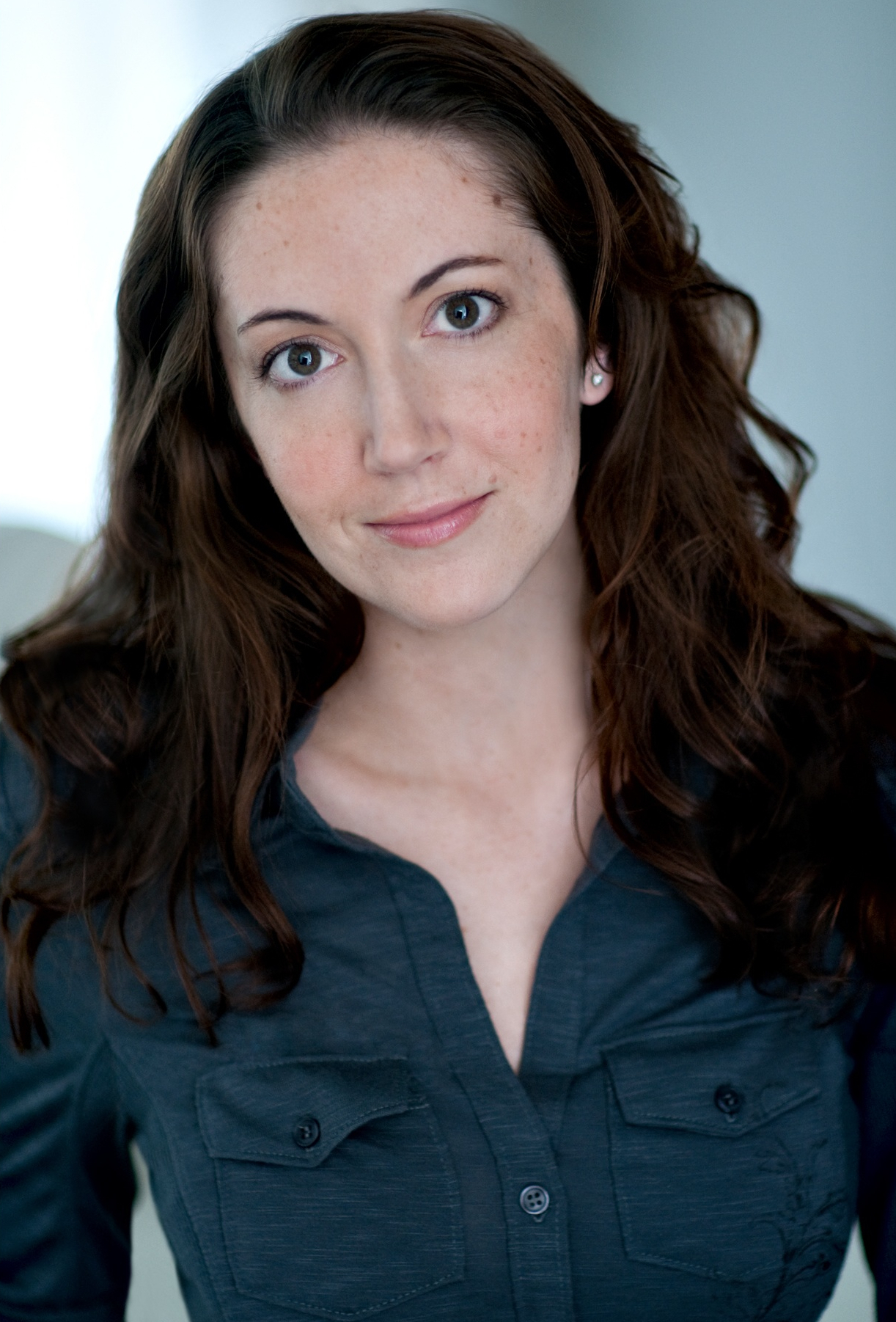
Jennifer Faith Ward plays Maggie Price in THE HAPPIEST PLACE ON EARTH
1Q: Tell us how you became involved with The Happiest Place On Earth, and how you prepared for the part.
My manager at the time saw the casting notice for The Happiest Place on Earth and submitted me to read for the role of Maggie Price. Preparation for the part truly commenced at the callback auditions for the role. The callback audition consisted of two and a half hours of screen tests, reading select sides from the script with various scene partners, and in-character interviews. It was my most intense audition to date and the most fulfilling in terms of creating an environment for me to become completely immersed in the material.
2Q: Cinequest Film Festival is hosting the World Premiere of The Happiest Place On Earth. Explain to us how it feels to bring this film before audiences for the first time, and what do you think their reaction will be to your film?
The fact that The Happiest Place on Earth is being shown for the first time at Cinequest makes the journey traveled to complete the film even more rewarding. The cast and crew put so much of themselves into this film and I’m excited that we now have the opportunity to share what we created with the world. I can’t predict what the audience reaction to the film will be like but I definitely think that the story will resonate with many viewers.
3Q: What was your best and/or worst experience while making The Happiest Place On Earth.
The Happiest Place on Earth centers on a time in Maggie’s life that is simply heartbreaking. Living her life at that point was both the best and worst experience of making the film. It was gratifying as an actor to have the opportunity to dive into such meaty material. On the other hand there was certainly an emotional toll that was paid in order to do so.
4Q: Festival audiences often have to make hard decisions about what to see, and the catalog descriptions sometimes run together. In your own words, why should people see your film?
We all strive for happiness and we have ideas about what we think will get us there. The Happiest Place on Earth illustrates the struggle that occurs when our life doesn’t unfold as planned. The film touches on current topics that many viewers will relate to and in turn will provide a cathartic experience for the audience.
5Q: Time to pre-plan: You just won the Oscar for The Happiest Place On Earth. Give us your acceptance speech.
First and foremost I would like to thank God. With God all things are truly possible. I would like to thank my husband Jesse. Your unfailing support and encouragement are invaluable. My beloved family, thank you for always being there when I needed you most. My agent, my manager, my team. I would not be where I am without you. The amazing cast and crew. Unwashed Entertainment, GnC Films. A special thank you to all the people who donated to The Happiest Place on Earth fundraising campaign. We couldn’t have done it without you. Thank you to Yvonne Suhor for getting me started on my acting journey and for your sage advice. To Bonnie Gillespie for helping me to figure out how to live my dream. I would also like to thank Gregory Kurczynski for submitting me for the role of Maggie and for continuing to be one of my biggest cheerleaders. Thank you to the Academy for this honor and to my fellow nominees; I am humbled to be in your company. Thank you.
See THE HAPPIEST PLACE ON EARTH at Cinequest!
View the trailer!
Follow them on Facebook!
Follow Jennifer on Facebook!
Follow Jennifer on Twitter!

John Goshorn, writer/director of THE HAPPIEST PLACE ON EARTH
1Q: Tell us a little about the origins of The Happiest Place On Earth, from concept to financing.
I moved my wife away from our home state to take a TV production job in early 2008, and was laid off six months later when the economy melted down. As I wrestled with questions of why and how, and developed coping strategies, I was also struck by how my circumstances could have been much worse, how desperate I might have become if they were, and why.
Shortly afterward, I applied to and was accepted to the University of Central Florida‘s innovative MFA program in Entrepreneurial Digital Cinema, which requires filmmakers to write, finance, produce, and direct a feature for less than $50,000. I knew I should make something inspired by the circumstances that led me there. Over the next two years, I wrote seven additional drafts of the screenplay, diving deeper as I discovered how to mesh a noir-ish mystery plot with my thematic concerns of agency and fate and the cultural myth of the American Dream.
We cast the film in early 2011, and launched our IndieGoGo campaign on Oscar night that year. We shot 24 days in the summer of 2011, and added pickup days in January and March of 2012. I graduated the MFA program that May, but was still unsatisfied with my cut, so I enlisted two additional editors over the next two and a half years, while taking many additional passes myself to get the picture done.
2Q: Cinequest Film Festival is hosting the World Premiere of The Happiest Place On Earth. Explain to us how it feels to bring this film before audiences for the first time, and what do you think their reaction will be to your film?
It has obviously been a long, painstaking process to bring this film to life, and it’s such a joy to have the opportunity to premiere at a festival I’ve heard such great things about. It’s both exhilarating and in some ways, terrifying, to consider how the film will play to an audience, but I hope they will be moved by the film, and that it will linger with them long enough to consider the parallels between the American Dream and the fairytale, the limitations of both, and ask questions about what ideology should replace them, on screen and in our lives.
3Q: What was your best and/or worst experience while making The Happiest Place On Earth.
Experiencing the talent, passion, and dedication of my collaborators, and feeling the support of my donors was easily the best part of making the film. Everyone worked so hard, was so generous and made so many sacrifices to make this film happen. It is genuinely moving to consider how many people believed in a first-time feature director making a no-budget feature and gave of their time, their talent, and their treasure to make it happen.
The worst part was an instance of novice risk-taking gone wrong. Rather than invest in a prop ring, I had lead actor Tom Kemnitz, Jr. wear my wedding ring in his scenes. Unfortunately, a take during a kayaking scene ended badly, and my wedding ring ended up at the bottom of Ponce Inlet in Florida, where it was immediately covered by sand as the evening tide came in, lost forever. The intangible value of that ring is irreplaceable, and of course, we ended up having to buy a prop ring to finish the film, anyway. Let that be a lesson, future filmmakers, in the dangers of taking shortcuts.
4Q: Festival audiences often have to make hard decisions about what to see, and the catalog descriptions sometimes run together. In your own words, why should people see your film?
I made the movie for anyone and everyone who has been working hard, striving to establish their own home and family, and then felt the rug pulled out from under them even just once. If that sounds like you, or you’re curious about a film that really probes the social fabric of the middle class during the post-recession economy, or if you just dig terrific screen performances, or great film music, or want to see how good a movie shot on a DSLR with no cinema lights looks, or you want to ask me questions about anything else regarding the film, come to one of our screenings. I’d love to see you there.
5Q: Time to pre-plan: You just won the Oscar for The Happiest Place On Earth. Give us your acceptance speech.
After several moments to catch my breath and several false starts …
I’m in a total state of disbelief right now. I couldn’t be more excited or thrilled or grateful that the Academy has chosen to recognize a film from such humble origins. The team that made and owns this movie is a ragtag bunch of collaborators whose blood, sweat, and tears made this film. They’ve made so many sacrifices, and I’m so honored for their work to be recognized.
I have to thank my wife Amy, who sacrificed more than anyone could ever know for this film, for my parents, family, and friends, who have been endlessly supportive, the University of Central Florida for providing a laboratory environment where I could practice all the thinking I’d ever done about the cinema, our donors who believed in us and gave out of love for our team, and everyone else who had anything to do with making the film and helping it find an audience.
George Carlin is famous for saying that they call it the American Dream because you have to be asleep to believe it. I’m still not believing this, but don’t let me wake up!
See THE HAPPIEST PLACE ON EARTH at Cinequest!
View the trailer!
Follow them on Facebook!
Follow John on Twitter!
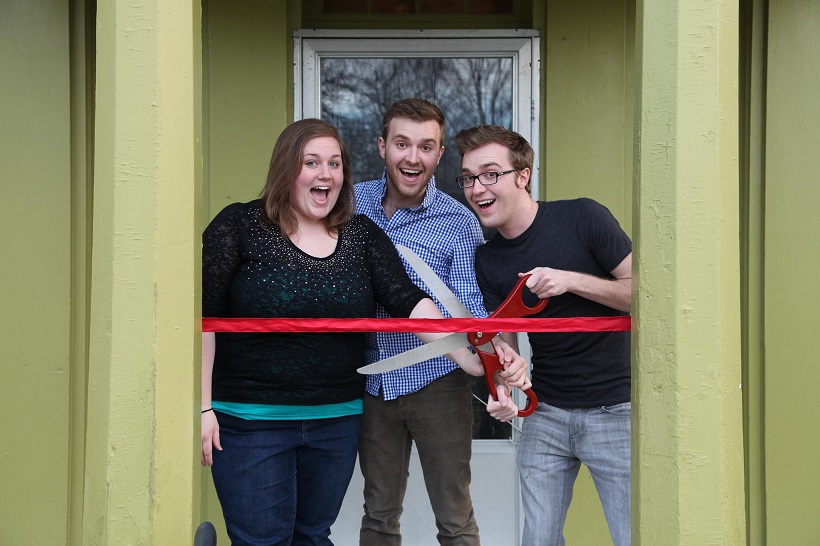
Natalie Jones, Aaron Keeling and Austin Keeling, filmmakers from THE HOUSE ON PINE STREET
1Q: Tell us a little about the origins of THE HOUSE ON PINE STREET, from concept to financing.
The three of us have been best friends since middle school, and immediately after college we decided to move in together back in our home state of Kansas to write (and presumably then make) our first feature film.
We knew right off the bat that we wanted to make a haunted house film. We are all extremely paranoid and terrified of pretty much everything, and each of us has had ‘ghostly’ experiences at some time in our lives. We also love the horror genre, especially haunted house movies, but when we sat down to discuss our favorites we realized we had a lot of problems with most of them and that there weren’t many specific horror films that we could say we loved. We couldn’t find the great haunted house movie that we wanted to see, so we decided to make it!
It took us about eight months to write and immediately afterwards we jumped into preproduction. We raised a good chuck of our budget on Kickstarter (THANK YOU WORLD!) and about two months after we printed our final draft of the script we moved into the shooting location. Three weeks later we wrapped production and about 6 months after that we had a finished film! The entire process took less than a year and a half, which was pretty crazy.
2Q: Cinequest Film Festival is hosting the World Premiere of THE HOUSE ON PINE STREET. Explain to us how it feels to bring this film before audiences for the first time, and what do you think their reaction will be to your film?
We’re really excited for people to see it! We’ve been with this film for a loooong time, so we’re kind of numb to it by now. It’s going to be a lot fun to have an audience who knows virtually nothing about the film experience it with fresh eyes.
At the end of last year we had a private cast/crew/family/friends screening with an audience of about 200 people and it was a blast. People were screaming in the theater. One woman stepped out of the theater about halfway through to use the restroom and told us later that the movie literally scared the pee out of her! So basically we can’t wait for more of that. Hopefully the Cinequest crowd will be equally as spooked!
3Q: What was your best and/or worst experience while making THE HOUSE ON PINE STREET.
We ran into a couple issues that we guess you could say were our ‘worst’ times. The house we shot (and lived) in was built in the 1840s and didn’t have some of the more modern amenities. For example: no shower. There was a single tub upstairs that we jerry-rigged into a make-shift shower and that was… interesting. A couple days into the shoot the floor beneath the shower started to leak into the dining room and we had to call in an emergency plumber, and not long after that the septic tank in the basement started to back up. Mix that in with the breaker box that started to short circuit and spark everywhere AND the fact that most nights we were pretty convinced the house was actually haunted, not to mention that we naively scheduled our entire 19 day shoot without any days off, and you’ll get an idea of the sheer madness of it all!
But these were just minor setbacks. Everything else was amazing. Pretty much everything just fell into place. We shot in the Midwest and had an overwhelming amount support at all times. Strangers donated their houses for locations, their furniture for set dressing, their food, their time, their love. We didn’t pay for a single meal during the shoot because MIDWEST IS BEST. Seriously. We met some of the most amazing people during this process, and the film definitely couldn’t have happened without them.
But probably the best experience of it all was the community that we formed with the entire cast and crew. Things were hectic, we were tired and stretching ourselves thin, sometimes things went wrong, and we had to go, go, go pretty much nonstop for three weeks. But somehow everyone stayed positive and had a great time. We were lucky enough to put together a team that was not only incredibly talented, but also incredibly fun. We had impromptu dance breaks between shots, we ate all of our meals together at a big dining room table, we sang, we laughed, we never took anything too seriously. It was so fun that many of our actors came to set even when they weren’t needed, and some of our crew members who initially couldn’t make it on certain days due to previous plans would cancel and show up on set anyway. It was like a big happy family, as corny as that sounds. We cooked, and cleaned, and ate, and slept, and filmed together and it was the best.
4Q: Festival audiences often have to make hard decisions about what to see, and the catalog descriptions sometimes run together. In your own words, why should people see your film?
Because who doesn’t like a good scary movie?! We think there is something so fun about horror, so primal and immediate – the shock, the suspense, the fun of a good scare. Also, we are the only straight-up horror movie playing at Cinequest, so if you’re looking to get scared, this is the film for you!
That being said, we approached this film from a slightly different perspective. Though horror is great, too many films in the genre focus on gore and violence without any purpose, and we wanted to ensure that the film would resonate with all types of viewers, even those who aren’t normally fans of horror. We did this by focusing on creating deep, complex characters to populate the film, and making sure the film had an emotional payoff that stemmed from something bigger than just ‘BOO!’
5Q: Time to pre-plan: You just won the Oscar for THE HOUSE ON PINE STREET. Give us your acceptance speech.
First of all – HUH? How did this happen?! What on Earth was the Academy thinking? There are probably a ton of people who are rightfully ticked off right now.
Secondly – THANK YOU. To everyone. This couldn’t have been done without our amazing cast, our incredible crew, the countless people who showed us generosity and support and respect. Oh, and our parents. Thank you.
Thirdly – We’re bad at speeches so this is going to be short.
In conclusion – MIDWEST IS BEST. GO THOPS!
See THE HOUSE ON PINE STREET at Cinequest!
View the trailer!
Follow them on Facebook!
Follow them on Twitter!

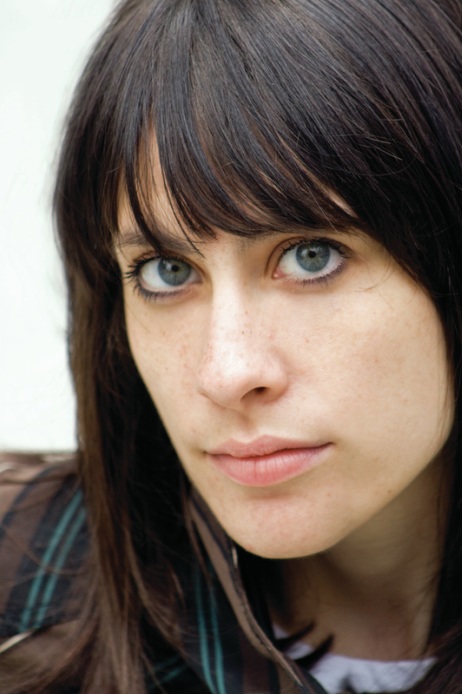
Gillian Leigh Visco stars in ELSEWHERE, NY
1Q: Tell us how you became involved with Elsewhere, NY, and how you prepared for your role.
I had worked with Tom Wilton previously on features Pale Horses (2014) and Vinyl (2010) and he said he had a friend coming to town who was interested in making his first feature film. I love Tom’s approach to making films, so when he asked if I’d be interested in working with him again I jumped at the opportunity.
I first met Jeff when Tom brought him to the bar I was working at and they ran the premise of the film they were brainstorming by me. In between making cocktails I’d come over to the end of the bar and see the headway they were making. Over the next few days, Tom finished up the script and we got to work.
In my preparation for the role of Jen, I had to explore the darker sides of myself in order to justify her actions. No one is perfect, especially in relationships, but I didn’t want her to come across as a girl without a heart. I wanted the audience to feel the authenticity in her struggle and her flaws.
2Q: Cinequest Film Festival is hosting the US Premiere of Elsewhere, NY. Explain to us how it feels to bring this film before US audiences for the first time, and what do you think their reaction will be to your film?
It’s always hard to predict how an audience will react to a film, especially when my experience of it will never be unbiased. However, I hope that the movie allows those that see it to reflect on a time where they may have been in a similar situation. I’d be very anxious to know what people think.
3Q: What was your best and/or worst experience while making Elsewhere, NY?
Guerilla style filmmaking can be stressful. Finding locations is probably the hardest part since you’re on a time crunch and it’s nearly impossible to find an empty quiet bar. We had to get creative – as in close down the bar I worked at (after working an entire shift), sneak in the crew, and shoot the scene after hours. Talk about running on empty (and risking my job!) Of course, this way of working is equally the hardest but also best part. Shooting in this style is almost as if it’s happening in real-time. It allows you to really dive into character in a way that’s not possible otherwise. Everything feels fresh because we really don’t spend too much time on any one scene. It moves and flows so fast that you can really stay in character and live in their world.
4Q: Festival audiences often have to make hard decisions about what to see, and the catalog descriptions sometimes run together. In your own words, why should people see your film?
It’s a film about relationships. It explores those temptations that sometimes arise and the consequences (and conflict) of love and lust.
 See ELSEWHERE, NY at Cinequest!
View the trailer!
Follow them on Facebook!
Follow Gillian on Twitter!
View Gillian’s website!

Fiona Graham stars in ELSEWHERE, NY
1Q: Tell us how you became involved with Elsewhere, NY, and how you prepared for your role.
I met both Tom Wilton (writer and producer) and the director, Jeffrey P. Nesker at Bootleg Film Festival. The next time we met was in Tom’s kitchen, along with the brilliant Gillian Leigh Visco to shoot, so it was a very fast process indeed.
Of course, due to the nature of film shoot, speed just became a part of its tapestry, working impulsively and organically.
As an actor, this process demanded such a high level of trust not only with Gillian, who I had literally just met, but of course Jeff and Tom – the captains of the ship. And I have to be honest, it was absolutely terrifying for me, yet thrilling.
I already knew, of course, that I needed a deep connection to my character, Christine, and a connection to my narrative circumstances. But I also had to have a complete awareness and connection to the actual environmental circumstances, which, I’ve got to say, were unpredictable at every turn.
Having previously worked on much larger budget films with way more crew members, the unconventional filming process was very new to me. However, it quickly became apparent that the camera was catching profound magical moments, which felt raw, exciting and uncompromisingly truthful.
2Q: Cinequest Film Festival is hosting the US Premiere of Elsewhere, NY. Explain to us how it feels to bring this film before US audiences for the first time, and what do you think their reaction will be to your film?
It’s very exciting! I think it’s important for crew and cast to come together and celebrate their triumphs and then share it with the world.
I really have no idea what the reactions will be – film is such a massive and subjective forum. But I think the film takes a look at a different part of NY, an untold alternative part of the city. We don’t really see the iconic buildings or the Manhattan skyline. Instead we meet people in transit, seeking to connect with other people and wanting to make changes in their lives. I think it will touch people, I hope it will touch people!
3Q: What was your best and/or worst experience while making Elsewhere, NY?
The best experience was learning to trust first impulses and to work hard and fast.
The worst experience? Well lets say most challenging; shooting my character’s final scene on day one.
4Q: Festival audiences often have to make hard decisions about what to see, and the catalog descriptions sometimes run together. In your own words, why should people see your film?
Elsewhere, NY is uncompromisingly and unapologetically intimate.
5Q: Time to pre-plan: You just won the Oscar for Elsewhere, NY. Give us your acceptance speech.
Well, how lucky and grateful I am to have had already learned so so much from these talented and daringly creative people. A thousand time thanks to team Elsewhere, NY!
See ELSEWHERE, NY at Cinequest!
View the trailer!
Follow them on Facebook!
Follow Fiona on Twitter!
View Fiona’s website!

Andrew Ruth, actor: ELSEWHERE, NY
1Q: Tell us how you became involved with Elsewhere, NY, and how you prepared for your role.
Elsewhere, NY came into my life through a self-submission. One of the tons of submissions I was making back then that led to one of the highlight projects I’ve been lucky to be involved in.
We went through the process of casting, but what sticks in my mind was when Jeff and Tom stopped by my bar (like my character, Todd, I was bartending at the time) and pitched me on the project. See, this was a no-budget feature. A film coming in at a level I told myself I wouldn’t work at anymore; the idea being that at a certain point you have to make the decision to not work at a certain level in order to move up a notch. I’ll be honest, I was hesitant.
But hearing Jeff and Tom’s pitch, their enthusiasm behind the project, and their belief that in filmmaking, it’s not the budget that matters, but rather a strong story and great acting that creates a successful film.
Listening to them discuss the plot, their own hesitations about low-budget filmmaking (they’d both made higher budget projects in the past), but their strong belief that one can’t let financing stand in the way of telling a good story, I was swayed and gladly joined the project.
2Q: Cinequest Film Festival is hosting the US Premiere of Elsewhere, NY. Explain to us how it feels to bring this film before audiences for the first time, and what do you think their reaction will be to your film?
I’m very excited to bring this project before a new audience. I think it’s a great example of what can be done when you bring together a group of people who believe, money or no. I also hope it will inspire other filmmakers to not let financing stand in the way, and instead, to really focus on the story, the acting. Get that right, and anything is possible.
3Q: What was your best and/or worst experience while making Elsewhere, NY?
The scheduling was tough. We had to be really, really flexible with our schedules because everyone still had to work their day jobs. This led to many late nights/early mornings where we shoot a scene then run off to our money gig.
The best part was the freedom that we had on set. Breathing room to improvise, to play with the choreography, to create the scenes truly guerilla – we’re on a subway surrounded by real commuters, or stepping out of doorways for offices we had no business being in. It’s exciting to make a movie that way. And as an actor to have some control over the scenes, the story, and how it unfolds at a script level – that freedom – it’s best part about indie film.
4Q: Festival audiences often have to make hard decisions about what to see, and the catalog descriptions sometimes run together. In your own words, why should people see your film?
To love, to lust, to make mistakes, to grow. A story with strong characters, good writing, and honesty told simply.
5Q: Time to pre-plan: You just won the Oscar for Elsewhere, NY. Give us your acceptance speech.
Yiiiippppppeeeeeee 🙂
See ELSEWHERE, NY at Cinequest!
View the trailer!
Follow them on Facebook!
Follow Andrew on Twitter!
Visit Andrew’s website!
 Popcorn and Vodka