
Brett Allen Smith (Rt) with Zelda Williams & Zachary Booth
1Q: Tell us a little about the origins of NEVER, from concept to financing.
I think NEVER represents the culmination of my joys, fears, and questions about what it means to be a twenty-something of this generation. It was something I wrote when I wasn’t really sure who I was, or if I was making the right kind of progress personally or creatively. Or if I even liked the kind of people I suspected we were all turning into. So I put all those concerns into a script, and from there started sharing it with friends and connecting with people who were asking the same questions I was. Everyone who worked on the film – from the actors, to the crew, to the people who helped finance – worked on it either for free or for next to nothing, because I suspect we all wanted to see if anyone out there felt the same way we did.
2Q: Cinequest is hosting the World Premiere of NEVER. Explain to us how it feels to bring this film before audiences for the first time, and what do you think their reaction will be to your film?
It’s equal parts exciting and totally gut-wrenching to share your film with the world, especially the first time. It’s your baby, and like all children it doesn’t matter what your intentions with it were or which mistakes you made or avoided – because once it’s out in the world, it has to speak for itself. Make its own mistakes. Finds its own allies. NEVER is incredibly personal to me, but it also captures a time of my life that in some ways feels distant to me now. Every time I watch it I have a new opinion about it. It evolves with me as I get older. I think that’s the best reaction I could hope from an audience: for them to remember that time in their lives, or relate to it now, and from there draw their own conclusion about how those experiences will shape them into men and women.
3Q: What was your best and/or worst experience while making NEVER?
One of the best experiences about NEVER was the casting process. My casting director (the amazing Lindsey Weissmueller) and I met with a lot of actors who really connected with the characters, and hearing their opinions and excitement made me believe in my own script all over again. Flying to New York to meet with Zach Booth, and then sitting down with Zelda Williams in LA… Those were two of the most exciting days I’ve ever had.
4Q: Festival audiences often have to make hard decisions about what to see, and the catalog descriptions sometimes run together. In your own words, why should people see your film?
There are a lot of things I could mention here – the endearing performances from Zach and Zelda, the ambiguities and questions about young adult life – but in some ways I think the haunting original music (written by the disturbingly talented Nora Kirkpatrick) captures all those strengths at once. Nora wrote the songs Zelda’s character performs throughout the film, and they feel almost like another character in the film. Maybe even the heart of the film. Those songs make me remember why I made NEVER.
5Q: Time to pre-plan: You just won an Oscar for NEVER. Give us your acceptance speech.
As long as I mention my mom – who personally catered the entire 24-day shoot in Seattle for all 18 members of the cast and crew – I think I’m safe. Maybe the more daunting question is: what the hell am I supposed to wear?!
See NEVER at Cinequest!
Our review of NEVER!
Watch the Trailer!
“Like” them on Facebook!


Chris Zonnas, Director
1Q: Tell us a little about the origins of LOADED, from concept to financing.
I’d been thinking about possible stories that could be told well on a micro-budget. I didn’t want to make a horror film or one with a bunch of people talking in a house, so I was leaning toward a road trip. And then a friend and I unexpectedly had to fly down to San Diego to help another old friend having a hard time with substance abuse. We packed up his place in a hurry, spent the night and headed up Hwy 5 in a U-Haul to his parents in the Bay Area. By the time we were having breakfast on the road, I thought, “This is it.” I knew I had my concept. I then set about writing the script and scraping together the money. It took over two years between sitting down to write and starting to shoot.
2Q: Cinequest is hosting the World Premiere of LOADED. Explain to us how it feels to bring this film before audiences for the first time, and what do you think their reaction will be to your film?
I’m really excited to experience this with a live audience. Especially because it’s a comedy and it’s fun to watch with a larger group. The laughs are always bigger. I think six is the highest number of people we had in the room for one of our post-production screenings. Kumail Nanjiani is hilarious as usual. Not only does he deliver the jokes, he supplies much-needed levity to the story. But there are some really heavy moments too, and I’m interested to see how the audience will react when they happen. And the music is absolutely wonderful.
3Q: What was your best and/or worst experience while making LOADED?
It’s hard to pick just one best experience. From casting to production to editing and music I had a wonderful time. But I’d have to say the best and worst experiences were both on the same day of production. What began as a nightmare we were able to overcome as a team. After an uneventful morning of shooting on the side of the road in Sepulveda Basin Park, and covering only one side of the scene, someone’s remote controlled gas-fueled model jet crashed in the distance – and exploded in a ball of flames. Within minutes our entire background was ablaze in fire and smoke. Fire Department trucks and helicopters were soon on the scene and we were surrounded by emergency vehicles. They quickly closed the road and most of our production team was trapped with the Police and Fire Departments. We were stuck for the next two hours as they slowly put the entire fire out. Our background – once dry yellow grass with green bushes – was now charred black and smoking. The production unit went into our own emergency mode; the producer and AD’s got everyone rounded up via phone while the DP and I found another similar looking spot a half mile away. We realized we’d have to shoot the other side all in close-up (luckily we’d gotten a little wide coverage before the blaze), but at least we had matching background. The lighting had changed so it was a little off – but that’s what color-correct is for. Kumail and Patrick Flueger were able to churn out some intense dialogue in a very short time. The final result is a powerful scene which the audience has no idea was shot in two different locations – 4 hours apart.
4Q: Festival audiences often have to make hard decisions about what to see, and the catalog descriptions sometimes run together. In your own words, why should people see your film?
If you like dramedies such as Sideways and Little Miss Sunshine then this is your film. The three leads play complex, quirky characters thrown into a boiling pot together, and you get a roller coaster of emotion that delivers both laughs and poignancy. Maybe it will make you think about how your own friendships have evolved through different stages of your life. Accompanied by an excellent indie rock soundtrack, LOADED will keep you entertained for 90 minutes. The San Jose Mercury News also named us one of the ’10 Films for your Must See List’ at Cinequest this year.
5Q: Time to pre-plan: You just won the Best Picture Oscar for LOADED. Give us your acceptance speech.
Wow. I can’t believe the Academy actually watches Ultra-Low Budget movies. If you told me two years ago this could happen I would have said you were nuts. I’m flattered and not sure we deserve this honor with so many incredible movies nominated this year.
But I would like to thank everyone who was a part of LOADED and helped make this happen. You know who you are.
See LOADED at Cinequest!
Watch the Trailer!
Like them on Facebook!
Follow them on Twitter!
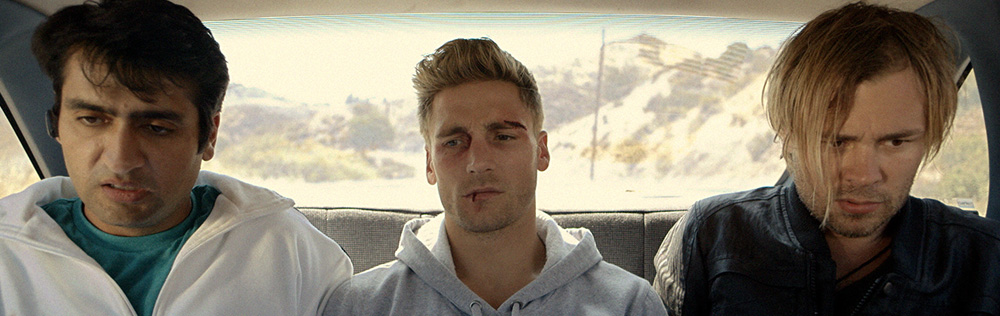
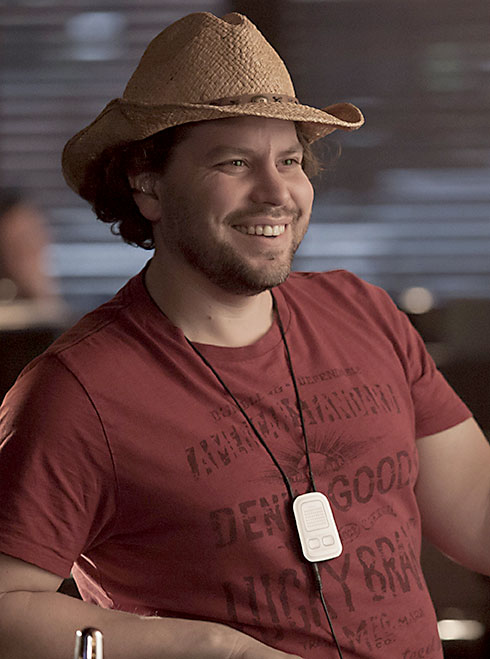
Matthew Kowalchuk, Director. Photo by Katie Yu.
1Q: Tell us a little about the origins of LAWRENCE & HOLLOMAN, from concept to financing.
I’ve collaborated often with Daniel Arnold, who co-wrote, produced, and plays Holloman. We have done theatre together, and teamed up to make our first short film, The Janitors, which starred William B Davis (The Cigarette Smoking Man on The X-Files) and ended up being a huge success. He and I were talking about a new project and I suggested doing this brilliant two-hander play, Lawrence & Holloman (by two-time Governer General Award Winner Morris Panych). Daniel kind of wrinkled his nose at that, but only because he had started thinking that we could do it justice as a film. Low, low budget two-hander, shoot on weekends with friends, that sort of thing. And then it grew. We got in touch with producer Paul Armstrong — who had actually seen the premiere of the play and loved it — helped us get development funding. We were able to option the play and do a couple of drafts of the screenplay. That also allowed us to bring in story editors Kyle Hunter and Ariel Shaffir (50/50, Goon, This is The End) as well as story consultant Dan Petrie, Jr. (Beverly Hills Cop, The Big Easy), who had been a supporter from afar since our early days with The Janitors. As the scope of the project grew, the script really gained a reputation for being something different, fresh, exciting. And it was. We took an existentialist play, which really lives in its own little world, populated by only these two characters, and created a fully formed world for them to live in. One that is still unique and a little off-kilter. I think people sensed that it had the potential to be something special – to have a feel all its own. At a certain point – keeping in mind, the development process went on for a good three years before we were able to get it funded – we met with our eventual Executive Producers, Mary Anne Waterhouse and Andrew Currie (who form Quadrant Motion Pictures). They were super impressed with our script, and more importantly the passion that we had for it. They really believed that these two first time feature filmmakers (along with Paul, who had a couple features under his belt already) could get the job done. And once they believed, that went a long way to having others believe. With their help, we aimed a bit higher in budget and eventually Telefilm Canada came in with the bulk of our financing, about a half million, which in the movie world is still very low budget – but remember, we had originally been talking about shooting this basically guerrilla style, with almost no budget, so we were ecstatic. A little over four years to the day of beginning the adventure, we began principal photography on L&H.
2Q: LAWRENCE & HOLLOMAN has done well at previous film festivals. Will you be less nervous now at Cinequest? Does this process ever get any easier?
Well, just having the blessing of Cinequest first of all, makes me less nervous. The fact that they and other reputable festivals are inviting us raises the confidence level immensely. I also tend to not be the nervous type. That said, I’m always a little nervous until we get our first few laughs – the first one is maybe a minute in, and sometimes is small, sometimes big, depending on the audience. Once the audience settles in, I’m less nervous and become more of a voyeur, watching and enjoying their reactions. I’m constantly surprised and curious at how each new audience reacts a little differently than the last. L&H is a pretty dark comedy. It goes to some extreme, absurd places, and that type of storytelling and comedy is simply not for everyone. One thing I love about L&H, is that the people who like this movie, like ita lot! They really do. In every screening we’ve had so far, at some point I’ve seen people losing it a little with laughter, going into little convulsions. A number of people have also said that it has inspired them. The idea of how your perspective on life changes the world around you is a powerful one, and audiences really have keyed on that. It’s an incredible feeling to know that what we’ve done has that strong an effect on people.
3Q: What was your best and/or worst experience while making LAWRENCE & HOLLOMAN?
It was my first feature, so of course, I want to say: EVERYTHING. It was such a dream to be doing it, that I cherished every moment – even the hard ones. The best was working with such talented actors. I know, everyone says that. But in a show that relies so heavily on its two leads, we were gonna sink or swim based on Daniel Arnold and Ben Cotton’s performances. And they were phenomenal. Daniel really immersed himself into Holloman’s dark, depressing world – to the point that on set, near the end of the shoot, he was becoming a real worry wort producer, and we were able to have a chuckle at realizing it was really Holloman talking. And Ben, he just fell instantly in love with his character, Lawrence. It seemed to grab him and take him for a ride, he could do no wrong. In the opening credits sequence, as we get to meet Lawrence, I just let Ben go and his instincts took over and carried the scene. They were both possessed by their characters in different ways. Working with them, and sharing the nuances of those performances was so rewarding, an incredible privilege. The worst experience was not necessarily bad, but oh so hard. After months of editing, I had to truly learn the art of collaborating in film. Once I had my ‘director’s cut’ as they like to call it, then the other producers weighed in (6 of us at this point, if you’re counting). And of course, they have many things to say: it’s not perfect, needs to be faster, funnier, all that. They say positive things as well, but as director, after spending months in the room, finely tuning each moment, you only hear the negative in this moment. And of course, you know, we’re all trying to make the best movie. Really, that’s the truth. But how do you appease six slightly different versions of what ‘The Best Movie’ is? That’s the golden question, and one that I wish I could answer for you. We worked hard to get the cut to where it is today. Producer feedback, test screenings, and more test screenings. I don’t think I’ll ever get used to the process. It was one of the hardest creative periods of my life. In the end, did we get the best movie out of it? Yeah, I think we did. But… there are a couple of moments I wish we didn’t have to lose.
4Q: Festival audiences often have to make hard decisions about what to see, and the catalog descriptions sometimes run together. In your own words, why should people see your film?
Lawrence & Holloman is billed as ‘The Feel-bad Movie of the Year’. And you will enjoy every moment of it. You will laugh at every bit of pain that the characters suffer, and they will take you beyond your wildest expectations, inspiring you, challenging you to think about how you see the world, and how it treats you in return. This is a buddy movie, gone bad. If Barton Fink stepped into the world of Entourage, and then plunged head first into the sensibility of Breaking Bad, you’d be pretty close to L&H.
5Q: Time to pre-plan: You just won an Oscar for LAWRENCE & HOLLOMAN. Give us your acceptance speech.
Oh, gosh. Yeah, I’d probably say ‘Oh, gosh’ first. I would thank my wife and son, for supporting (and putting up with) me all this time. I would thank my mom and dad for having me, accidentally, all those years ago. I would thank our entire producing team, and especially Daniel Arnold, for how, together, we’ve come so far. I would thank all of the actors and the crew. Yes, I’d give the incredibly boring thank you speech. But I wouldn’t miss anyone, not even my 2nd grade teacher, Mr. Doxsey-Whitfield, who was then and is still, a great inspiration to me. Unless I got pulled off the stage for talking too long. Yeah, I could see that happening.
See LAWRENCE & HOLLOMAN at Cinequest!
“Like” them on Facebook!
Follow them on Twitter!
Follow Matt on Twitter!
View the Trailer!
Watch Matt’s short The Janitors!

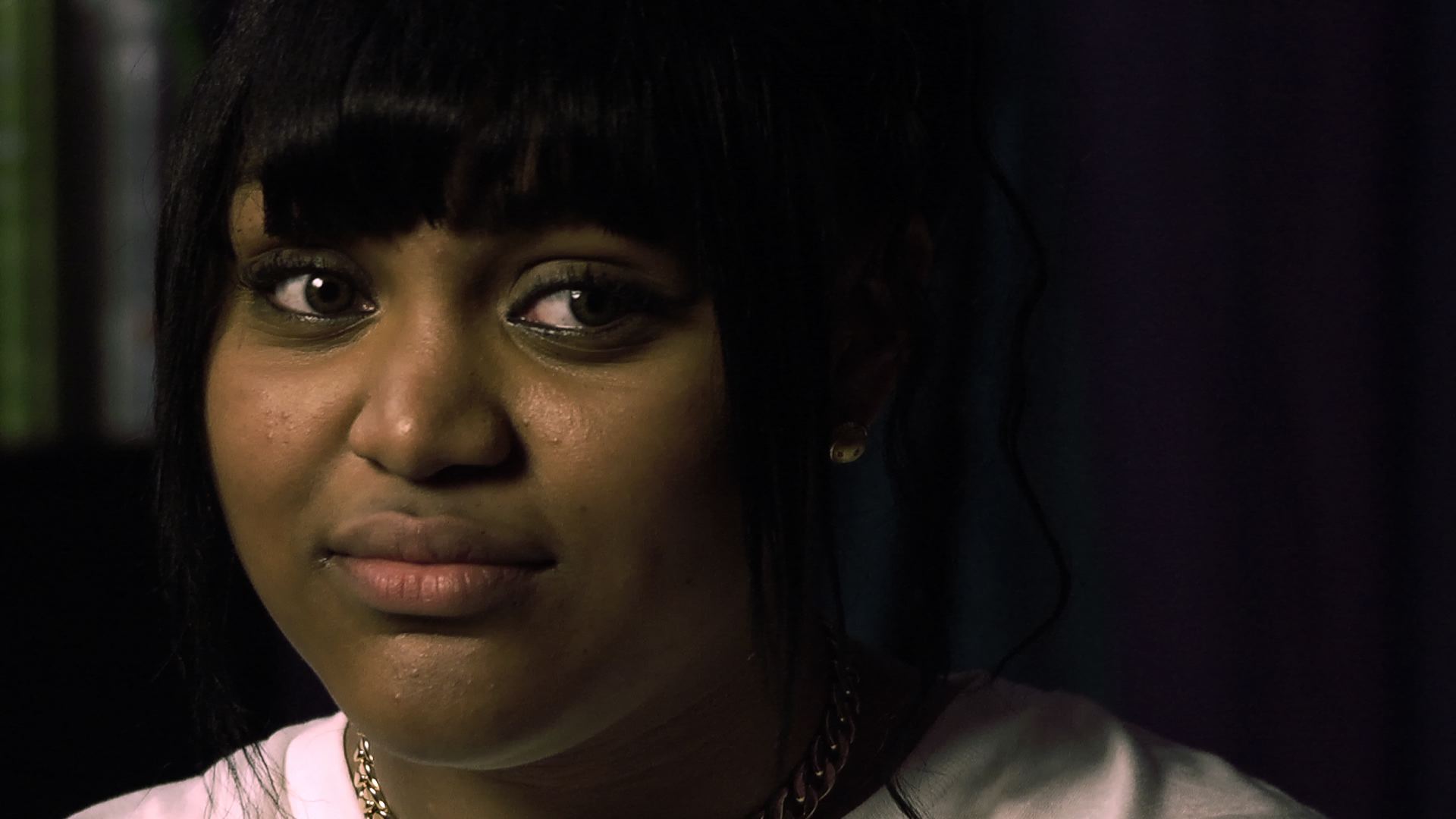
Gabrielle Garcia, Writer/Actor
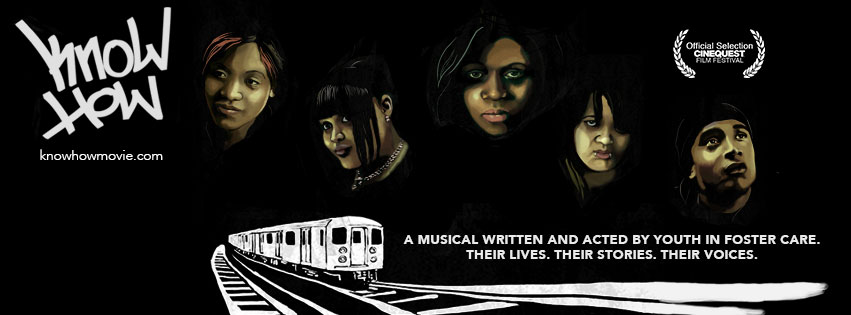
1Q: Tell us a little about the origins of KNOW HOW, from concept to financing.
Know How started out as a musical written by me and my cast mates in 2010 entitled, Know+How=. My cast mates and I performed the show, after long months of writing and perfecting the acting, in a small theater in Lower Manhattan. Audiences of all ages and backgrounds seemed to connect to our show. Every night, people would come up to the actors and share how the story and our performances really spoke to them. After our show’s run was over, we appreciated the memories and the experiences, but I didn’t think anything else would come of it. Fast forward a couple months ahead, we’re working on a new show and Paul, our director, asks the cast if we’d want to turn our play into a feature-length film. Of course, we were all like, “Duh, yes”. I doubt most of us, myself included, knew how much work that actually entailed, but we did it. We switched around some storylines to make sure they made more sense for the movie while still keeping them authentic, learned the difference between acting on stage and acting in front of a camera, and pretty soon, Know+How= was Know How, and here we are!
2Q: Cinequest is proud to host the World Premiere of KNOW HOW. Explain to us how it feels to bring this film before audiences for the first time, and what do you think their reaction will be to your film?
It feels amazing to have Know How premiere in front of such a large audience. We’ve have several small private screenings before, but nothing like this! I’m really grateful Cinequest has not only acknowledged the artistic quality of what my cast has created but also, deemed our message important and necessary to share. It’s truly a dream. I hope our film will move audiences to take action. Maybe audiences didn’t know how the foster care system worked before or maybe they had no connection to it. Well, after watching our film, now they’ll know. With that knowledge, I hope they become active in working towards child welfare system reform and won’t just appreciate the film and continue to live their lives like before. Whether our film just urges someone to contribute to our fight in a small way or moves them to do so in a big way like becoming a foster parent, I would be satisfied.
3Q: What was your best and/or worst experience while making KNOW HOW?
It’s hard to pick out a best or worst experience while making the film. Most memories, even the ones where I was annoyed and grumpy, I fondly look back on now. The whole film, from writing to shooting, was a great experience in retrospect. I bonded with everyone, from my fellow actors to the crew, and formed unbreakable bonds. It’s cliché to say it was an experience of a lifetime but it really was.
4Q: Festival audiences often have to make hard decisions about what to see, and the catalog descriptions sometimes run together. In your own words, why should people see your film?
Our film isn’t just the story of our lives. Our film is an exposé of an American problem. The child welfare system is failing the children our country entrusts the future to. There aren’t many people demanding legal reform or pitching with helping hands, or healthy homes, to support our youth. How could something so devastating to so many young lives go on like this? People should know.
5Q: Time to pre-plan: You just won an Oscar for KNOW HOW. Give us your acceptance speech.
This Oscar is for every young life that has been transformed or touched by foster care. Every moment we spent working on this film was out of love for you.
See KNOW HOW at Cinequest!
“Like” them on Facebook!
Follow them on Twitter!

Aaron Schimberg, Director
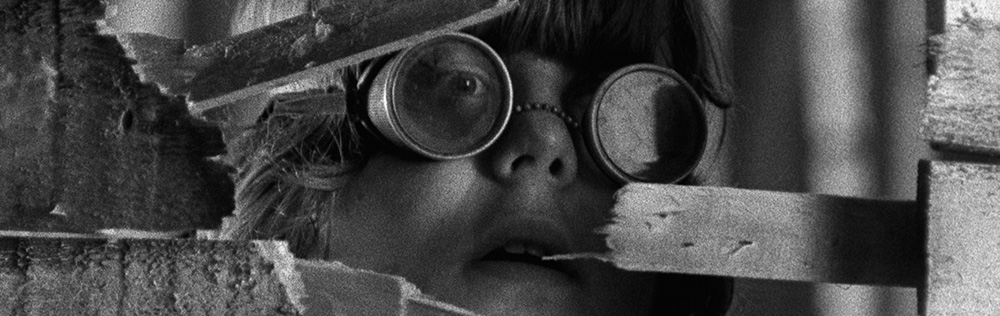
1Q: Tell us a little about the origins of GO DOWN DEATH, from concept to financing.
Go Down Death was inspired partly by a fever-dream I had while on morphine after having surgery. Unfortunately certain key elements of the dream infringed on some existing intellectual copyrights held by a large and intimidating media corporation, so I had to change or outright remove some specific details. This lends the film a chaotic, fractured structure.
Other elements of this dream were highly personal, which is to say, public domain, although now that these personal details have been filmed, they are jointly owned by the Library of Congress and my distributor. I no longer hold any stake in my personal problems.
The making of the film seems to me now like another fever-dream, induced by stimulants instead of narcotics. Now I’m incredibly hungover, and due for more surgery.
2Q: GO DOWN DEATH has done well at previous film festivals, and even made Indiwire’s list of Best Undistributed Films. Will you be less nervous now at Cinequest? Does this process ever get any easier?
It does get easier, theoretically, but I am just as nervous, especially about the flight to California.
3Q: What was your best and/or worst experience while making GO DOWN DEATH?
The night-terrors regarding my upcoming flight to California rank among the worst experiences I’ve had. Another bad experience was showing the film to a hostile crowd. The best experience was showing the film to a slightly less hostile crowd.
4Q: Festival audiences often have to make hard decisions about what to see, and the catalog descriptions sometimes run together. In your own words, why should people see your film?
You will never see another film quite like it, although you may see a film that has a fairly similar title.
5Q: Time to pre-plan: You just won the Best Director Oscar for GO DOWN DEATH. Give us your acceptance speech.
“Thank you, this is quite a surprise, and a true testament to the fact that, hypothetically, anything is possible.”
See GO DOWN DEATH at Cinequest!
See the Trailer!
“Like” them on Facebook!

Justin Hannah, Director
1Q: Tell us a little about the origins of CONSIGNMENT, from concept to financing.
The original concept came out of my interest in a sort of 1950’s style of filmmaking – these exaggerated, stylized films with very dramatic lighting, lush narrative music and mannered performances. I love the feeling of mood of those kinds of films. So I wanted to make something in that style, in that alternate world. At the same time, I became a little bit obsessed with this consignment shop I would pass on my way home from work. All you could see from the road were these mannequins wearing older women’s clothes in the storefront, and murky darkness behind them. I can’t say why, but the two concepts started to fuse in my mind, and I started imagining what kind of mysterious things might be going on inside that consignment shop. Which led to the story that we see in the film.
To raise funds for the movie, I submitted work to tongal.com, a website that connects creative people with large companies. I was able to raise around $1000 from a Beach Boys music video contest and a few other things. From there, I was really lucky to find talented people who shared my passion and who were willing to help with the necessities and/or work for reduced rates. Like the cinematographer Lee Clements, and the composer Robert Casal, both incredibly talented people, among many others. The budget for CONSIGNMENT ended up being around $2000.
2Q: What was your best and/or worst experience while making CONSIGNMENT?
I would say the best experience was watching something that began as a feeling or a mood in my mind slowly crystalizing and becoming this physical thing that exists in the world, and the universe coming together to help make that happen. I’m sure that that’s true for most films, but CONSIGNMENT is a period piece, so there were so many details – locations, clothing, hairstyles, props, vehicles – that couldn’t be taken for granted. But one by one, each one fell into place, with strangers (now friends, mostly) coming forward and volunteering props, clothing, filming locations (in one case, an entire town!), antique vehicles… everything. Of course, it’s easier to say that in hindsight, and it took over a year for it all to come together into a finished film. But still, there was something magical about how it all came together.
3Q: CONSIGNMENT has shown at several film festivals and even won a few awards. Do audiences respond differently at some festivals than they do at others? And do you ever stop being nervous?
I’m thrilled that CONSIGNMENT has been accepted into several festivals, and like you mentioned, has won a few awards. But I definitely haven’t stopped being nervous! It’s scary every single time. It’s an odd movie, so I never know how people are going to respond to it. But honestly, everyone I’ve spoken to at the showings have been incredibly kind, warm and interested. There was one showing where someone asked me straight out, “what did i just watch?” And there have been others where the audience really got it, and locked into the story or the mood, and in some cases even the technical aspects of the film, and really enjoyed it. It’s fun to talk to people about their interpretations of the film; they are usually a lot more perceptive than they realize.
4Q: Although short films are my favorite, they often have little chance of being seen by a wide audience, and an even smaller chance of gaining you fame and fortune. Now that you’re in the “easy” stage of filmmaking, the high of showing your film to an audience, was the making of CONSIGNMENT worth it? Will there be more films from you in the future and would you stick to the short format?
I would definitely say that CONSIGNMENT was worth it. I’d love to make more films, most likely short films for the foreseeable future. I agree that shorts have less of a chance for success than features, but like you, I’m a fan of the format. I also have a theory about resources – that basically, I have a certain amount of time, money, talent, etc., that I can put into a project. If I make a short film, those resources will be more concentrated than if I put the same amount into a feature. I’ve actually known people who have done this, and I personally would rather have a concentrated film that reaches a smaller audience than a feature where the quality is inconsistent, or that feels watered down or stretched thin. In the end, I want to make something that I’m happy with, regardless of how many people end up seeing it.
5Q: Time to pre-plan: You just won an Oscar for CONSIGNMENT. Give us your acceptance speech.
Oh, gosh. I’m terrible at speeches. I can’t even imagine. It would be awkward. That’s the only thing I can say for sure.
See CONSIGNMENT at The River City Festival of Films!
“Like” them on Facebook!


Director Skyler Cooper. Photo by Sidney Erthal.
1Q: Tell us a little about the origins of HERO MARS, from concept to financing.
Hero Mars is inspired by a performance piece that originated from a stream of consciousness writing exercise written almost 14 years ago. My intentions were to revise it to a 60 minute one person show. I found someone to direct the stage performance, who also happened to be a screenwriter. We talked about it and began developing the project for the stage again. Then an idea sparked, I thought maybe this can be short film instead. I contacted the director/screenwriter (now my mentor) if I could make this performance piece into a screenplay. She told me I already have the spine of the story, I only needed to develop scenes to go around it. I began writing the script.
Slowly the story of HERO MARS began to emerge as I explored the themes of this piece and set it to a world. I thought what better world than the world I love and know well…theater! What was once my performance piece became the backbone of the story for HERO MARS. Within 4 months I had my first screenplay! I wanted to shoot it!! I set out to find my cast and crew including a producer, director and the lead Hero Mars. I found awesome producers and filmmakers. However finding the lead was super hard and important to the success of the film!! I couldn’t find the actor in the short amount of time I had set for myself. Reluctant to play Hero Mars as I knew it would certainly indicate this story was very close to home. I wrote HERO MARS because I believe there are people out there that have struggled and will continue to struggle with their identity in a society that is vastly asleep about gender expression. It was during the process of producing HERO MARS that I realized I would need to cast myself as the lead. It made sense because of the physicality of the role. Not that I couldn’t find an actor to do it. It just would have taken a lot longer. Now getting closer to crewing the film all I needed was a director. I approached several awesome directors and just about all of them said first, “Why don’t you direct?” Truth be told I didn’t want to direct for fear that I’d send a message I was making some sort of a self-serving film or even worse a film of pity-me. Which would be wrong for viewers to believe. To send that message would strip away the validity, honesty and vulnerability of HERO MARS. I didn’t want to risk that by directing.
I began searching for the locations, cast and crew. And I didn’t see this coming… I had just left a location and I could not stop thinking about a scene. The film just started unfolding to me. I was in downtown Oakland when I pulled over and called my mentor. I told her I should direct HERO MARS. She was waiting for me to say that and she said it made sense. The stars began to align and all that was needed for this film I received.
Financing for HERO MARS has come in a numerous ways- donations, contributions, in-kind, and cold hard cash! Financing is still ongoing because festival fees are on going and add up quite fast. A terrific effort went into finding the financing we did get and its shows in the film. That said, I’m ready to deliver to my supporters again and again and again!
2Q: You have several previous actor credits, but this is your first time as filmmaker. We have talked before about how making a film is like giving birth. How do you feel about presenting your “baby” to the world? What do you think the audience reaction will be to HERO MARS?
HERO MARS is my baby, my first kid. I am ready to show it, share it. I made sure that the story remained pure and honest. HERO MARS is a gift. A labor of love to express to the world. The story came together artfully, as if this was meant to be. I know now that things that were meant to be cannot be stopped by positive or negative reactions. It is what it is and if all the things I have paid attention to and heard from so many “walks of life” is true, then I think HERO MARS will resonate. The film touches on common struggles to us all. So I don’t think the audience would feel far from identifying with the story, rather close to it, and some maybe even closer than they thought. I have to say though that the Fusion-OUTFEST programmers ROCK! Thank you!!
3Q: What was your best and/or worst experience while making HERO MARS?
I really enjoyed the process of finding my cast and crew! The relationships you build along the way. The things I learn about myself. There is such a rich connection when artists of different skill sets merge together to create a visual story. I love the connection or at least the process of finding those you want to collaborate with.
The worst experience is losing people and/or losing scenes. Whether it’s having to tell actors that the scene they shot didn’t make it into the film or having to part ways because the production schedule doesn’t fit any longer for my people. I know both can’t be helped it’s just the nature of the business. It still sucks.
4Q: Festival audiences often have to make hard decisions about what to see, and the catalog descriptions sometimes run together. In your own words, why should people see your film?
HERO MARS takes you on a journey with an unconventional actor navigating her way through a conventional society steeped in the binary paradigms of gender expression. Down-and-out, Hero must find a way to overcome misconceptions, hostility and ignorance in her quest to gain acceptance to a prestigious theater company.
5Q: Time to pre-plan: You just won the Best Short Oscar for HERO MARS. Give us your acceptance speech.
Wow…..(takes a deep breath) Wow!! Thank you. What I’m feeling can’t be put to words….so I’m just going to feel this moment. Thank you. I remember hearing a director say once, “there are no failures, you just have not found your audience yet.” I can say with certainty that I finally found my audience and it’s such an honor to meet you. Thank you to my fans, my loving family, friends. I want to thank my mentors, Cinthea Stahl, Veronica Duport, Jörg Fockele. You all are to blame for this! I want to thank the phenomenal cast and crew of HERO MARS you know you ROCK!! Deep appreciation to my donors, thanks for your support. Thank you Dawn, Dorian; Thanks to the Lannings for feeding me after 9pm. This is so AWESOME!! Mom, I did it. I did it!!! Thank you! Wooooohooo!!
See HERO MARS at Outfest!
Watch the Trailer!
Please help with Donations!
“Like” them on Facebook!
Follow Skyler on Twitter!

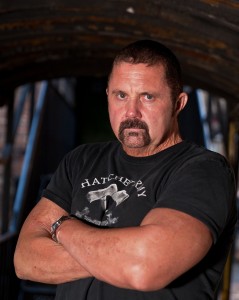
Kane Hodder, Legendary Horror Film Actor
1Q: What was your best and/or worst experience while making LOVE IN THE TIME OF MONSTERS?.
The best thing about doing the film was the cast. Not to seem like a kiss-ass, but all the actors were great. Even the less experienced ones. I hadn’t known how good Doug Jones was, and working with Matt [Jackson] and Andy [Gunn] was a real pleasure, as well. The only thing I didn’t like about the experience was that I wasn’t there as long as I would have liked to be.
2Q: Festival audiences often have to make hard decisions about what to see, and the catalog descriptions sometimes run together. In your own words, why should people see your film?
Because if they don’t see it, I will fucking kill all of them.
3Q: Time to pre-plan: You just won an Oscar for LOVE IN THE TIME OF MONSTERS. Give us your acceptance speech.
I’d like to thank the Academy for being drunk and/or stoned when considering my performance to be Oscar-worthy.
See LOVE IN THE TIME OF MONSTERS at Cinequest!
“Like” them on Facebook!
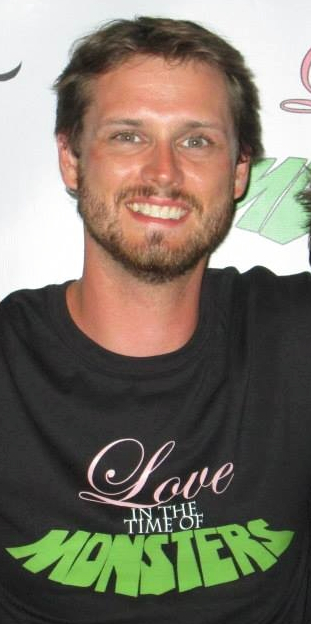
Mike Skvarla, writer
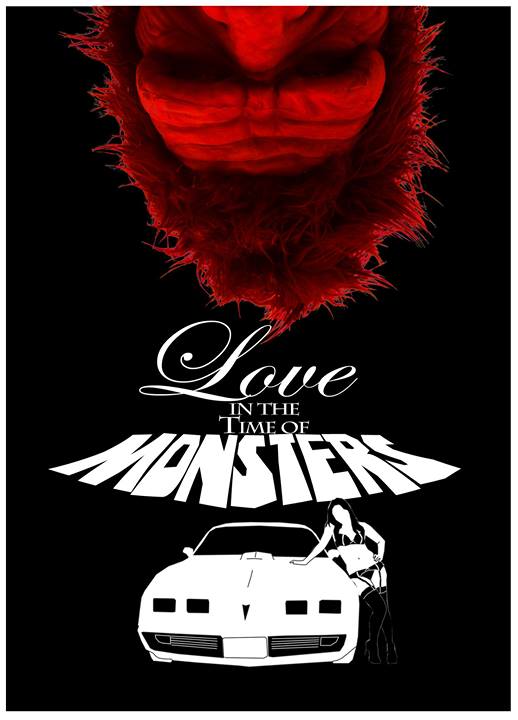
1Q: Tell us a little about the origins of LOVE IN THE TIME OF MONSTERS, from concept to financing.
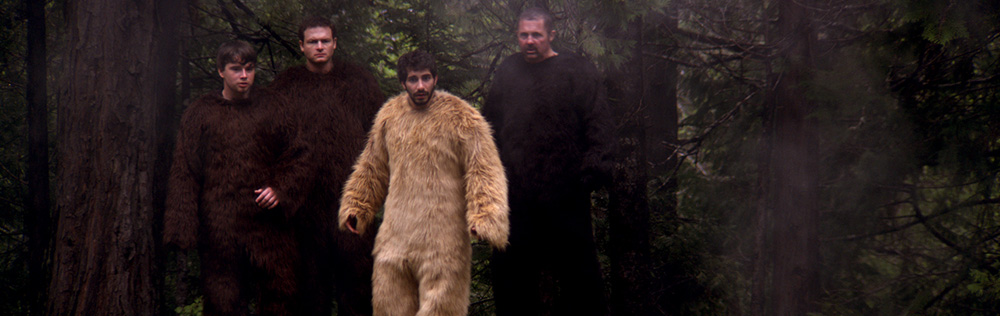
The central idea came right out of a dream I had back in 2005 – in it, I was on a tour group in the middle of the woods where this Davey Crockett-esque guide was trying to do some schlocky buddy-buddy routine with a Bigfoot-suited actor. Needless to say, it suddenly got pretty violent! Before I knew it there was a half a dozen of the Bigfoot-suited monster guys now running around, chasing us through the woods, it was really one of the most fun dreams I’ve ever had. There was a lot of stuff after that that never made it into the script, but that key scene – which is in the movie, by the way – really set up the entire story.
2Q: Cinequest is hosting the World Premiere of LOVE IN THE TIME OF MONSTERS. Explain to us how it feels to bring this film before audiences for the first time, and what do you think their reaction will be to your film?
We’ve had a couple of private screenings already but none in a film festival environment, so I’m really looking forward to showing it to an audience full of people who are excited about indie films! I think they would definitely be able to acknowledge and appreciate all the hard work that we put into it.
3Q: What was your best and/or worst experience while making LOVE IN THE TIME OF MONSTERS?
The best experience was actually every day, when I saw so many people slaving away to turn my imagination into a reality! Actually, I mean, uh, I was humbled by working alongside such a hard-working, talented, and dedicated crew who quickly became my friends and family.
The worst experience was seeing how many people got sick on set, I felt so bad anytime it happened. Especially when Kane Hodder got a bit of eye irritation – I really didn’t want him to get pissed off!
4Q: Festival audiences often have to make hard decisions about what to see, and the catalog descriptions sometimes run together. In your own words, why should people see your film?
From Day One we’ve operated on adhering to two adjectives for this movie – Fun, and Unique. It’s written, produced, and directed to entertain the audience, to keep them engaged, and make them walk out of the theater feeling like their experience was worth the ticket price.
5Q: Time to pre-plan: You just won an Oscar for LOVE IN THE TIME OF MONSTERS. Give us your acceptance speech.
Thank you all very much, I’m glad you enjoyed our film. It seems that my life goal has been finally reached, so it was nice meeting you all and I hope you have a great rest of your evening. <commits Seppuku>.
See LOVE IN THE TIME OF MONSTERS at Cinequest!
“Like” their Facebook page!

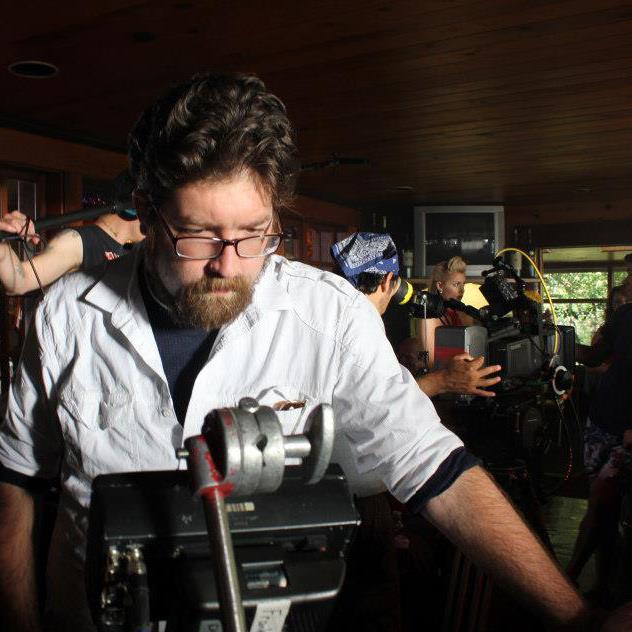
Matt Jackson, Director
1Q: Tell us a little about the origins of LOVE IN THE TIME OF MONSTERS, from concept to financing.
I started working on LOVE IN THE TIME OF MONSTERS sometime in 2008. Andy Gunn and I were just finishing a festival run with our previous short film, Background(ed), and were looking for something fun to follow it up with. So, we put out the call for scripts and Mike, who has been a friend of mine for years, answered with the craziest, most awesome script I’d read in a long time. By page three I knew it was the movie we had to make.
From there began the arduous process of notes, planning, funding, and more notes. It was a constant fixture in my life, even when there were times that it didn’t seem like it was going to happen. But through it all, we stuck to it, refining the draft into something that was both exciting and viable for us to shoot.
Our first step into actual preproduction began in December 2010, when we got a collection of actors together for a read through. Because it had been such an insular project up until that point, we just wanted to make sure that it was as funny to other people as it was to us. Clearly, it was a big hit and starting in 2011, LOVE IN THE TIME OF MONSTERS went from this back burner idea to something that we were really working on.
Things were moving at a pretty decent clip, but ultimately we hit a bit of a setback in August of that year, as we weren’t able to secure all the funding that we needed to pull the movie off. At the time I was devastated, but ultimately it was the best thing for us because, in retrospect, we weren’t nearly as ready as we thought we were to shoot.
We pushed our shooting dates back six months and re-attacked the movie with a newfound vigor. The following six months was a blur of producing fund raising tools, taking meetings, and generally spreading the gospel of LOVE IN THE TIME OF MONSTERS everywhere we could. Ultimately, we ended up shooting LOVE IN THE TIME OF MONSTERS over the course of three weeks in May of 2012 with a third of the original budget we thought we needed.
It was a certifiably insane idea, one that we never should have been able to pull off, but by the time we hit Memorial Day 2012, we had shot the craziest horror-comedy that we could imagine.
Then we started on the hard part.
2Q: Cinequest is hosting the World Premiere of LOVE IN THE TIME OF MONSTERS. Explain to us how it feels to bring this film before audiences for the first time, and what do you think their reaction will be to your film?
I am SO STOKED to finally get this beast out in front of people! And I’m so excited for Cinequest to be our world premiere venue.
It’s been such a journey from script to screen that I can’t wait for people to experience it. And I think the audience is gonna love it! It’s funny, brash, scary, exciting, with a dance of romance: It’s got something for everyone!
I have a good feeling about our screening.
3Q: What was your best and/or worst experience while making LOVE IN THE TIME OF MONSTERS?
Well, the worst experience was either our setback before we shot (which ended up being a major positive for us) or the massive rainstorm that hit us during our last few days of shooting… the days where all the action took place outdoors.
While we all pulled through as a group (the crew was especially great rushing equipment in and out of the rain during the small shooting windows we had), to be honest, there was a span I was really worried we’d end up with a movie without an ending. Ultimately, we shot the last chunk of the movie over the course of 4 days crazy out of order with me keeping track of everything in my head and ended up with my favorite sequence in the entire film.
My best experience though was either the first day of shooting or the last. Our first day was at the Trees of Mystery, where the producers surprised me by securing a 30 foot jib so I could get the opening shot I had wanted since our first scout up there. Initially it became a sacrifice to the budget, but the guys figured something out and sprung it on me over breakfast. It was the perfect way to start the journey.
And then the last day should be pretty obvious. After years of work, setbacks, and triumphs, I had finally achieved my goal of directing my first feature. It was a little overwhelming, but calling cut on that last shot and knowing that no matter what else happened, I had made a movie was the best feeling in the world. Definitely a lifetime highlight.
4Q: Festival audiences often have to make hard decisions about what to see, and the catalog descriptions sometimes run together. In your own words, why should people see your film?
Because it’s the best!
I might be a little biased though.
When we set about making LOVE IN THE TIME OF MONSTERS, it was with a simple goal in mind to make the most awesome love letter to the movies that we loved so much while we were growing up. We wanted something with that was as big on crazy action as it was on heart, that’s fun to watch over and over again. And I promise that you’ll never see another movie quite like it.
5Q: Time to pre-plan: You just won an Oscar for LOVE IN THE TIME OF MONSTERS. Give us your acceptance speech.
Clearly all my bribes have paid off.
I’d like to thank everyone involved, from our crazy dedicated production crew and everyone in the Crescent City/Gasquet area who helped us out to everyone in post who opened their living rooms up to me to hang out in for months, for making the movie possible. Andy, Allison, Rob, and Mike, without you guys there’d be nothing for us all to work on, so thanks for that. And finally, I’d like to thank my wife, Katrina, who has been the absolute best for putting up with the movie for the duration of it’s journey, allowed it to take me away from our wedding planning (we were married in March 2012, 5 weeks before we went to go shoot) and kept things rolling through the post process as our Pos Supervisor. She’s everything!
Now, let’s go see how much we can pawn this thing for!
See LOVE IN THE TIME OF MONSTERS at Cinequest!
“Like” them on Facebook!
 Popcorn and Vodka