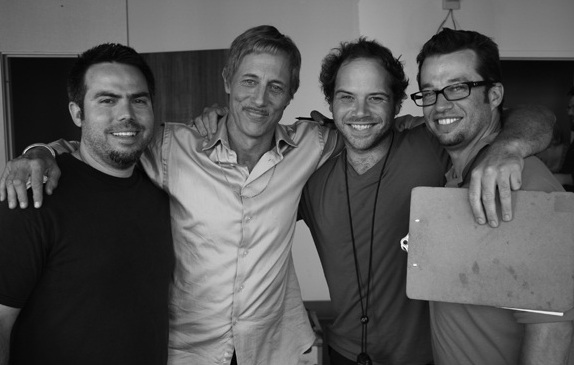
 (from left to right) Director Ian Thorpe, actor Jon Gries, writer Joey Abi-Loutfi and producer Eric Staley smile and pose during one of the last days of filming in San Diego’s abandoned Department of Transportation building.
1Q: Tell us a little about the origins of ETERNITY: THE MOVIE, from concept to financing.
Concept:
Writer, Joey Abi-Loutfi:
My good friend Eric Staley approached me in 2006 to write a screenplay for his business partner, Ian Thorpe, to direct under their company Sidecar Productions. I wrote them a few different treatments, and this one grabbed their attention. I was listening to a lot of Hall & Oates and Richard Marx at the time… don’t ask. Additionally, I had some male friends who truly platonically loved me, but had a hard explaining their love, because, well, we’re into girls. I also thought that was funny, so that became the basis for these two characters. I combined all these thoughts, and whammy, Eternity!
Development:
Producer, Eric Staley:
The initial script went through years of modifications and production concerns and 7 years later we met with Kevin Tostado, a local producer/production partner, and he had the idea of setting a date to shoot and not looking back.
Funding:
Director, Ian Thorpe:
To finance the film we raised most of the budget via private investors, but we also raised $50k on Kickstarter. Also, Sidecar Productions, our joint production company, was able to contribute a lot of sweat-equity to cover much of the post-production tasks/costs. Principal photography was completed in July 2012, and the last year and a half has been dedicated to post-production.
2Q: Cinequest is proud to host the World Premiere of ETERNITY: THE MOVIE. Explain to us how it feels to bring this film before audiences for the first time, and what do you think their reaction will be to your film?
Ian: I am really excited to premiere my first feature film in front of the Cinequest audience. As a Northern California native, I couldn’t be happier with the first showing being in the bay area. I think people are really going to enjoy the movie, there is something for everyone, the comedy is dry and very tongue-in-cheek, the music is silly but catchy, and 80s nostalgia make it a fun reflective ride for people who lived the era.
Joey: I feel extremely blessed, and I’m very proud of what we’ve accomplished. But it’s strange thing: being a comedic film, the audiences’ laughter will be the real test of the film’s success.
Eric: We have a great, energetic and fun film. I can’t wait to let the audience enjoy what we have created, even though I am little nervous.
3Q: What was your best and/or worst experience while making ETERNITY: THE MOVIE?
Eric: Unfortunately, everything costs more than when you created your budget, but it was so fun looking for 80s gear, wardrobe, and locations. Rubik’s Cubes rock!
Ian: My best experience on the film was working with a talented group of people both in front of and behind the camera, it was a true pleasure. Oh, and the craft services, huge shout-out to Annette for keeping the truck stocked with all my favorite snacks.
Joey: We filmed over the summer of 2012 while we all lived under one roof. It was like summer camp, except we created something special and didn’t get sexually assaulted by camp leaders.
4Q: Festival audiences often have to make hard decisions about what to see, and the catalog descriptions sometimes run together. In your own words, why should people see your film?
Joey: I like to tell people the film is about acceptance, but really, it’s a bunch of sex jokes with epic 80’s R&B music and costumes to pull it all together. I mean, if you like laughing really hard and listening to super rad music, then this would be the movie to see!
Ian: 9 words: Two dudes making smooth R&B music in the eighties. We could get technical about how many words ‘R&B’ should count as, but the point is that the movie has a great sense of humor that is understated and lets the audience decide for themselves when to laugh.
Eric: If you want to be entertained by colorful wardrobe, energetic music, awkward dialogue, and feathered hair then Eternity is the film for you.
5Q: Time to pre-plan: You just won the Best Director (or Screenplay) Oscar for ETERNITY: THE MOVIE. Give us your acceptance speech.
Ian – Best Director: I’d like to thank Aquanet, Rubik’s Cube, Neon, and Daryl and John, for making this film possible. I’m glad that audiences and the academy can appreciate humor that doesn’t rely on a laugh-track, slapstick, and fart jokes (okay, so there is one fart in the movie, but it’s classy). [Then the music starts playing and microphone lowers down into the floor, so I get down on all fours to talk into the mic before it goes away…] And I also want to thank my beautiful wife, sorry honey, I’ll get my life back now.
Joey – Best Screenplay: I would start by thanking the cast and crew; they’re the ones that made this story truly funny. I’d thank Sidecar Productions and our investors for believing in my writing and giving me this opportunity. I’d thank Hall & Oates for being the hit makers that they, as well as Nick Faiella, the man behind the movie’s original hit songs. And I would end by thanking my family for loving me so much. And my mom, because I promised her I would.
See ETERNITY: THE MOVIE at Cinequest!
“Like” them on Facebook!
Follow the film on Twitter!
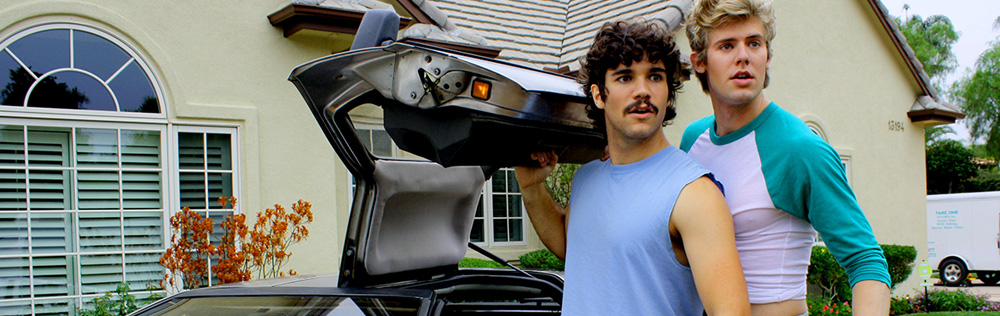
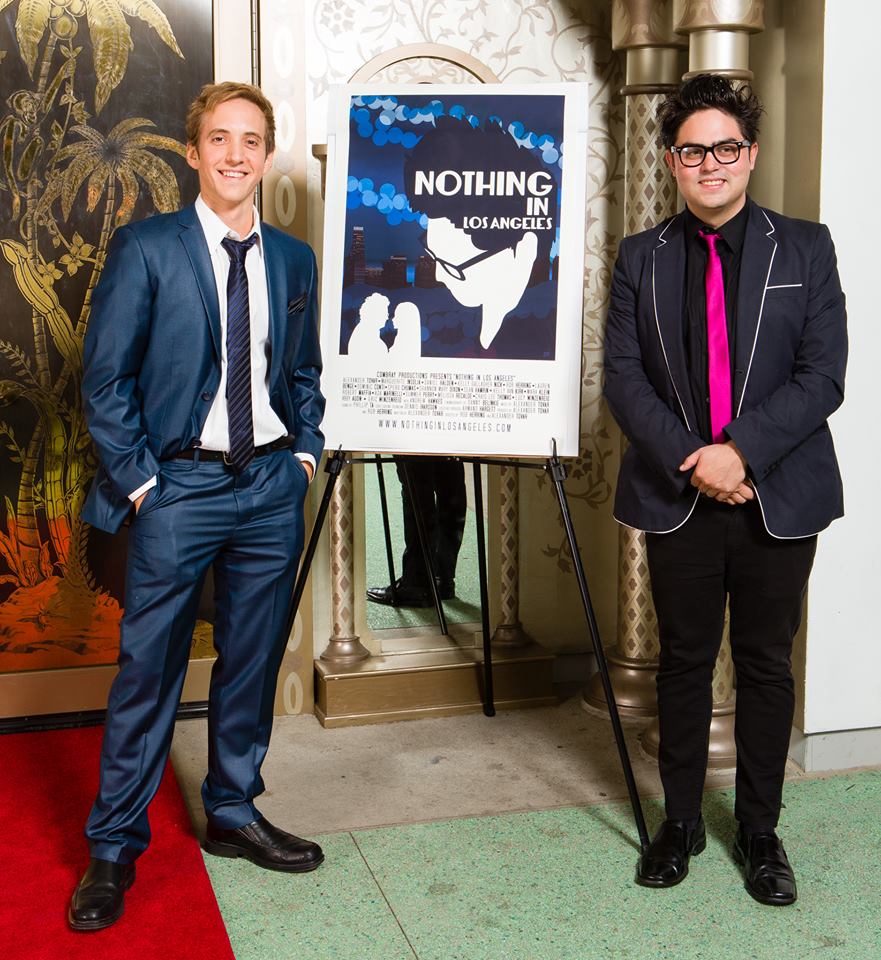 Alexander Tovar (right) and Rob Herring (left) wear many hats:
Alexander Tovar is Director, Producer, Screenwriter, Music, Editor AND Actor
Rob is Director, Producer, Editor and Actor
1Q: Tell us a little about the origins of NOTHING IN LOS ANGELES, from concept to financing.
Alexander: Having been trained as a composer, I wanted to write a script that showcased my music. I had never written a screenplay before so I thought I had nothing to lose. Being in a town where everybody wants to write one, I decided the hardest part was just sitting down and writing one. That’s how “Nothing in Los Angeles” was conceived. We used Kickstarter as a way to get initial funding but an old family friend, Armand Hargett, came on board and loved the idea.
Rob: The brilliant script and origin of the vision all came from Alex. I was more than eager to hop on board once I saw the potential for greatness in the project. I’m so grateful that Alex trusted me enough to let me join in the fun and help steer this ship. None of it would have been possible without the faith of our Executive Producer Armand Hargett. He understood the type of film that Alex had written and thank goodness he wanted to see it made.
2Q: NOTHING IN LOS ANGELES has done quite well at other film festivals. Will you be less nervous now at Cinequest? Does this process ever get any easier?
Alexander: I think instead of nerves, there will be excitement for both of us. The hard work is done and now we should take the time to enjoy what we’ve done and hope other people take a liking to it.
Rob: For me, watching the film with a crowd has definitely gotten easier since being honored with a few awards. The first time we screened it for anyone I was scared out of my mind. I knew I thought it was good, but I had no clue how our style of humor would translate. Just knowing that someone besides the two of us likes it at all is quite comforting. It means a lot for us to be at Cinequest, so we hope it continues to play well.
3Q: What was your best and/or worst experience while making NOTHING IN LOS ANGELES?
Alexander: The best experience was editing the film and putting it all together with the music. Editing is really where the fun part comes in because you’re seeing the film evolve as opposed to just rough dailies. The hardest part for me was wearing so many different hats (co-producing, co-directing, acting, and memorizing my lines). Having never acted, I needed to trust the actors around me and in particular, Rob, who gave me a tremendous amount of guidance and support.
Rob: My favorite part is being on set, building camaraderie with the crew and getting to support the actors’ performances as a director. I’ve never before been excited to have to wake up before dawn. I also had a ton of fun with my own time on screen, and actually really enjoyed the challenge of getting to wear a few hats on set. The hardest was getting over anxiety as to whether or not it would all line up in the edit. We’re all pretty inexperienced with filmmaking, so we were just doing our best. Having Alex and Danny Belinkie, our awesome DP, really made the difference. We each brought a different thing to the table and each covered for the others’ shortcomings.
4Q: Festival audiences often have to make hard decisions about what to see, and the catalog descriptions sometimes run together. In your own words, why should people see your film?
Alexander: They should see it because despite having a good story, it’s filled with laughter, sentiment, silliness, and serious moments. It’s shot beautifully and shows LA like no other film.
Rob: I think the struggles of our main character are those that almost everyone can relate to. There is a realness to some of the awkward moments throughout the film and that kind of comedy is really charming in its sincerity. We do showcase a lot of the beauty of the city. If you like Woody Allen, I think you’ll enjoy yourself.
5Q: Time to pre-plan: You just won an Oscar for NOTHING IN LOS ANGELES. Give us your acceptance speech.
Alexander and Rob: The making of this film was about trust. We had an extremely small team, so we had to really trust each other. But more than anything we had to trust ourselves. A little bit of encouragement from your teammates can go a really long way. We consistently gave each other positive feedback and I don’t think we’d be here today having not created that habit on and off set. If you keep people believing in themselves, there’s nothing they can’t do. Thank you to everyone who continues to help me believe in myself.
See NOTHING IN LOS ANGELES at Cinequest!
Watch the trailer!
“Like” them on Facebook!
Ben Ratner
1Q: Tell us a little about the origins of DOWN RIVER, from concept to financing.
My dear friend Babz Chula, a beloved Vancouver-based actor, teacher, and singer died of cancer and I felt devastated about losing her, so I decided to make a movie inspired by her, and by how she helped me and so many other actors, artists, and musicians find our way. It came together fast. I wrote parts specifically for the actors I wanted to play them, and Babz’ widower, Larry Lynn, was the only choice for cinematographer. Larry knew a guy named Jack Ong who wanted to get into producing, I showed him the script, he loved it, and he put up the dough. We brought in an excellent young producer named James Brown I had worked with before, and we shot the film in 16 days for under 100 grand. A year later, at our Premiere, we won Most Popular Canadian Film at The Vancouver International Film Festival. I still miss Babz, of course, we all do, but making this film and sharing it with the world helped us all find closure, and celebrate the good times we had with her.
2Q: DOWN RIVER has done well at previous film festivals, even winning Most Popular Canadian Film from the Vancouver International Film Festival. Will you be less nervous now at Cinequest? Does this process ever get any easier?
I believe in this film. I know it’s solidly crafted, beautifully acted, and truthfully told. It’s up to the audience members to decide whether or not it’s their cup of tea. What makes me nervous is not knowing how many people are going to show up for the screenings. (What makes me really nervous are turbulent flights on the way to the festivals.) So, far, at various festivals, we have played to theatres with over 500 people in attendance, and theatres with under 50. But I’ve enjoyed every screening, for different reasons. The Q and A sessions are always very satisfying. To know we have connected with and affected our audience in a positive way is the best reward for the hard work and makes all the schlepping around well worth it.

Babz Chula
3Q: What was your best and/or worst experience while making DOWN RIVER?
Best experience, shooting a scene when “Aki” played by my wife, Jennifer Spence, stands in front of a mirror and puts on a sweater that had previously belonged to the character of “Pearl” (Helen Shaver). The sweater Jen was wearing had belonged to Babz in real life. As we shot the scene, beautiful natural sunlight was pouring into the room and me and Jen and Larry were all barely keeping it together, emotionally speaking. In the scene it was important that “Aki” remains brave, despite her sorrow, and Jen embodied it perfectly. There was so much emotion coursing through us all, our hearts were pounding, our legs were shaking. As she put on the sweater, the wind shifted outside, and the shadows of the trees began to wave across the background of the shot. I called cut and some serious hugging took place. To feel such powerful emotion and know we were capturing it without forcing it, and to know it was truthful and vital to the story, that’s what it’s all about, man.
Worst experience — suffering from exhaustion a week or so after the film had wrapped, and my wife finding me wandering around the apartment directing scenes in my sleep. I was literally “sleep-directing.” I have never been so tired in my life. And I have been in this business almost 25 years. This one took a lot out of me. But it was worth it.
4Q: Festival audiences often have to make hard decisions about what to see, and the catalog descriptions sometimes run together. In your own words, why should people see your film?
It’s very original, quite funny, rather edgy and very heart warming, with a very satisfying finish. If you like films like The Squid and The Whale, Frances Ha, Sideways and Nebraska, this film should please you greatly. It also has great original music that you’ll be hearing for the first time. And, yeah, I know you’ve heard it before, but it’s true: since most films these days cost many, many millions to make, come see what we were able to do for a teeny, tiny fraction of that amount. A lot of money will buy a good looking dog, but only love will make him wag his tail, right? A good story, passion, and genuine talent are priceless. Take a chance on something new. Ain’t that what film festivals are all about? Support The Little guy! The Big Guys don’t need festivals. They have marketing budgets and movie stars to get people into the theatres at the multiplexes.
5Q: Time to pre-plan: You just won the Best Director Oscar for DOWN RIVER. Give us your acceptance speech.
First of all, I gotta thanks Babz. I wouldn’t be here without her. And thank you to my cast, including my wonderful wife Jennifer Spence, I love you. And Helen Shaver, and Colleen Rennison, and Gabrielle Miller. And Ali, and Jay, and Brian, and Teach, and Peter, and Tom, and the rest of the actors, you were all fantastic. And thank you to our Executive Producer Jack Ong and our Producer James Brown, and Larry Lynn, of course, and Rob Wenzek my editor, and Kevin House for this great songs, and Chris Ainscough…and Lesley Diana… and Avi and Telefilm Canada…there’s so many of you who made this film happen… Most of all… (begins to well up, tears roll down cheeks) thank you to the people of San Jose who came out in droves to support our film when we played at Cinequest. (holds Oscar above head triumphantly) This one’s for you, San Jose! (Band kicks in and I am shoved off stage by Sean Penn and Miley Cyrus.)
See DOWN RIVER at Cinequest!
“Like” DOWN RIVER on Facebook
Ben Ratner on Twitter
DOWN RIVER on Twitter
1Q: Tell us a little about the origins of AS IT IS IN HEAVEN, from concept to financing.
In the fall of 2011, my producing partner and I decided we were just going to do it — we were going to make a feature film. I said to my wife, the co-writer, “Let’s write a script about a cult leader.” I had always found cult leaders fascinating, specifically David Koresh and Jim Jones, and wanted to see that ascension to power from an altruistic beginning to the kind of ending that usually accompanies these stories.
We pulled together a producing team and got to work on pre-production. As a film professor, I was able to recruit students to crew the film; in fact, 95% of the crew were students. Due to extremely limited funds (as in, no up front investors), we chose to crowd fund the project through Kickstarter, and the rest is history.
2Q: Cinequest is proud to host the World Premiere of AS IT IS IN HEAVEN. Explain to us how it feels to bring this film before audiences for the first time, and what do you think their reaction will be to your film?
I always tell my students that if you don’t feel entirely exposed when premiering your film, then you haven’t fully invested yourself in the project. So, I feel incredibly vulnerable! But I’m also very excited to be able to share this. I think it is a challenging story, and I hope that it will push people to think hard about why they believe what they believe.
3Q: What was your best and/or worst experience while making AS IT IS IN HEAVEN?
I didn’t anticipate how close our ragtag group would become, so even now, looking back on making this film, it was one of the best experiences of my life. We definitely created a family bond.
4Q: Festival audiences often have to make hard decisions about what to see, and the catalog descriptions sometimes run together. In your own words, why should people see your film?
People go to film festivals to be entertained, and also challenged. This film accomplishes both. The main reason I made As It Is in Heaven was that I saw a lack in American cinema concerning the nature and power of belief; I was inspired by Bergman and Tarkovsky and their fearlessness in their examination of the human condition and how faith is an essential aspect of that. If anyone is interested in the potential cinema has to explore belief, come see this film.
5Q: Time to pre-plan: You just won the Best Director Oscar for AS IT IS IN HEAVEN. Give us your acceptance speech.
First and foremost, I have to thank my wife for her long-suffering nature. I have to thank my producers, Nathaniel Glass and Isaac Pletcher. The cast was amazing, and thank you to Chris Nelson for his phenomenal performance as David. And a huge thank you to the incredible volunteer crew for working long hours in the summer sun, and the numerous friends and family who helped finance this film and made the whole thing possible.
Watch AS IT IS IN HEAVEN at Cinequest!
“Like” it on Facebook!
Joshua Overbay on Twitter
AS IT IS IN HEAVEN on Twitter


Alex Orr on set with Katie Orr
1Q: Tell us a little about the origins of A IS FOR ALEX, from concept to financing.
The film is about a soon to be Dad that freaks out about the upcoming birth of his first child. I shot the film over the 10 months of my wife’s pregnancy because I was……freaking out about becoming a Dad. There was no script, no financing, we just started shooting scenes that were based on what we were doing and going through. Instead of going through the experience, writing a script and then going back and making a film- we just did it as it happened. It was the most fun I have had making a movie in 10 years.
2Q: You are actually a Cinequest veteran. You are the writer/director of BLOOD CAR (one of my favorites ever) and producer of last year’s CONGRATULATIONS!.
That’s right! I love Cinequest and can’t wait to come back!
a) Does this process ever get any easier? I don’t really think the process of making a film should be easy, but it does get easier the more you do it. The self doubt and second guessing never change, they’re always the same.
b) How does Cinequest compare to other festivals? I’ve been going to any film festival that would have me since my first festival (Cinequest ’07) and Cinequest is the best. You have great venues to see films, incredible picture and sound, great parties to interact with filmmakers and amazing guest speakers.
3Q: What was your best and/or worst experience while making A IS FOR ALEX?
The best experience making this film was that it was a film that had no pressure. We were just going out every day and doing what we wanted, sometimes it didn’t work and we didn’t use the footage, sometimes we would shoot scenes we didn’t plan on and they turned out great. It was wonderful, just making a movie with your friends and not giving into the pressure of what might happen after the film is done, just having fun while we were shooting was great.
4Q: Festival audiences often have to make hard decisions about what to see, and the catalog descriptions sometimes run together. In your own words, why should people see your film?
When I go to see films at any festival I want something I’ve never seen before. That is why we go to festivals, we want something that the studios aren’t doing, something different. I can promise you, you have never seen a movie like this. This film is a really funny (and vulgar- sorry, I have a filthy mind) family comedy/Documentary that also throws in some really strange Science Fiction. It’s fun to watch, full of jokes and doesn’t alienate the viewer. Plus we will all be in San Jose for Q&A after the film (and we really slay the audience in Q&A’s, we have it down to a science.)
5Q: Time to pre-plan: You just won the Best Director Oscar for A IS FOR ALEX. Give us your acceptance speech.
“I personally believe, that U.S. Americans, are unable to do so,
because uh,
some, people out there, in our nation don’t have maps.
and uh…
I believe that our education….like such…..as in South Africa,
and The Iraq,
everywhere like such as…
and, I believe they should…..
our education over here,
in the U.S. should help the U.S.
or should help South Africa,
and should help the Iraq and Asian countries so we will be able to build up our future,
for us. And I want to thank the Academy.”
Well Folks, it’s that time of year again. You need to start stocking up on your vitamins, get as much sunshine as possible, and get your body in shape, because there are only six more weeks until Cinequest 2014 begins!
The lineup will drop next week, and previews, reviews and interviews will start getting published soon after. And if you’re quick, you can even buy a Maverick’s Pass for 20% off if you order by tomorrow, January 22.
If you want to really get involved, fill out the volunteer form and get in on all the behind the scenes action.
As soon as the lineup is out, Popcorn & Vodka will be holed up in a dark room with screeners and excited filmmakers waiting for interviews, so you will start seeing more information as soon as possible. Keep up with Cinequest and future deals by Liking their Facebook page.
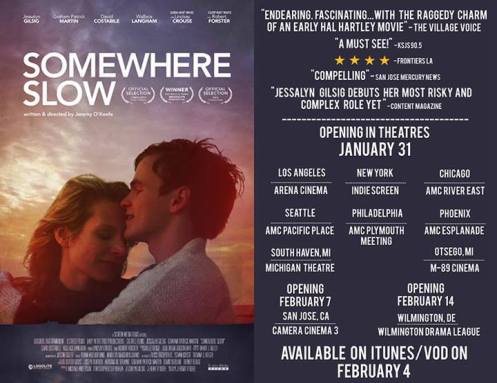
Can’t wait for the new films of Cinequest 2014? Somewhere Slow, from Cinequest 2013, will be opening at Camera 3 in San Jose on February 7. If you missed it last year, now is your chance. Here is our review, and my interview with writer/director Jeremy O’Keefe.

THE CITIZEN is a film about Ibrahim Jarrah (Khaled Nabawy), an immigrant from Kuwait who has won the green card lottery and arrives in America on September 10, 2001. As he explains, he always has the worst luck, and it doesn’t get much worse than a Middle Eastern immigrant arriving in the US on the day before 9/11, especially when his cousin is later suspected of being one of the terrorists involved in the World Trade Center attacks.
I was very excited to see this film. Over a decade after the attacks, that particular day is still fresh in my mind and I still have no desire to see an action film set onboard the planes or in the WTC. This film promised to tell the story of how that day affected one particular person, but also certain groups of people.
It is a good story, focusing on several trials and tribulations that Jarrah encounters, including six months in jail immediately after the attacks for questioning, the difficulty in getting a job, and how he deals with being an “other” in New York at that time.
But the film is not as strong as it could have been. Jarrah may have a lot of bad luck, but he also has better luck than most. He’s taken in and housed almost immediately by a beautiful young New Yorker who also helps him get a job and helps him enroll in school. He does go through some trials, including an actual trial over the question of deportation, but he comes out on top in every single situation. He is also such an upstanding, perfect citizen that the viewer never once questions whether we should believe his story or not – even with the issue of the mysterious disappearing cousin. We always feel that we should be rooting for him no matter what. But without any flaws, any whatsoever, it is hard to believe in him as a real person. And the final scenes, wrapping everything up… way too pat, not believable to me, they did not work for me at all. Real life is generally not a Cinderella story, and I desperately object to these particular happily-ever-after final scenes.
That all said, this is director Sam Kadi’s first feature film after only two shorts. In that case, he has performed some extraordinary work by tackling this complicated story and filming all over New York. I understand he wanted to tell the story of what so many people went through during that time, people who have not yet had much voice, and sometimes that means simplifying a story in order to get the message out as a whole. He has gathered an impressive group of actors and done an amazing job attempting to bring this tale of the American Dream to the big screen. Kadi is an immigrant who lived through the 9/11 attacks himself and was inspired to tell these stories, and he accomplished his dream. And for all these reasons, and more, you should see this film. I know I have criticized it here, but it is a flawed film that also has an important story; it is a story that many still need to hear and think about.
Watch the trailer!
Buy tickets to see THE CITIZEN at Cinequest!
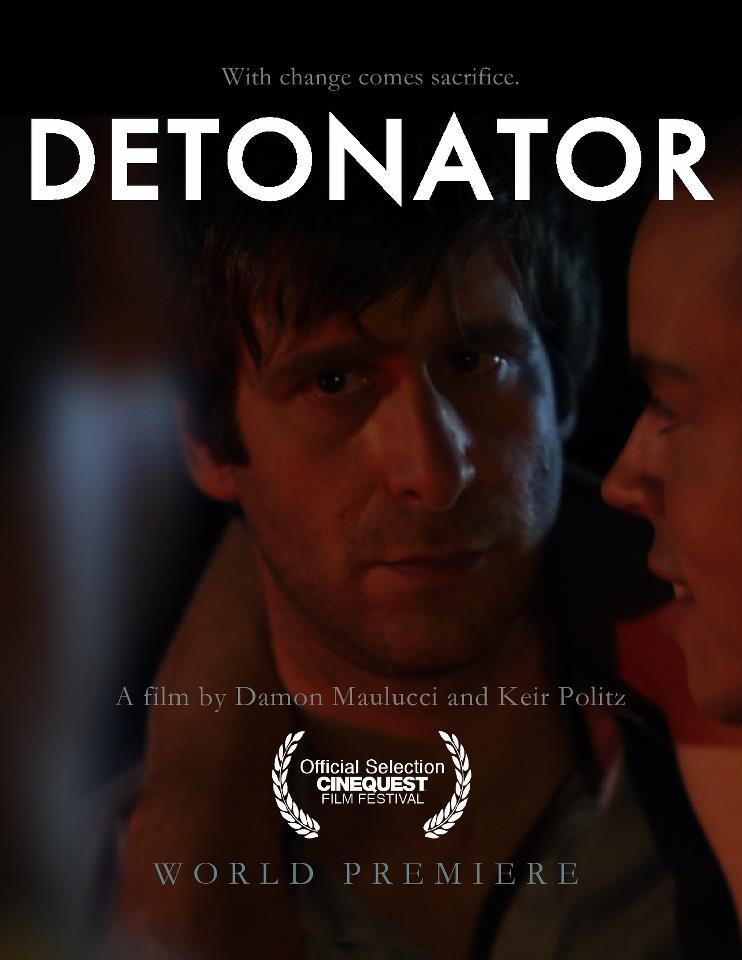 Sully used to be in a Philly punk band but has given up his dream and is now trying to make ends meet with a wife and five year old son. His old band mate Mick is still chasing his dream, or, more accurately, living in a dream reality. After years of being apart (or estranged) Mick has reentered Sully’s life bringing a tornado of drama. We soon meet a third member of the band, Dutch, still in the music business and walking on the dark side. This film reveals more and more information about its characters as the film progresses, so I want to stay away from giving up much more of the plot details.
I was blown away by the film. The combination of writing and acting created a believable reality and showed characters that I know very well. My ex-hubby had a childhood best friend who was Mick to a T, and they had many of the same fights with each other as adults. Or, “adults”. It was a bit painful to watch these familiar arguments between men who clearly love each other but who can no longer be in each other’s lives. The Mick in my life ended up dead… the Mick in the film might very well be on the same path.
“Besides, I have a plan…” …Mick.
If I only had a nickel for every time I heard this from the Mick in my life.
Lawrence Michael Levine plays Sully in an impressive performance. I met Levine at Cinequest two years ago and found him to be a quiet but sweet guy, and so I was amazed to see his performance on screen that year in GABI ON THE ROOF IN JULY. He gave a solid performance and commanded attention on film. So I should not have been surprised at his completely different role in DETONATOR. Levine really is an impressive actor and this is no longer up for debate after these very different roles.
Also impressive is Benjamin Ellis Fine who plays Mick, one of those unfortunate people who might have talent, but not the drive or work ethic (or any ethic) to make their dream come true. Mick is the kind of guy who will forever live on the fringe… until he’s pushed right off the edge and disappears forever. Having known a Mick with an unfortunate ending, Fine’s amazing performance broke my heart. I could barely stand to see this character come to life up on the screen.
Some of the credit for these performances has to go to Damon Maulucci and Keir Politz, the writer/director team for DETONATOR. The dialog between Sully and Mick was very real, the plot progression of the evening was fluid, and the casting (including Dawn L. Hall as Karen, the wife who has way more patience than Sully deserves) was perfect. But these four main men definitely are a powerhouse team in film.
That said, I did have some issues with the film. Although I was intensely excited from the first few minutes, the purpose of that first half hour is kind of a mystery to me now that I’ve seen the whole film. All the questions about Sully, the issues he had with his son in the car, the tension that the background music created… what was all that about? I never read any sort of plot description before I watch these films, so I thought I was really in for a thriller from the beginning , and couldn’t wait to see what mental issue, or maybe super power, it was that Sully had. But all he had was… adulthood? My second (constructive) criticism is that Dutch and his gang were just slightly over the top in their “bad guy” roles. It wasn’t Robert Longstreet’s acting; it appears to be the directing. Everything else in this film was so real and true to life, but much of the scenes with Dutch were not.
But overall? Excellent film. And again, the amazing talents of these four, Damon Maulucci, Keir Politz, Lawrence Michael Levine and Benjamin Ellis Fine, are a force to be reckoned with. And overall, I was blown away.
 1Q: Tell us a little about the origins of A NIGHT AT THE OFFICE, from concept to financing.
The idea for the story came from working at an office in the corporate world and not wanting to work my life away doing something I didn’t love. I was writing a feature script but wanted to write and direct a short film before making the jump to a feature. The film was self financed, it is relatively low budget since it was shot in one location with only two main characters.
2Q: What was your best and/or worst experience while making A NIGHT AT THE OFFICE?
I think the best experience was the feeling of accomplishment after we finished shooting. The idea had been in my head for a while so to be able to see it come together as I expected was a dream come true.
3Q: You’ve chosen to go the route of short film for A NIGHT AT THE OFFICE. What do you think are some unexpected differences and similarities in the making of a feature vs. short?
I think the big difference with a short is that you really have to economical with the script, you have to get right into the story from the beginning and show the audience where you are going, there isn’t as much room for character development, every line has to count.
4Q: Although short films are my favorite, they often have little chance of being seen by a wide audience, and an even smaller chance of gaining you fame and fortune. Now that you’re in the “easy” stage of filmmaking, the high of showing your film to an audience, was the making of A NIGHT AT THE OFFICE worth it? Will there be more films from you in the future and would you stick to the short format?
It is definitely “easy” to enjoy life on the festival circuit, and it is unfortunate that most shorts at festivals won’t have much of a life outside the circuit, I meet many people like you who come to festivals specifically for the shorts programs. So far I would say it was worth it, Cinequest is my second fest, we premiered in September at DC Shorts, and the response to my film has been great, hope to play a few more fests and then we’ll see what happens next with the film. I am almost finished with my feature script, hope to get that into production in the near future. I would do another short if I came across the right project.
5Q: This appears to be your first film, and your first film at Cinequest. How has your experience been here so far, as a filmmaker? What advice do you have for future filmmakers at Cinequest?
This is my first short, and first time at Cinequest, I have been blown away by the whole experience, the audiences have been great, we had an almost full theatre for our shorts program on a Sunday morning at 10 am. Cinequest does a fantastic job of arranging VIP meet ups and soirees in the evenings, I would advise all filmmakers to go to the networking events and meet as many fellow filmmakers as you can; you never know what opportunities that may lead to in the future, also try to see as many films as you can so you can get an idea of what types of films a top discovery festival like Cinequest programs.
Buy tickets to see A NIGHT AT THE OFFICE in the short program at Cinequest!
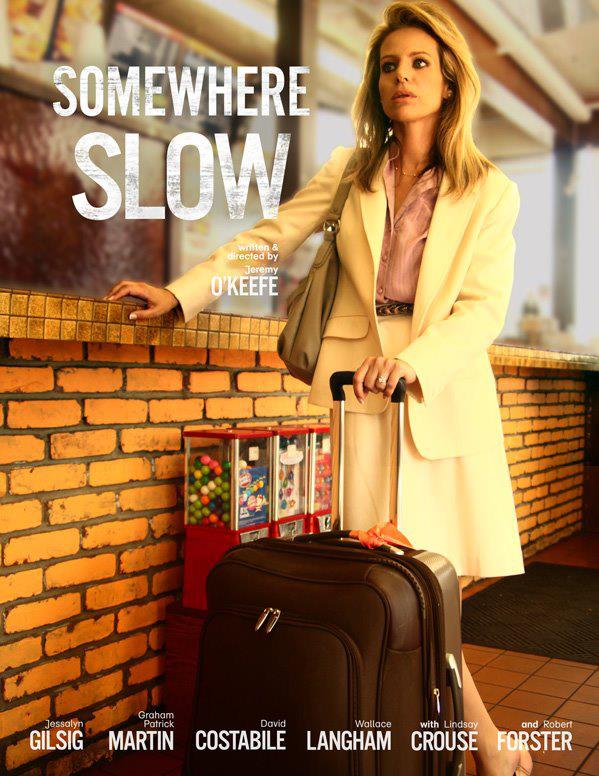 Ever feel like dumping your entire life and just starting over?
40 year old Anna (Jessalyn Gilsig) has never even snuck candy into a movie theater. She follows all the rules, is afraid of dirt and germs, gives a compliment to every single person she meets, and has lost total and complete control of her life.
“Karma’s just been having a field day with me,” says Anna as she watches her adult pimples grow and flare in the mirror. Yes, she’s definitely having a bad day, and not in a funny, ha-ha sort of way. It’s her one year anniversary to a man who seems well meaning but doesn’t really pay any attention to her wants or needs (or the giant cloud of depression hanging over her). Her family thinks she can do nothing right, and it’s a really, REALLY bad day at work. When Anna finally meets her last straw, a violent tragedy, she takes off with only her purse, a dead cell phone, and a suitcase filled with anti-aging products.
She quickly meets Travis (Graham Patrick Martin) a troubled young man with an unknown history, and somehow these two embark on a soul healing journey.
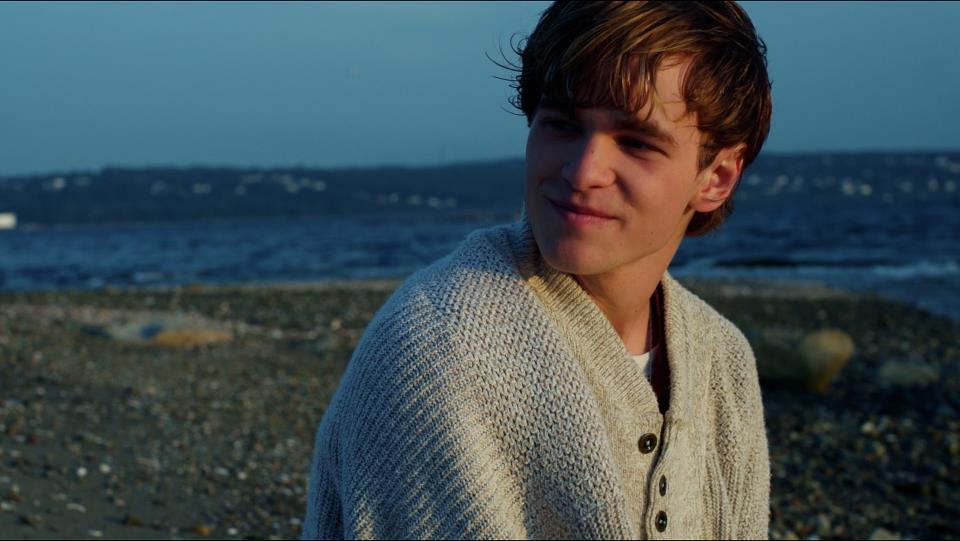
Graham Patrick Martin as Travis
Both of these actors have credits a mile long, and they both turn in solid, amazing performances. I have not yet seen Gilsig in this kind of dramatic role, playing a much weaker woman than the over the top crazies for whom she’s most well known. But she is absolutely amazing as the sad bulimic who hides behind a thick wall of make-up. Martin also plays a particularly touching and believable role as Travis, and holds up his half of the film with great strength and heartbreak. I am also very impressed with writer/director Jeremy O’Keefe. The film is not only directed as by a seasoned veteran, but it has one of the best scripts I’ve seen at Cinequest this year. Once you’ve seen SOMEWHERE SLOW, read my interview with O’Keefe for more behind the scenes information.
Don’t miss this great addition to the Cinequest lineup.
Buy tickets to see SOMEWHERE SLOW at Cinequest!
Watch the Trailer!
 Popcorn and Vodka