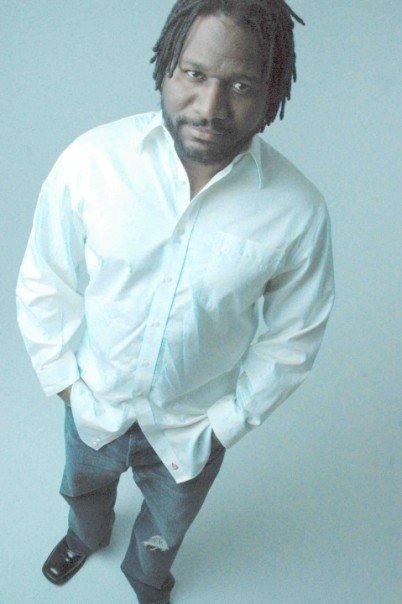
 1Q: Tell us a little about the origins of NEW YORK DECALOGUE, from concept to financing.
New York Decalogue was inspired by one of my all-time favorite directors, Kryztof Kieslosky, a Polish director (of the Blue, White, and Red trilogy, as well The Double Life of Veronique) who in 1989 made a mini-series called The Decalogue. Kieslosky’s The Decalogue dealt with each of the Ten Commandments; New York Decalogue has only a hint of religious overtones, but deals more with the idea that we create our own narratives and give those narratives a great deal of weight, which becomes the way we interact and react to our environment.
New York Decalogue is a scaled down version of a Decalogue series I originally conceived of six years ago that would span over ten international cities, at one-hour episodes, dealing with speculative political waves of war, poverty and politics on everyday people. New York Decalogue follows a long list of films such as Tuvalu, Baraka, The Red Balloon, Koyaanisqatsi, Naqoyqatsi, and Powaqqatsi where there is very little to any dialogue. Eighty to eighty-six percent of communication is body language, and I was really interested in the landscape of the mind, the isolation and seemingly, tenuous connections we have with one another, which is being further eroded in the age of artificial social networking and disposability.
The budget for the film was micro, at $10,000, actually, $9, 345, but who’s counting?
It was filmed over five months, only on the weekends. This was the first time I served as my own cinematographer, but it was out of pure necessity. There’s a lot of sacrifice that goes into producing an independent film—most of it, the state of mind. I’m happy to report, I’m fully recovered.
2Q: Cinequest is proud to host the World Premiere of NEW YORK DECALOGUE. Explain to the audience how you feel about bringing this film before audiences for the first time, and what do you think their reaction will be to your film?
It’s like going out on a first date with a person you really like, and knowing that person will be spying you—making sure you have all five fingers, every word is carefully considered, but regardless—either the date will be attracted to you, or not. The film has to be able to stand on its own without me over explaining it, or justifying it. It’s out there, flaws and all; the audience will like it, or not like it. Either way, I’ll be okay. But since I’m able to hold two complicated emotions at the same time, I’m scared as hell.
3Q: What was your best and/or worst experience while making NEW YORK DECALOGUE?
The best experience and worst experience are often like a healing wound that itches, and when you scratch it, it hurts so good.
I think the worst experience of making Decalogue was sort of feeling like the characters in it, alone and isolated. There was no crew to bounce ideas. There was no fellowship, which is the foundation of filmmaking—the shared experience of building something. I moved to New York in 2007 from Seattle, leaving behind a cast and crew that I’d collaborated with for years. So Decalogue was the first narrative film I was making in a long while. Tried as I might, I failed at building a sustainable crew (with such a paltry budget), so I pushed forward wearing many hats on the production—prop maker, makeup, cinematographer, sound, etc.
The best experience was simply being able to pull off a feature film after a four-year hiatus.
4Q: Festival audiences often have to make hard decisions about what to see, and the catalog descriptions sometimes run together. In your own words, why should people see your film?
Because I was voted the number one filmmaker by my mother, and have won the audience award from family and friends 12 years in a row and counting. I’m sure this is unprecedented. The film festival audiences are a different breed of audience than their mainstream counterpart. I like the idea that they are willing to give an ugly gal or guy a shot at a date. And they are the most loyal bunch that will support a film if they are moved by it. The film festival audiences are responsible for mainstreaming independent films because they are ahead of the curve in taste.
If you can’t make it to my screening, just support me on Facebook. I take what I can, and that’s really all you can ask for. Take what people are willing to give. Sometimes it’s more, sometimes less.
5Q: The current market for independent films is fractured, to put it lightly, and existing distribution models grow more ineffective with each passing moment. What are your hopes or plans for distribution?
There are at least 8,000 films made a year, of which only 85-90 will receive distribution, so I’m under no illusions about my chances of securing distribution. The ultimate goal for filmmakers is to see their films playing in theatres, but we also have to be realistic about straight-to-video, or self-distribution, or no distribution at all. There is no shame for instance in going straight-to-video. Film festivals are great opportunities for networking, where you may not get distribution, but you may get an opportunity to make the next film, or meet your next partner. I’m not dogmatic about the type of distribution; for me, it’s more about the relationships I get to nurture that may help me make the next film, or enlighten me in some way.
You can follow Malik Isasis on Twitter @MalikIsasis
New York Decalogue now available on DVD and Instant Video.
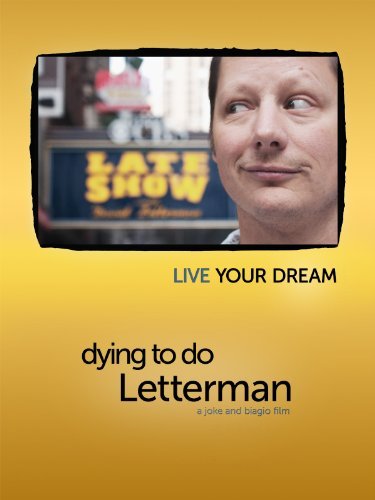 When it comes to my favorite kind of documentary, it’s kind of a tie between docs that teach you something, and docs about quests. My own thirst for knowledge always makes me seek out the informational docs, but quests are often quite motivational, no matter how silly. MY DATE WITH DREW is a silly fluff of a film, but I’ve watched it several times. I think it’s just part of human nature to want to see people succeed in their goals, no matter what that goal is. They always inspire you to want to complete your own quest.
But the stakes get higher when you realize time is running out to achieve your life goal… or any other goal. DYING TO DO LETTERMAN takes the quest documentary to another level when comedian Steve Mazan decides he will give himself a year to accomplish his goal of playing on David Letterman’s show. That is one year out of the possible five he has left to live after he is diagnosed with cancer. As he says, Monday and Friday always come; “Someday” doesn’t always come.
This film becomes inspirational and motivational in about five minutes, and as the terminal prognosis is explained the audience not only feels Steve Mazan’s urgency, but he makes us feel the urgency in completing our own goals as well. A few months into his goal he travels to Iraq with some other comedians to play for the troops. When they all end up being evacuated because of a severe bombing which is too close to the area they are staying, Mazan notes that “it’s not just cancer that can kill you.” This fact is not lost on the audience. Death could be behind any door, at any time.
There is not a whole lot of suspense in this film. Steve and his crew have been walking around handing out pins and t-shirts during the entire festival, so we know he’s still alive and well (and apparently doing fine at the moment). The nature of the quest documentary tells us he likely completed his goal as well. The only real issues in the film are the difficult road he travels to get there, and all the hard work required to achieve that goal, as well as many disappointments on the way. As far as whether it’s a great film, there is quite a lot of exposition (although having Steve sit on stage while he speaks – as if he were at work – almost makes this work for me), and when it comes down to it, it’s just another cute quest documentary.
But audiences loved it. At Cinequest it was even awarded Best Documentary Feature in the Maverick competition, and Best Documentary from the Audience award. And why? Because it did exactly what it should do: inspire, motivate, and make people feel good about themselves when they leave the theater. It certainly helps that Steve Mazan and directors Joke Fincioen and Biagio Messina were great presences at the festival, always smiling and wanting to talk to people, and were handing out swag: T-shirts and the yellow “I’m dying to…” buttons. Not only do audiences love swag, but those pins are actually pretty inspiring. I put a serious goal on mine, and I’m going to use it to inspire and motivate myself to make that goal come true.
So is it a great film? I say it’s a great story. In its own way, it’s also a great film because it does exactly what it is supposed to do, and it really affected the audience, which is a good thing. And YES, you should see it. I’d give it 4 out of 5 stars. I also wish Steve Mazan many years of achieving goals, and hope the film gets out to an even wider audience – I have no doubt it will, and that is great because everyone needs this inspiration and motivation to achieve their goals.
Don’t miss my interview with Steve Mazan (2011).
 1Q: Tell us a little about the origins of DYING TO DO LETTERMAN, from concept to financing.
Five years into my stand-up comedy career, I got diagnosed with incurable cancer in my liver, and was given a worst case-scenario of 5 years to live. Obviously that was an incredible blow. But rather than sit around feeling sorry for myself, or waiting to die I asked myself what I wanted to accomplish in that time I had left. I knew right away that the number one thing was to complete a dream I had since I was 12 years old. To perform my comedy on the David Letterman show.
I started a project called “Dying To Do Letterman” to get my dream out there. I had been waiting for that dream to come true, and now I was going to make it come true. I gave myself the goal of getting on the show in 1 year. I started filming all the steps I was taking, just as a personal documentation of what I was doing–and to maybe put on the website I had started about the project.
Two friends of mine, Joke Fincioen & Biagio Messina, heard about the project and asked if they could help in any way possible. They worked in the TV industry and offered to make any calls that might help me get closer to Letterman.
Instead of having them make calls, I asked them if they’d be interested in doing a documentary about my journey, and wherever it might take me over the next year. Being the great people they are, they agreed.
Now, they signed up for what they assumed would be a one year project. The documentary finished filming 5 years later. Luckily, they stuck with me through all of it.
As far as financing goes…Joke & Biagio call this their passion project. That means that none of us make money on it. Every part of the film from cameras, travel, photography, etc. has been paid for out of our own pockets. Joke & Biagio, and our cameramen have all donated their time.
I’ve been very lucky to have friends like that. Friends that would care as much about the project as I do.
2Q: This film will be making its World Premiere at Cinequest. How do you feel about bringing such a personal story to such a wide audience?
It is very strange sometimes to think about a very tough part of my life being shown to complete strangers. But that feeling quickly fades when I think about all the people who have told me they were inspired by my project. People told me they were inspired before we ever started filming. They were inspired by the idea of me chasing this dream despite my diagnosis.
If you’ve ever had someone tell you that you’ve inspired them, it’s an incredible feeling. You feel a responsibility to not let them down. This project quickly felt bigger than me. Very soon I wanted to complete my dream, and the movie, for everyone who had told me they were inspired by the project.
So as personal as the film is, the story and every part of the journey it takes over 5 years feels very much about a gigantic group of people. I felt like Rocky running thru the streets of Philadelphia with kids running behind me. I wasn’t alone when I reached those steps. Those moments don’t feel like they were only mine.
3Q: What was your best and/or worst experience while making DYING TO DO LETTERMAN?
The best experience was feeling a sense of power from all the cool things that happened on the journey. The relationships that grew stronger. The sacrifices I saw people make on my behalf. The strangers that told me they were inspired by my project. This ALL came out of a cancer diagnosis. It’s amazing how much power came out of such a weak moment.
The worst experience was the feeling that I might let someone down. Whether that be my friends and family or Joke and Biagio. I know my limits and what I’m willing to do and sacrifice to reach my goals. But so many other people were sticking their neck out for me and my dream that I felt a lot of pressure. I also felt selfish for allowing others to do so much on my behalf. When things were good and moving forward I could handle this, but when it wasn’t I would get very depressed about what I got myself and others into.
4Q: Festival audiences often have to make hard decisions about what to see, and the catalog descriptions sometimes run together. In your own words, why should people see your film?
People should see our film because it offers so much. It’s relatable, because everyone has dreams. It’s topical because everyone has dealt with cancer close to them somehow. It’s interesting because it’s real. And it’s an incredible experience because it was produced and directed by two incredible filmmakers that will be doing even more incredible things in the future.
5Q: The current market for independent films is fractured, to put it lightly, and existing distribution models grow more ineffective with each passing moment. What are your hopes or plans for distribution?
We, the producers and I, are actually excited about the possibilities for distribution. We know the market is fractured—but that’s not necessarily a bad thing. It only means that the traditional route is not what it used to be.
We believe that there are so many new ways to get distribution as long as you are open to them. Basically, we are willing to put in as much work on the distribution of this film as we have in getting it made. Even if that includes taking DVD’s door to door and forcing people to watch it. So leave your door open.
Steve Mazan can be found on Twitter @D2DLTheMovie
Joke Fincioen & Biagio Messina can be found on Twitter @jokeandbiagio
 1Q: Tell us a little about the origins of BAD BEHAVIOUR, from concept to financing.
Bad Behaviour was originally an extension of a short film I made called Smiling Faces. It taught me a lot but in the end the film was a bit crap. The really cool idea behind it seemed to have been spoiled due to me over-stylizing and messing with shit that didn’t need to be there. The editor on Smiling Faces was a guy called Steven Caldwell and whilst we edited it he encouraged me to start writing a feature. We both seemed to be at a point in our lives where we wanted to commit to a large project. So in early 2009 I set about writing what eventually became Bad Behaviour. I met with Kris Maric who would later come on board as the second of the three producers right before going back to the UK where I finished the screenplay. It turned out pretty awesome and we managed to persuade some bigger names to come on board through Kris. I executive produced and raised all the financing. I originally thought it was going to be a $20,000 uber low budget kinda thing, but when we got John Jarratt (who in 2005 played Mick Taylor in Wolf Creek which found him worldwide recognition and friendship with Quentin Tarantino) and Dwaine Stevenson (from another Aussie cult movie called Gabriel) I was able to raise more money. I’ve worked as a bookkeeper as a means to an end since I left school and was able to pitch the project to some clients. Suddenly we got a nice chunk of cash to get this thing made and from there it snowballed.
2Q: It appears that the film has been screened at other festivals; how has it been received? Do audiences respond differently at some festivals than they do at others?
We’re now known as ‘that film where the scary man blood-voms into that chicks mouth’ which I’m extremely proud of. Who wouldn’t be? We wanted to shock audiences and stand out – which is generally what every film maker wants to do so it was our intention to take it as far as we could with every aspect of the film: the drama, the violence, the humour, the dialogue. The story is quite compact and fast so it naturally causes the audience to connect and stay engaged. The reactions we’ve found are incredibly vocal right there in the cinema both times we’ve screened. This really showed at the Melbourne Underground Film Festival Closing Night where we took 6 of the top awards. I got best director but it was the cast who took most of the nods with best lead actor for Lindsay, and others such as Aussie acting veteran Roger Ward (Mad Max, Turkey Shoot) who took best supporting actor at the age of 74 for playing Voyte in Bad Behaviour. That was an awesome night but now we’re really interested to see how an American audience will go with it at Cinequest (Friday the 4th at midnight is our international premiere). I have a feeling its gona be a friggin good night!
3Q: What was your best and/or worst experience while making BAD BEHAVIOUR?
Best from the point of view of a director would be directing Dominique and Nic in the scene where one of the characters sends his best friend off to break into a house during a party. It was strange because it was a pick-up day on one of the weekends during principle photography so there was hardly any crew, probably only 10-15 of us. There was a weird atmosphere on set and the characters were connecting beautifully. The scene was meant to be more of a ‘wedge scene’ but somehow developed a really terrifying undertone which shocked me. For me that’s the most scary scene in the film, and yet not one drop of blood. The worst would probably be finishing the film doing 36 hour days colour grading and sound mixing in Brisbane to meet a festival deadline that we eventually were rejected from. I ignored the rule where you’re not supposed to rush and I paid for it. I felt like shit for about 15 minutes and then decided to re-cut the film which turned out a million times better… so here we are now! Thank fuck.
4Q: Festival audiences often have to make hard decisions about what to see, and the catalog descriptions sometimes run together. In your own words, why should people see your film?
Go see Bad Behaviour if you want to watch something completely balls-out fun. It’s fast, loud, violent and funny. That’s entertainment – plain and simple. The story in the end is a study of ‘The Villain’. Most of my favourite characters of all time are villains: Darth Vader, Col. Hans Landa, Anton Chigurh I could go on forever but you see my point. Villain’s are free to do what they want, there’s no rules and that’s what Bad Behaviour is about.
5Q: The current market for independent films is fractured, to put it lightly, and existing distribution models grow more ineffective with each passing moment. What are your hopes or plans for distribution?
I find it all very exciting to be honest – discovering all these awesome people teaching about this ‘new world’ of self distribution for independent films and how to really make money and reach an audience with it. At this point in time it’s a transitional period so we’re using a hybrid of both old and new models. Distribution can be terrifying if you don’t understand what you’re getting into, it’s terrifying even when you do know what you’re doing. Someone once told be distribution is like standing in a cold shower tearing up $100 bills, I don’t think that’s the reality all the time. I find it’s about staying in control of your movie and finding people who are willing to work hard for the project and making informed intelligent decisions. We’ve got a sales agent who’s awesome and we’re looking at doing great things there, plus we’ve got a team of amazing producers still slogging it! We’re interested in establishing career-long relationships as that’s what this industry seems to be about (and Cinequest clearly recognises and celebrates this). Movies have to be made responsibly and that’s it. The job doesn’t end until the bastard’s sitting on shelves in peoples homes and everyone’s paid, film makers have to learn that this is their job just as much as it is anyone else’s.
You can follow Joseph Sims on Twitter @josephsims
 1Q: Tell us a little about the origins of FIVE PROOF, from concept to financing.
The script for FIVE PROOF was brought to me by a good friend and collaborator of Element 151, our production company based here in San Jose, Rory Campbell. At the time Rory had just finished helping us with a motion graphic title sequence for one of our previous short films. I received an email with about half a dozen scripts for shorts from him that said I could take my pick, and FIVE PROOF stood out to me most. The writing is amazing, the ideology behind it was sharp, and the fact that it was the most technically difficult script to make into a film out of the lot, intrigued me. And to be honest there is a lot of subtext underlining the story in a comic book nature, of which I am a fan.
The financing for the film is a unique situation. My partner and producer at Element 151, Chante Cardoso and I founded a non-profitsummer youth program focused on teaching real-life filmmaking skills to youth in the East Side Union High School District here in San Jose, two summers ago. Our initial summer program worked off a grant from the city. However, last summer that grant was not made available to us. We felt we needed to try and continue the program regardless, and sat down with some of the students from the previous summer and let them know we had no funding for the program but if they wanted to dedicate themselves to working on FIVE PROOF and help us fundraise then we would continue the program and work side by side with them to shoot the film. They jumped on board in a heart beat. Which was amazing. From there we went into pre-production and started fundraising. A Kickstarter was formed, we held various fundraising events including a concert at the Improv hosted by our good friends at Live 105, and did just about anything we could to make it happen. On top of that our collective filmmaking crew all chipped in by reducing rates and doing what was needed to just see the film finished. We were incredibly lucky to have an amazing group of kids to work with as well as an enormous amount of support from our local community here in San Jose that ended up reaching across the nation.
2Q: You attended Cinequest last year with another short film. How was your experience with the festival, and were you able to show at any other festivals?
Cinequest 20 was great, we met some amazing people. I have gone to several Cinequests past and always felt it was important for us to be a part of it, being that we are local. The free beer isn’t a bad perk either. Our film from last year, Parallels, did screen at the Carmel Art & Film Festival and was invited to the Toronto Film Market as well.
3Q: What was your best and/or worst experience while making FIVE PROOF?
The best part, was the opportunity to collaborate with some amazing people. I got to work with my good friend Eric Callero (Conan O’Brien, The Runaways, Terminator : The Sarah Conor Chronicles) again, he was in our first short film Whiskey Tears. Eric and I have a great relationship as director / actor, I trust him and that gives him the freedom to take risks. The film also took me to a new venture in filmmaking and that is dealing with visual effects. In turn I was introduced to Mark Christiansen. Mark has worked on titles such as Pirates of The Caribbean, 2012, and The Day After Tomorrow. He is just a mind blowing person to talk to when dealing with the reality of something that is not real or for that fact can’t even be seen when shooting. Our team has also expanded locally working with the likes of Brandon Van Auken from Moving Red and Steve Murr a local music producer with a sharp cinematic sensibility. These new relationships have grown past FIVE PROOF and we are all continuing to create locally together. The worst experience, we had some technical issues with the RED files. Even to the point that RED itself couldn’t lend a helping hand. Some shots in this film were saved frame by frame, which sucked.
4Q: Festival audiences often have to make hard decisions about what to see, and the catalog descriptions sometimes run together. In your own words, why should people see your film?
That is really tough for me. As I’m writing this we are literally wrapping up the final locks on picture and sound, getting ready to print later this week. So I still have an unsettled feeling about the film. It’s great, don’t get me wrong. I’m extremely proud of it. But right now selling it to people is hard for me to process. We will be promoting it like crazy though…and good people like [this site] are key to us getting the word out. So, thanks.
5Q: Short films often have no means of wide distribution. What are your plans for FIVE PROOF in the future, and what sorts of things can you accomplish by making a short film?
Plans for FIVE PROOF are to just get it out on a wider festival run. I feel strongly that this film is the start of something greater as well. So, Shawn West could potentially be developed into a longer format. The three shorts I have directed over the last two years are all stepping stones towards a feature length production. They are proof that we can accomplish successful work and are key for us to know our strengths and limits when moving into a feature. There is an original idea in development right now for said feature. The plan is to be in production by late summer / early fall of 2011. Unless something epic comes along, FIVE PROOF will be our last short film. I feel that in itself is an accomplishment for my team and collaborators.
 1Q: Tell us a little about the origins of BASE EMOTIONS (playing at CQ with The Sentiment of the Flesh), from concept to financing.
“Base Emotions” is a film that came to me at a time when I was really struggling with the question of faith. How do we trust in people when we have been hurt by them? How do we trust in God — if we do — if we have been hurt by Him? I was considering the word “faithless” one day and was struck by the fact that it had two meanings: one of infidelity, and the other of not believing in something. I wanted to write a piece that would bring into direct conflict two characters who each were faithless in those different ways — one who was an adulterer and another who simply did not know how to believe. It just grew from there. Ultimately, it ended up being a character piece about a maddening woman named Katie, probably the first fully realized female character I’ve ever managed to successfully write; I know her incredibly well, and yet she always simultaneously surprises me. She is someone I hope the audience will desire, despise, be repulsed by, feel compassion for, and then ultimately will come to understand. This is because the film is also to an extent about judgment; we judge other people so easily, yet never seek to understand their perspectives, to realign our thinking to their priorities, their punishments, their sense of morality. In the course of one night, all of this plays out. Can the character of Justin, and through him the audience, seek to understand this woman whose behavior just seems to be so contrary to many of our own conceptions of morality?
Once I’d written it, I called up the guys who I’d worked with since film school, and in our various ways, we found our ways into the project. The entire short film, 22 minutes long, takes place in one hotel room with only two characters. In terms of financing, we found a willing partner and executive producer named Quoc Peyrot who believed in the project and basically donated all the camera equipment for the production. In terms of the actors and the set, it was all very low budget; my crew basically consisted of people who were passionate about this project and the filmmaking process. It was during this time that we basically went from being guys who worked together in film school to being a film company. Together, we bought a jib crane. Together, we paid for the location and the necessary supporting equipment. Together, we made the project work.
I have done work in the past I’ve been proud of, but “Base Emotions” is really the first project for our company — Siren Song Creations. And it’s really an honor to be able to say that now that it’s finally done, it will be having its world premiere at a film festival that is just a block down the street from where we filmed it at the Fairmont Hotel, and maybe three blocks down the street from the school where we as a group learned our craft and met each other. We are about as local as local filmmakers can get; yet we take a certain pride in the fact that our work is absolutely universal in quality. We just believe in the strength of storytelling. You can sink millions into a movie, but I hope our film — low-budget as it is — just has characters and a situation that will churn something visceral in our audiences, something uncomfortable but familiar, and something ultimately hopeful. I mean, it’s a question all of us deal with in our lives, right? How do we forgive?
2Q: You have attended Cinequest several times before as both filmmaker and film viewer. Explain your favorite parts of our film festival.
God, I love Cinequest. That’s the truth. I’ve had some bad years in my life recently, and Cinequest helps tokeep me inspired and motivated. It’s a festival where there are no celebrities; even the celebrities are just people who make art and you can make a connection with. It’s incredible to join energies with the other independent artists on the rise. I’ve been to Cinequest as a filmmaker, and every year that passes when I don’t have a film in the festival, there’s a certain itch under my skin when I attend — a certain sense of knowing I got stories to tell and I got to get on telling them, that I gotta be a filmmaker. Cinequest is really always going to be my home festival. I sincerely hope that as my film productions increase in budget and size and scope and hopefully quality, I continue to premiere every single one at this festival. It’s just home. And it’s a place that absolutely loves the independent artist.
It’s tough to be a filmmaker in this day and age when you don’t have any money and you have few connections. Relationships suffer. Families want you to settle. And still, you got this burning desire to create something, and I think that has value. Historically, artists had value. To want to be an artist was an honorable thing. It simply is not true anymore, at least not in most parts of the world. It’s seen as selfish, expendable, and its value negligible. At a few places like Cinequest, being an “artist,” pretentious a term as that may seem sometimes, still has value. It’s not about the money or who was in your film, it’s about the story you were trying to tell. My film is playing at the festival that played incredible films like “Prague,” “For My Father,” “A Colombia,” “The Last Lullaby,” and “Andrew Jenks, Room 335.” I don’t care that most of the world hasn’t heard of these movies; I saw them at Cinequest and they changed my life. Now my movie’s playing there, too. There’s real pride in me to be able to say that.
3Q: What was your best and/or worst experience while making BASE EMOTIONS? Read more…
 1Q: Tell us a little about the origins of THE GLASS SLIPPER, from concept to financing.
In college I read a Flaubert novella called Un Cœur Simple (A Simple Heart in English), and was quite taken with the austerity of both the central character and the narrative style. Flaubert’s Felicity is a kind of pious naïf who fails at every turn to take charge of the trajectory of her own life; she eventually slides into the deepest depths of penury–and then death–because she trusts that the “Holy Spirit” (whom she confuses with a stuffed parrot) will save her. It’s a rather fatalistic story, and it lacks the typical character arc of almost all Western literature. She doesn’t change; she doesn’t learn (which is not at all to say that the reader can’t learn from her mistakes). I think most of us end up living a similar kind of life in one way or another, and that the standard structure of our narratives might therefore have a certain willful falseness at its core.
I’ve wanted to adapt the novella into a film for about seven years, and The Glass Slipper is the end result of that. Mind you, my film is almost nothing like the novella- there’s a character called Felicity, and I’ve certainly taken some cues from Flaubert in creating her, but there’s much going on in my film that’s completely unrelated to the ostensible “source material.” A large part of the film deals with another character who fails also to improve his lot, and we watch his family crumble while he flounders around. This thread is entirely mine.
Though we’ve recently, through more traditional channels, secured additional funding with which to finish the film, the lion’s share of the actual production phase was funded via a Kickstarter campaign. I’ve found it to be not only a great source of funding, but also an incredible way to build a community around the film from day one.
2Q: You were at Cinequest last year with your first feature which you had filmed in Tennessee. What differences were there between filming in Tennessee vs. Palo Alto, CA? Pros and cons?
The biggest “pro” has doubtless been the much larger pool of willing, enthusiastic collaborators in the Bay Area. It was quite a challenge to get people off of their couches in Tennessee, even when shooting five minutes away from their homes. Now I’ve got people driving from over an hour away. It sounds like a pretty slight point to be made, but I think it speaks to the fact that the cast and crew were actually driven to work on the project (as opposed to my driving them, with a bullwhip). Enthusiasm makes the biggest difference in the world on a microbudget film. It’s what allowed me to complete this film in about six months; my first film took nearly four years.
I’ll add that I have access to an incredibly varied number of locations here. Tennessee is beautiful, but there isn’t much variation. In Northern California there are deserts, mountains, rolling grassy hills, beaches, fog, sun… Every setting imaginable is represented, and easily accessible. Drive an hour one way and you’re in “Maine,” drive another way and you’re in “Arizona.” This obviously has an enormous impact on the kinds of stories one can tell.
3Q: What was your best and/or worst experience while making THE GLASS SLIPPER?
This was actually a remarkably untroubled production, especially when compared to that of the first feature, Hell Is Other People. There was, however, a bit of a nail-biter when it came to securing permission to shoot a few scenes at a key location: The Glass Slipper Inn. It’s an old, quasi-crumbling motel in what passes for the “seedy” part of Palo Alto. It’s built with turrets, as if to secret away some past-her-prime princess. As such, it creates an important thematic overlay of broken-down-fairy-tale-ism, and provides–in a pretty low-key way, I hope– a certain context for the story’s characters and events. And of course it’s the inspiration for the film’s title.
It was not easy to talk the owners into signing off on our shooting there — they’re pretty traditional people in spite of the business they’re in, and probably assumed we’d be either shooting pornography or else putting up a front for some kind of debaucherous party. It took a couple of months of dropping in, calling, begging, pleading, etc. Finally we talked them into it just a week or so before we were scheduled to shoot there. And then we showed up and shot pornography. (Not really.)
4Q: Festival audiences often have to make hard decisions about what to see, and the catalog descriptions sometimes run together. In your own words, why should people see your film?
I think it’s going to have a particular draw for local audiences because it treats Silicon Valley (and its own particularly hollow take on the “American Dream”) in a way I don’t think many other films have done; there’s very little in it that focuses on the tech side of it all. It’s more about the reckless gambling that takes place behind the 1’s and 0’s. Speaking more generally, I’d say this film is worth watching because it’s just as big a gamble as anything Ermir (the male lead, played brilliantly by Vahe Katros) undertakes in the film. The traditional concept of protagonism is a tricky sacred cow with which to attempt making hamburger.
Speaking more generally still: it will make you laugh, then cringe, then wonder which is more appropriate.
5Q: The current market for independent films is fractured, to put it lightly, and existing distribution models grow more ineffective with each passing moment. What are your hopes or plans for distribution?
I think the only way to make a name in filmmaking these days is slowly to insinuate oneself onto a few screens here, then a few more there, and so on. To do that, one has to keep making films as often as possible. One has to get as much press as possible, and to continue building relationships with critics. Finally, and most importantly, one has to get very, very lucky. These things being the case, my plan is simple: to keep making films, to try to get people talking, to meet as many people as possible, and to keep my eyes peeled. I don’t know what else anyone can do.
You follow Jarrod Whaley on Twitter @jbwhaley
January 2011
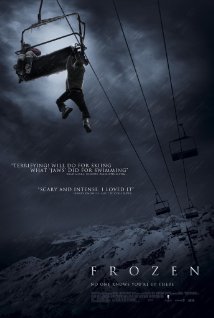
FROZEN: I watched this little piece of hilarious “horror” last night. I had recently seen it on some list of “Underrated Films of 2010” but it was already in my Netflix queue for some reason, so I decided to see it.
And I thought it was ridiculous. I mean, at least it made me laugh, and often that is the beauty of horror films, that the characters are so stupid it’s funny to watch them die. But this film, aside from having an interesting premise, just seemed to take the easy way out at every turn, and does not really give you any surprises.
And so this review is going to be completely spoiler filled. Not a review, just a funny, spoiler filled recap. Don’t read it if you plan to see the film, because I’m going to tell you everything that happens. But if you want to be smart and watch something better with 90 minutes of your time, Read On!
The premise is that the three characters (two male best friends and one girlfriend) get stranded on a ski lift. I think that is a very interesting idea, one where maybe you could explore the psychology that happens when you are literally stuck in midair with no way to get down. Kind of like that movie with the couple stranded in the ocean, waiting for sharks to eat them. That film was WAY more interesting. Or for an even better example, 127 HOURS, where there is only ONE character stuck in one spot, not going anywhere. That film is not so much about his escape but about the psychological changes he must go through.
Ah well, why do something complicated when you could take the easy way out? First, start out with three unlikeable people who have already irritated you to death in the first 15 minutes. But then, when the three of them realize they have been stuck up there, they waste no more than a few seconds before they FREAK THE FUCK OUT. Within two minutes they’ve dropped their gloves and goggles. In five minutes they realize it’s Sunday night and no one will be back to the lifts until Friday… because ski resorts close during the week?? WHAAT?? But even if this is the one resort in the world that closes during the week why does it not occur to them that maybe someone will notice them missing, like, THE VERY NEXT DAY.
Now sure, I don’t want to spend the night on a ski lift. In fact, after my last horrific zipline episode (long story for another day) I’ll probably never get on a ski lift again (and I’m okay with that). But the first thing that would have gone through MY mind would be getting comfortable and covered up, and trying to get through the night until morning and THEN SEE WHAT HAPPENS.
Not freak out so badly that within ten minutes the only option available to them is OBVIOUSLY to jump OFF the lift. From at least a good 25 feet above ground. So sure enough, within minutes we have one asshole jump right off the ski lift where he breaks his fucking shins in half in the snow. This could have been an interesting turn of events, leave the two above and the one below, just as stuck. But no, because it takes a pack of wolves a good 10 seconds to find him and eat him dead. Awesome!
So the other two end up spending the night up on the chair anyway. And (miraculously!) don’t freeze to death. BUT, because they are moronic assholes, they’ve left their hats way up on their foreheads (the better to see their pretty little faces) and now they have frost bite. Better yet, the girl, who is missing one glove, left her uncovered hand on the chairlift overnight, where it has now frozen. What moron would do this? It doesn’t take much instinct to just stick your hand inside your sleeve (and to cover your face with your hat, but whatever). EVEN BETTER: instead of unsticking the hand with some warm spit, she pulls it right off the handle, leaving several layers of skin behind. This was obviously done just for the gross factor, but come on, if no rational person would do this, and there’s a very easy, pain free solution, it’s just dumb.
Now the other guy makes a few attempts to shimmy across the lift line above, and after a few failures he actually makes it to the nearest pole!! And there is a ladder!! And he makes it all the way down the ladder! AMAZING!!! Oh, but here come the wolves! Watch out, Guy! So the girl tosses him his ski pole, because they couldn’t hold on to their gloves or goggles, but that guy still had his ski pole with him, and he manages to scare the wolves, and get to one of their dropped snowboards, sit his butt on it, and slide down the mountain.
Oops, there go the pack of wolves after him!!
NEXT morning… Oh, the girl still hasn’t frozen yet! And see, if the other two assholes had just stayed on the lift there would be THREE alive people. But obviously no one who has a family or friends or coworkers who care where they are.
Because no one has come to save her yet! What happened to Guy #2 on the snowboard? Didn’t he get help? So anyway, the lift is now hanging by one screw (because Guy #2 broke it during one of his escape attempts), and Girl decides she needs to get off the lift, wolves be damned. And so she tries to lower herself off, but of course then the lift falls… but only halfway! It’s hanging by a rope! So she can drop herself down, and she hurts her leg, but it’s not snapped in two. And she starts sliding herself down the mountain.
Oh, here are the wolves! They’re chomping on their supper from the night before, Guy #2. Guess he couldn’t sit-board down the mountain fast enough. They all start growling at Girl, but when they decide she doesn’t really want to have any of their luscious buffet herself, they just lick their chops and go back to their leftover breakfast and ignore her. So she continues sliding down the mountain.
And somehow, she manages to slide right down into the ROAD! Where there is an actual CAR that comes by, which is AMAZING since this ski resort is closed during the week! But the driver guy gets the almost dead Girl into his car, and takes her to the hospital. Because there always has to be one person left to tell the tale, right? And I guess the irony is that the one person to make it down the mountain was the one person with no ski experience! Oh! CLEVER! That’s probably why it was one of the most underrated films of 2010!!! Anyway: The End.
The Moral of the Story: Don’t get off the ski lift until the wolves are nice and full after feasting on at least two of your friends.
 1Q: Tell us a little about the origins of BABNIK, from writing to financing.
I bite off more than I can chew. It’s pathological. This film was made in a language I don’t speak. It stares down one of the hot-button issues of the day—sex-trafficking. I’m in over my head. I’m drowning. I can’t look at my work from the outside but I imagine it’s quite a spectacle. I don’t remember making this film and can’t imagine why I did.
2Q: You have brought two previous films to Cinequest in the last two years and they were about as different from each other as I’m sure BABNIK will be from them. How do you think you have grown as a filmmaker in the last three years? As you get more practiced in your field and become more known in the industry, do you think things are easier or harder now?
I’m developing in reverse. The process gets harder, the films are increasingly messy and amateurish. I resist “arriving” or realizing any promise that my earlier work may have suggested. Forget it. BABNIK was made by a twelve-year-old. With any luck, my next film will look like the work of a seven-year-old.
3Q: What was your best and/or worst experience while making BABNIK?
Risking imprisonment by impersonating FBI on the crowded streets of San Francisco. Losing crew members because I’m abusive. I had to shoot several scenes by myself because people refuse to work with me.
4Q: Festival audiences often have to make hard decisions about what to see, and the catalog descriptions sometimes run together. In your own words, why should people see your film?
I once joked that I couldn’t edit my way out of a paper bag, so the audience is stuck in the paper bag with me. Join me inside my latest paper bag. You won’t like the experience, but it will give you something to complain about, and there’s nothing more cathartic than that.
5Q: The current market for independent films is fractured, to put it lightly, and existing distribution models grow more ineffective with each passing moment. What are your hopes or plans for distribution?
My first film was a record of an emotional crisis which has now ended in divorce and my second film was a record of an intellectual crisis which has dogged me since I was privately tutored in fourth grade. BABNIK is a record of another kind of crisis—I won’t ruin it by being explicit. These are incredibly personal films, charting unmanageable anxiety with rambunctious and alienating techniques and a disregard for anything but sincerity and unity of vision. Who would want to distribute such films? They are eroded inscriptions on a reclining tombstone; I gather they mean something to the one who’s buried there.
1Q: Tell us a little about the origins of GABI ON THE ROOF IN JULY, from concept to financing.
 Lawrence (writer/director/actor): I shot and edited my first feature, TERRITORY, over the course of my first year at film school, so when the film premiered in Cinequest in 2005 I was still really a student. While at film school the teachers pushed me to write very conventional screenplays, which I was resistant to, but I wrote them anyway. When I graduated, I realized the films I’d written at school would be hard to get off the ground because they had relatively large budgets. It was depressing to think I might have to wait years to get back on set and work with actors, which is my favorite part of filmmaking. At the same time, I’d been revisiting a lot of Cassavetes, Mike Leigh & Rob Nilsson films and reading about their methods. They really inspired me to break away from the more conventional approach that I’d adopted at school. I was especially interested in how they collaborated with actors to create their films and decided that the next film I shot would draw on their techniques.
 Sophia (actor/producer/editor): I got cast in a national commercial. It was the first commercial audition I’d ever gone on, and I was pretty sure I blew it in the callback but then got a call from the casting director saying I’d gotten a part. When I got to the set, I remember I called Lawrence and said I was pretty sure my part was useless and I was going to get cut from the commercial (which I basically did). But, the commercial aired and I started getting residuals despite the fact that you could mainly only see my left kneecap. So, I suggested we use the money I made to make a film using the methods Lawrence had been so interested in. Combined with Lawrence’s savings, we had enough money to make a no-budget feature!
2Q: You used an unconventional way of developing your script to obtain more complete and truthful characters. Please explain to our readers how improvisation was used in your film.
Lawrence: Well, the film itself is not actually improvised, though I’m sure a lot of people will think it is because all of the performance are so natural. I feel like I really have to point this out, because the term ‘improvisation’ seems to distract people from the fact that these actors are giving great performances. They aren’t in front of the camera making up lines, playing themselves. We worked for six months prior to the shoot rehearsing and developing characters that are often startlingly different from the actors who play them.
The first step in the process was the audition. I asked the actors who were auditioning to bring in a list of people they knew – they could be someone as close to them as their sister or someone they’d only seen once on the street – I just wanted the list to consist of real people. Then each actor and I went through the list and parsed it down to two or three characters that I thought would be interesting to see them play. Once that decisions had been made, each actor came in and did a private moment as each of the three characters we’d selected. After seeing all the actors do this, I decided what characters I thought would play well off each other and that’s how we decided which actors would be in the movie.
The next step was to meet with each member of the cast individually, and flesh out specifics about the characters. After that, each actor went out into the real world as their character and I shadowed them, watching how they interacted with people and how people reacted to them. For example, one of the character’s lives on the street for stretches, so I followed him around and watched him panhandle. This allowed the actors to experience the way their character would be treated in certain situations and enabled me to see how people responded to them.
The following step was to bring characters together through backstory rehearsals. Any relationships that existed prior to the start of the film were explored. For example, a brother and sister in the movie improvised the time the sister was five and her older brother was babysitting her, or a couple in the film who had a romantic history rehearsed the entirety of their relationship from first meet through break up. This part of the process allowed the actors to get really specific about what the characters meant to each other and to have real emotional memories to draw on during scenes.
The final step consisted of considering what we had seen in the backstory rehearsals and deciding what might be going on in all these characters lives at present. That present would be the basis of the screenplay. Kate Kirtz, my co-writer, and I came up with a list of scenes we thought could potentially be in the film, then gave the circumstances of each scene to the actors. They improvised scenes that sometimes went on for three or four hours, all of which we recorded on video, and then I went back and took those long scenes and boiled them down to their essence using the video tapes as a reference.
All of this work culminated in a final shooting script. There is very little improvisation in the final version of GABI ON THE ROOF IN JULY. The film is scripted, it just feels like improvisation because the actors knew their characters so well due to our process.
Sophia: I just want to mention that working this way, as an actor, was incredibly empowering. So often actors don’t get to control the characters they play, but through this process I not only had control over who my character was, I was also able to dig so much deeper into her history than on any other project I’ve worked on.
3Q: What was your best and/or worst experience while making GABI ON THE ROOF IN JULY?
Lawrence: I think we both had the same best experience – a backstory rehearsal we did where the majority of characters came together for the first time. It’s difficult to describe, but it was extremely exciting to see the characters that we had created finally colliding with each other in surprising ways. At that point I knew we were on to something pretty special, the things that happened in this rehearsal would never have manifested if I’d been sitting alone in a room writing a script.
Sophia: Yeah, that rehearsal ruled! My character, Gabi, was 14 and visiting her brother, Sam, in New York City. Sam was throwing a housewarming party with his then girlfriend, Chelsea, and a bunch of other characters were there. It was crazy, I never had a brother but I really experienced what it would be like to be younger and meet all your brother’s older, cooler friends. Also, one part of this process was that Lawrence kept all the characters apart until they were fully formed. Actors couldn’t know anything more than their characters would know about the other characters in the film. Lawrence was in and out of our apartment all hours of the day and night working with other actors and I had no idea what they were doing. When we all finally came together at this rehearsal it was awesome to see what he and the actors had been cooking up. I got a real kick out of how different some of the characters were from the actors who created them.
The worst part for me was watching Lawrence kiss other girls. Once I got so jealous I punched him.
Lawrence: That was the worst part for me.
4Q: Festival audiences often have to make hard decisions about what to see, and the catalog descriptions sometimes run together. In your own words, why should people see your film?
Sophia: My mom really likes the movie.
Lawrence: Mine does too. And I know it sounds unimpressive but my mom is really, really objective. Just kidding. I’m most proud of the performances in this film. I believe that people go to movies to reconnect with their humanity and actors are the conduit for that. Every time I watch our film I’m thrilled by the energy and vitality the actors bring to the screen. Because of the process that we did, even the smallest parts have real life and specificity, and I have to give the cast a lot of credit. If there’s any reason I want to people to see the film it’s for the beautiful work they all did.
Sophia: Also, it’s really funny.
5Q: The current market for independent films is fractured, to put it lightly, and existing distribution models grow more ineffective with each passing moment. What are your hopes or plans for distribution?
Sophia: I want to play at every AMC in the world. I’m not gonna let the haters tell me I can’t.
Lawrence: Word.
Sophia: Actually, we’ll take what we can get.
Lawrence: Unfortunately, we live in a world where movies like this don’t play in multiplexes. There are so many amazing films coming out now that are made for nothing that are vastly superior to what plays in big movie theaters. I think this period for filmmaking is a lot like the post-punk or psychedelic eras for music, when cheaper technologies and the social climate combined to provide fertile ground for an artistic explosion. People are still discovering new/old bands from those eras that were recording demos in their garage or on 4-tracks that are amazing. Compare a bunch of movies like NIGHTS AND WEEKENDS, FROWNLAND and COCAINE ANGELS which were made for practically nothing to something like COP OUT – not that I’ve even seen that, maybe it’s great, but you take my point. People are doing really, really high quality work for very little money. That being said, it’s great to know there are so many ways to get your film seen even if you can’t make your money back. Which is fine by me. If you’re making a movie to make money you shouldn’t be making a movie.
 Popcorn and Vodka