 1Q: Tell us a little about the origins of ANA’S PLAYGROUND, from concept to financing.
It started as a writing experiment. I didn’t want to use any dialogue in the film and was trying to play with the empathy of the audience. Soon I discovered that the story was a provocative piece that could be an effective tool. At that point I made a very clear mission statement: I set out to make a film that would reach the broadest audience possible, to raise the most amount of awareness about children affected by war & violence, and the organizations working to improve their lives. The entire production was made possible through charitable cash and in-kind donations made to our fiscal sponsor IFP Minnesota. Screening rights of the film are being offered to non-profit organizations working to help children living in violent conditions.
2Q: It appears that the film has been screened at numerous other festivals; how has it been received? Do audiences respond differently at some festivals than they do at others?
So far we’ve won top honors at several festivals (including an Academy qualifier and a Best of the Fest). Audience reaction has been consistent domestically and internationally. Whether screening in Northern Ireland, Nassau, or New Hampshire, people are connecting with the message of how a child’s humanity is affected by violence – it’s a very universal theme. While screening at the Santa Barbara [festival] we actually had someone scream during a tense moment in the film – I loved it!
3Q: What was your best and/or worst experience while making ANA’S PLAYGROUND?
My best experience was working with the family that makes up a film crew. Seeing each one of them transform words on a page into things like a set, a character, a hairstyle, an image, or a piece of music is the best part of being a director. Watching an audience react in a dark room is the pinnacle of all of that effort. Luckily we as humans tend to forget the worst experiences. Maybe the worst thing I can remember is how miserably cold it was during production. However – because it was so cold the actor’s faces became flush red, which in turn allowed me to desaturate the image – leaving the actors looking natural while the world around them lost color. Even the bad things ended up being magical on this project.
4Q: Festival audiences often have to make hard decisions about what to see, and the catalog descriptions sometimes run together. In your own words, why should people see your film?
‘Ana’s Playground’ is a complete cinematic experience within the short film format. One which I feel brings the audience to an empathetic understanding of its subject. It is an experience – not a lecture – and it is truly engaging.
5Q: You have quite the resume filled with stunts and special effects on some well known films. What brings you to the world of short films and directing? What are the pros and cons of making a short and getting it out there for people to see?
Stunt performing/coordinating has allowed me to work closely with amazing directors and actors, and this experience represents my film school. Mastering short film is my step towards making quality feature films. My hope is that people will see what I can do with 20 minutes and want more. The hardest part is that short films have limited resources – therefore the filmmaker ends up wearing many hats long after the film has been completed. Making ‘Ana’s Playground’ was a monumental task – and it was nothing compared to getting the movie seen by the general public! If you’re reading this and you like the film, please find ‘Ana’s Playground’ on Facebook and Twitter – I need all the help I can get!
 1Q: Tell us a little about the origins of PRAYERS FOR PEACE, from concept to financing.
I don’t know that it was ever a conscious decision. The film is entirely non-fiction, and I tried to keep as close to the facts as possible, so the story unfolded relatively naturally. I write every day, so after I walked past the ribbons, I went home and wrote about it, and while I was writing it I knew I was going to make a sound piece out of it. I was trying to make it feel a little like a Ira Glass narrative, very Americana. When I started looking for a topic to do the animation on I realized that I already had this sound piece finished and could simply animate on top of it. I don’t know that I ever sat down and said that I was going to make a film about my brother. I think this goes back to the question of what motivates me, when I said that the creative process is exciting, that I never really know what is going to happen next. I could be writing a letter one day that becomes a sound piece another day that becomes an animation the next, I don’t ever really know.
I think I might have just done that. The film’s creation was very organic. I just had to sit in the studio and do the work. As I mentioned before, the whole thing is a narrative of what actually transpired. I was walking home, I saw the ribbons and went home to write about my thoughts. After making the sound piece and deciding to turn it into an animation I decided that the shots should be long and slow so that the viewer has the opportunity to digest the story and not get hung up that it is entirely drawn with pastels on a sheet of slate. I storyboarded what I could, and pulled a lot of the sound and imagery off of Devin’s laptop, although the images for the end didn’t arrive until months later. I had some ideas of what I wanted to use, but this film’s creation was very organic. I just had to sit in the studio and do the work. I found the reference footage for the very last shot a few days before I used it. My Uncle Art gave me hours and hours of family VHS tapes to go through and I was getting sort of tired and drifting out and would have missed it entirely, but my girlfriend leaned over my shoulder and said, “Whoa!” Even though I did a lot of the work on the film, the film itself kept shifting forms and I really didn’t know what it was going to be about. It wasn’t until it was all over that I realized it wasn’t really my film at all, I was just there to put it together.
2Q This is your first time at Cinequest, how has your experience been so far? Has your film been to any other festivals, or do you have plans to take it elsewhere?
I had a great time at Cinequest. Sometimes the larger festivals have a tendency to treat the shorts a little different, maybe as second class filmmakers, but Cinequest really did a great job at treating us well. The film has been doing very well at festivals, in fact it just got into Annecy, which is great for animation, and it is a semi-finalist for the Student Academy Awards.
3Q What was your best and/or worst experience while making PRAYERS FOR PEACE?
I think my best experience in creating Prayers for Peace was simply enjoying the creative process. It was my first attempt at a narrative structure, so most everything was scripted ahead of time, but I still left enough room for the film to become what it wanted to become. It just feels so good to be able to be working in a field where you love what you do, and making new work and creating new animations is such an exhilarating experience, that I feel like that is motivation enough. I had a friend over the other day and I was working while she was here, and it took me out of the zone for just a minute and I saw myself and incredibly repetitive and how boring it might look, and I found myself trying to explain to her that it isn’t as bad as it looks. I really enjoy the meticulousness of it, and the fact that you really can get out of yourself for long periods of time.
4Q Festival audiences often have to make hard decisions about what to see, and the catalog descriptions sometimes run together. In your own words, why should people see your film?
I feel that my film is honest and emotional and if that is the type of film you are interested in, then you will enjoy this one.
5Q I know this short film was very personal for you. Do you plan on filming any more shorts in the future, or maybe try a feature film?
Honestly, I love the short film format and feel that it is actually more popular than the feature format. How many millions of youtube videos are there? Those are all less that ten minutes. I’m going to do a few more shorts for now. I have some ideas that I’m excited about. Plus I feel like I need a little more time to understand the process before I jump into something that takes as much work as an animated feature.
Cinequest 2010
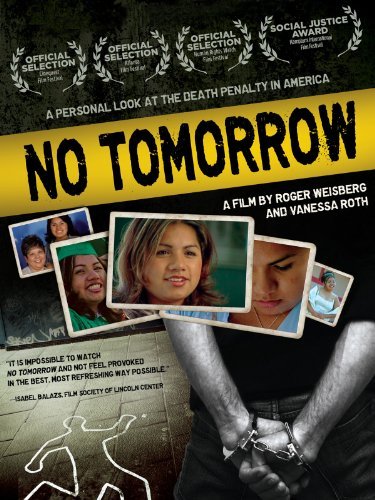
NO TOMORROW is a thought provoking documentary that covers a lot of ground and argues a lot of different ideas. Its only weakness is that it perhaps presents a few too many ideas and does not have the correct case to prove their arguments.
AGING OUT is a documentary brought by the same filmmakers to Cinequest in 2004. It was about three teenagers who are aging out of the foster care system and the trials and tribulations they were then facing. The film focused on the resilience of each teen and chose to look positively on their future prospects.
But soon after that film was completed one of the teens, Risa Bejarano, was brutally murdered. The killer was caught, prosecuted and found guilty. This is where NO TOMORROW comes in. For the penalty phase of the trial the prosecution wanted to (and did) show the jury AGING OUT as a way of humanizing Risa and pushing the jury toward a death penalty decision. The filmmakers were not happy about having their film used to give death to an 18 year old when their original purpose was to bring something positive into the world. And so the documentary brings its arguments.
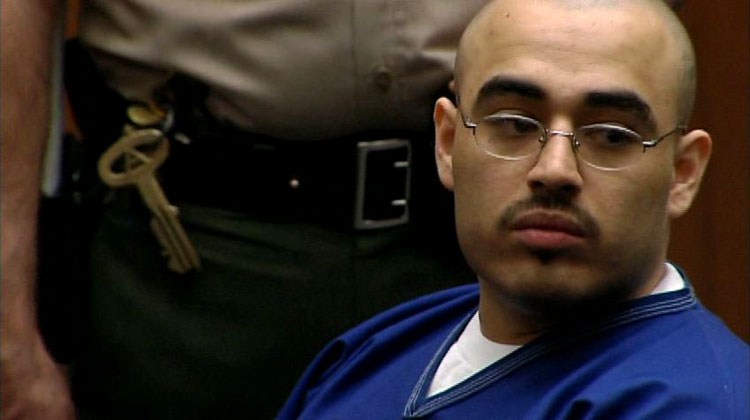
The problem I have with the film is that it brings so many arguments to the table. The value of the death penalty itself is a main topic, but we are also presented with the idea of whether Juan Chavez (the killer) would have received the death penalty if a) AGING OUT had not been shown to the jury or b) Juan Chavez had had his own life documentary to show the jury.
 There is a weakness in this particular argument because the crimes he committed were so senseless and violent, and Chavez himself so proud and unrepentant of his crimes, that I don’t think it mattered who he killed or what his own circumstances were. I have issues with the death penalty myself, but in this particular case it is hard to summon up any sympathy for Chavez whatsoever, so the arguments about documentaries and cost of imprisonment have no real punch. Chavez is not a sympathetic character in any way, no matter how many childhood photos the filmmakers show us.
There is also the fact that Risa and Juan grew up in much the same circumstances. Both were abused as children and abandoned by their parents. Both had difficult teenage years and experimented with drugs. And both did have people in their lives who loved them. There were choices made by each, and though Risa often made wrong decisions herself, she was trying to follow the correct path. Chavez went a completely different route, and he did it by choice.
 The filmmakers do give excellent arguments against the death penalty in general: As far as an eye for an eye goes, we do not sentence rapists to be raped. For every 8 people sentenced to death, one is later found innocent. 60% of Europe believes the death penalty is fine in theory, but because of the chance of error most do not want it enforced – and it is not. There have only been 11 executions in California in the last 30 years, the rest are sitting in prison waiting for their appeals paid by tax payers. The cost of putting a prisoner to death from trial through appeals to actual execution is 2-3 million dollars per inmate vs. $750,000 to house an inmate for life. And there are so many inmates on death row in California that we could execute one per month and take the next 40 years to get through them all.
I think they make a great argument against the death penalty. I am not sure they prove anything else in this film as Juan Chavez is a poor choice for anti-death-penalty poster boy and there are just too many issues being argued in this film.
It is however an excellent documentary and you should watch it. The filmmakers were unfortunately snowed in on the East Coast and could not attend the festival for a Q&A. As I said, it is a thought provoking documentary and gives the viewer an incredible amount to think about on their own, even if the film itself is not able to sway thoughts about this particular case.
Cinequest March 2010

On Sunday we watched as the Canadian hockey team beat the US in Olympic overtime. An hour later I was presenting PUCK HOGS to a crowd of disappointed hockey fans at the San Jose Repertory Theatre. I told them I hoped this film would cheer them up, and I think it did as there was raucous laughter throughout the film.
PUCK HOGS is a mockumentary about the worst recreational hockey team in Canadian history. It’s done in sort of a “Reno 911” style, with that type of humor. The audience of hockey fans seemed to love it and were having a great time. I will say up front that I am not a fan of hockey and not really a fan of “Reno 911”, and this film was honestly torture for me to sit through. There were scenes of men urinating on bathroom walls and eating urinal cake “pucks”, and there were about 57 too many jokes about butt-holes. However like I said, the audience was laughing like crazy through the entire thing.
The verdict? I hated it. But if you are a hockey fan or enjoy this type of humor then you might possibly love it. I am just the wrong person to review this kind of film.
Cinequest 2010

It turns out that Morty IS the HELL IS OTHER PEOPLE. Morty embodies everything in ourselves that we dislike. And yet Morty, perhaps because he IS us, is someone we can’t quite help loving.
A clumsily manipulative loser, Morty shuffles through this film pissing off his friends, offending strangers, and generally making sure he never gets ahead. “Sounds like you’ve got some stuff to work out,” says one character to Morty. Don’t we all. And if we’re not working through things now, everyone has at some point in their life – which is why we all cringe as Morty lets himself be degraded by one of the crazier characters in the film after he has run out of people to manipulate on his own.
If this is a mumblecore film, it is most definitely a mumblecore of a different sort. The lilting Tennessee accents of the characters quickly drew me in, and even with the sometimes blurry handheld camera work the film has a beauty that director Jarrod Whaley’s incredibly touching documentary short PASSION FLOWER also exhibited. There was a clear path to the story (a downward spiral, but still), the characters had dialog of value to speak, and there was a great deal of humor amidst the sadness that is Morty.
I thought the acting was outstanding for a group of Chattanooga residents that Whaley sort of rounded up on his own. I think this is what separates this film from the typical “mumblecore” that I get stuck unhappily viewing. Morty and his ex-girlfriend were natural and believable to the point that I felt I was watching a documentary shot from a long distance lens. There are other crazily quirky characters who add a great deal of humor to the film and are invaluable to the film as a whole.
It is too bad that Richard Johnson (Morty) could not attend Cinequest as he would have added an incredible presence to the film festival and possibly drawn more attention to the film. The Repertory Theatre was not packed but should have been; this is one of the better (though quieter) films of the festival and you should put one of the future screenings on your schedule. As the camera focuses for one last time on the main character and the credits roll, one audience member shouted “Your life SUCKS, Morty!” Yes, yes it does, but this film is a beautiful winner.
Now available on Jarrod’s website.
Cinequest 2010
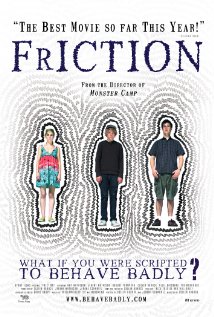
FrICTION played to a packed Repertory Theater on Saturday afternoon, only to have director Cullen Hoback turn the audience’s heads inside out. Those of us who know Cullen and have seen his previous films were perhaps more confused than anyone, but in the best way possible. Billed as a feature film gone wrong, FrICTION will leave you scratching your head and wondering just exactly what was real and what was not, even after listening to the Q&A. FrICTION is simply an enigma wrapped in a mystery and then possibly wrapped in bacon. FrICTION is the kind of film that Cinequest is all about.
Back in 2007 director Cullen Hoback arrived at the Cinequest Film Festival with his motley cast of actors from his first feature film FREEDOM STATE. Cullen and his cast didn’t exactly blend in as they had an amazing quirkiness about theirlarge group that was quite evident, but for the most part they stayed quietly in the background those first few days. However, once FREEDOM STATE finally had its first screening this group became beloved stars of the festival. I would say that FREEDOM STATE itself had quite a few flaws but was a beautiful film, had some incredibly hilarious scenes, and overall showed that Cullen Hoback was going to do great things in the years ahead.
Returning in 2008 with MONSTER CAMP, Cullen was already well known and recognized at the festival. Again bringing some of his hilarious but loveable cast, no one could miss them as they held sword battles outside the Camera theaters. MONSTER CAMP was a documentary that could have been an irreverent look at live-action role playing (LARPing) and the losers that participate, but Cullen was able to turn those documentary expectations on their head; by the time the film ended, those in the audience wanted to find their own local LARP organization and join in. The audience came away with a different view of those who participate in LARPing, and learned that what looks ridiculous from the outside is actually a business with unimaginable work put into it, and is no more silly than dressing in your favorite team gear to watch football on the weekends – in fact, it might just be more rewarding. MONSTER CAMP won Best Documentary at Cinequest that year.
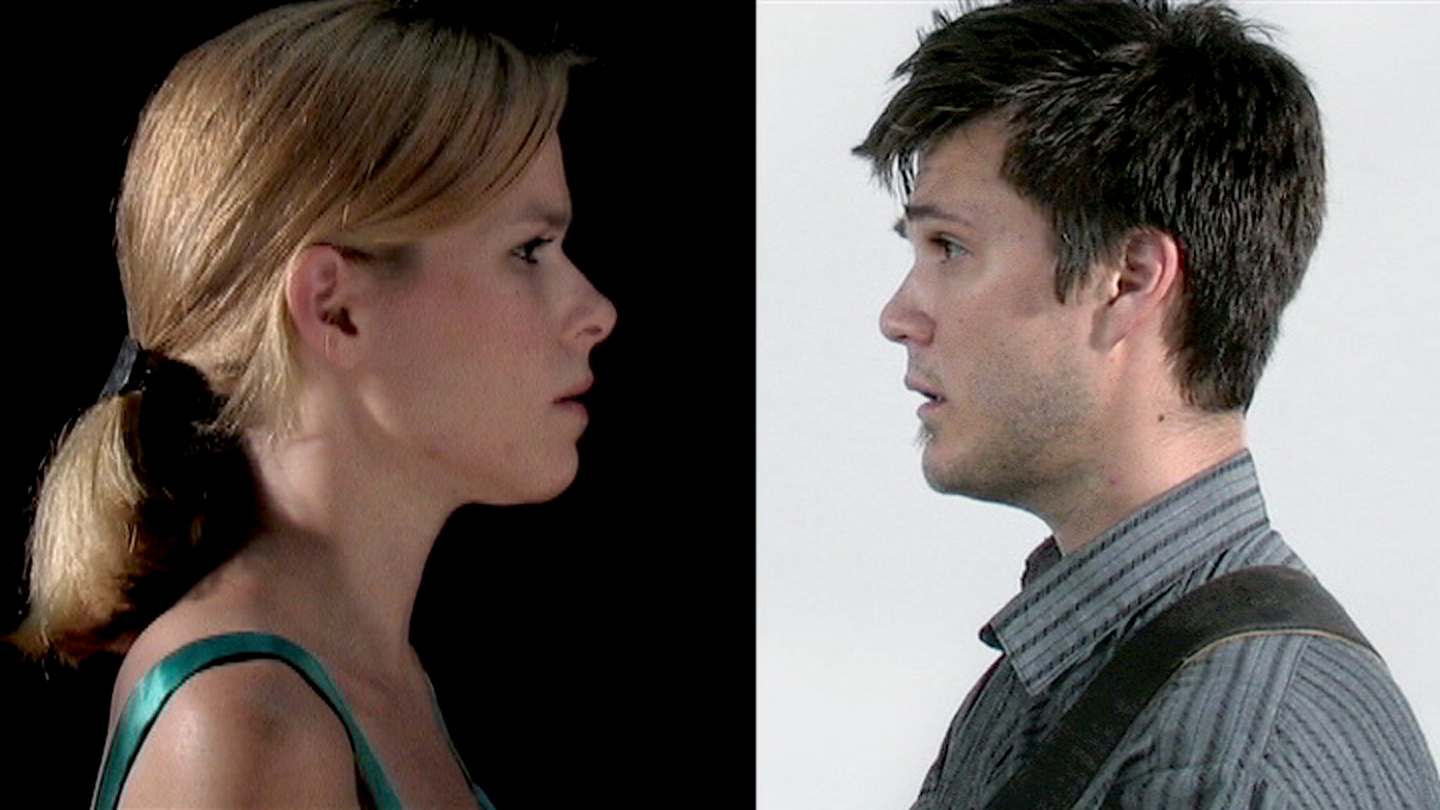 And so imagine our surprise when those of us familiar with Cullen’s work were presented with a very different type of film than his previous work. FrICTION is a very provocative, sometimes shocking story of two married teachers and the 15 year old student who comes between them. “Teachers sometimes have relationships with students,” we are told at one point on the film. There was a gasp in the audience – because yes, they sometimes do, and then they usually go to jail. But this film isn’t just about that. It completely blurs the lines between what is real, what is scripted, and what is scripted to be real. As more and more lies are uncovered during the film you realize that, real or not, absolutely nothing is as it seems in FrICTION.
Cullen is concerned that after this initial showing (with our heads in a cloud of ignorance) that future audiences will never have the same experience, so I am not going to go further into the storyline. I will say that there is a beautiful soundtrack which the audience was very excited about, and that some scenes in the film were so typically Cullen Hoback that I could have picked them out of a line-up. He definitely has a visual eye for quirky film, and I loved the shots of Amy standing under a tree in the rain, the overhead shot of the three characters on towels, and one of August floating past lily-pads in the boat.
Should you see this film? Yes, Yes, and Yes. Don’t read anything further about the film, just sit back and enjoy this crazy ride and try to decipher what is really happening on your own. And then go pick up the DVDs for FREEDOM STATE and MONSTER CAMP and become a Cullen Hoback groupie like the rest of us.
Now available on iTunes and Amazon Instant Video.
Cinequest 2010

THE ROBBERS is quite the crowd pleaser. This film has everything: Comedy, Tragedy, political commentary, Chinese culture, beautiful feisty women, exciting battle scenes, romance, and a fabulous soundtrack (not available, to the audience’s disappointment).
Two robbers with hearts of gold come across a village in the middle of a Tang dynasty forest. After robbing one of the village families they are forced to step in and save the same family from some soldiers who were trying to rape one of the daughters. This sets off a domino effect of circumstances as the village chief must now hold the robbers responsible for killing a soldier – even though the robber was trying to save a villager. There is much talk of law vs. mercy and a lot of commentary on the political and judicial systems in China.
But don’t take this to mean it is a serious, dramatic film. The first 3/4ths of the film are very reminiscent of a BLAZING SADDLES type slapstick humor, intercut with exciting sword fights set to 300 style rock music. The last quarter of the movie surprises with a switch to Tragedy, and then a final sweet ending to what has become clear is a great love between two friends.
Producer Cindy Lin [who went on to work on Life of Pi]came all the way from Beijing and was delighted that the black humor, which she said was heavily based in Chinese culture, seemed to translate to our American audience. And indeed, about 75% of the audience stayed for the late night Q&A and all had huge smiles on their faces. Her company looks for unknown talent in China and came across this director and his script – only his second film ever. They managed to get an A-list Chinese actor to play one of the robbers, and he adjusted his fee to get this film made. The film was positively delightful and the best I had seen this year up to that point.
I definitely suggest you do what you can to get this movie on your Must-See list.
This is one of those really sad cases where I cannot locate the film for you to see. It was absolutely outstanding. Keep a look out for it.
 1Q: Tell us a little about the origins of PROFESSOR, from concept to financing.
PROFESSOR is the third film in the Work Series (www.workseries.com), a cycle of cinema verite documentaries about working in America. After making SHERIFF and MUSICIAN, I wanted to do a movie about the labor of the mind, so I tracked down the University of Iowa’s Rabbi Jay Holstein. I remembered him from my undergrad days as angry, hilarious, foul-mouthed, and brilliant. I was pleased to find that not only was he still teaching at age 69, but he had lost none of the fire.
2Q: This is the first festival for your film, and your first audience; how has it been received? Are you looking forward to any other festivals?
I was caught off-guard by the response. Three packed houses (including one that had a lengthy unplanned intermission when a popcorn machine in the lobby caught on fire) and an added Audience Award screening. My documentaries are typically patient, studious affairs that are not everyone’s cup of tea, so it was a lot of fun to see how Holstein’s personality transcended that and exploded the appeal factor.
3Q: What was your best and/or worst experience while making PROFESSOR?
I’m the first to enjoy a good bad-experience story, but this one has been a total pleasure. The shoot was a straight-up nostalgia trip for me, walking the same campus and attending some of the same classes that I did in college. And the editing was a blast — I did it between drafts of my latest novel, which made it feel like a vacation. But the best part has been getting to know Holstein at an entirely different level. As a student, he seems so intimidating and untouchable, but his openness to both the project and me has been really gratifying.
4Q: Festival audiences often have to make hard decisions about what to see, and the catalog descriptions sometimes run together. In your own words, why should people see your film?
Remember that class you always wished had existed? With the teacher who thrilled you and scared you and challenged you? With a syllabus that included Catcher in the Rye and Blade Runner? With lectures that took on the grandest of philosophical questions and connected them to your life in a meaningful way? THIS IS THAT CLASS.
5Q: The current market for independent films is fractured, to put it lightly, and existing distribution models grow more ineffective with each passing moment. What are your hopes or plans for distribution?
I plan to follow the same distribution model that has worked for SHERIFF and MUSICIAN: do a few film festivals, a couple theatrical bookings, score a TV deal, and release on DVD (available now exclusively through www.workseries.com). I work mostly alone, I work cheap, and I continue to somehow turn a modest profit. As you indicated, the system is indeed in flux, and the theatrical and DVD stages are getting shakier every moment. Thankfully I’ve had the luck of strong reviews and a small but loyal fan base, so I’ll keep on fighting the fight for now.
Cinequest 2010

GABI ON THE ROOF IN JULY is one of the more interesting films of Cinequest this year, and the filmmakers Lawrence Michael Levine and Sophia Takal are two of the most personable and loved of the festival this year. I am not sure it is one of the best films though.
The movie and its characters draw you in from the start. Gabi, a student of “post-fluxist feminist art”, comes to live with her older brother Sam, and there is a cast of characters that I certainly remember knowing when I was in my early 20s. Sophia Takal is strikingly beautiful and it doesn’t hurt that her character loves to be naked through most of the film. This may explain why my male friends think this film is the best ever.
I didn’t find it the best ever. There was a good story and I liked the progression and how it ended. But the characters turn out to be mostly unlikeable. Gabi especially moves from very immature behavior to possibly crazy. Sam behaves badly with his girlfriend. And all females in this film are shown as extremely possessive and insecure. I suppose I most liked irresponsible Garrett and silent Charles, in comparison to the other unlikeable characters.
That said, overall I think it’s a good film with some problems. We were warned about profanity and nudity before the film started, and while neither bothers me, I do have a problem with swearing for the sake of swearing. It was overused a bit in the beginning. The actors did a great job and were very comfortable in their roles; I think the biggest surprise to me was what a great presence Lawrence had on screen. But there needed to be someone to root for. I think Gabi was actually more likable as emotional issues were finally becoming clear, but for the first half she was just a very annoying child. I do think overall there was more good than bad.
Yes, you should probably see this film. You may or may not enjoy it very much, but I doubt you would hate it. The actors are talented and beautiful; in fact one of my notes reads: “EXACTLY where is this place where everyone is beautiful and naked??” It IS a good story. Just don’t expect a 5 star film.
Now available on Amazon Instand Video.
 1Q: Tell us a little about the origins of ANYONE YOU WANT, from concept to financing.
ANYONE YOU WANT is a romance about a young businessman in Sydney who befriends a troubled homeless girl and is drawn into her secret fantasy world. I wrote it in a month and it was financed by me, my two brothers and my ex-girlfriend!
2Q: ANYONE YOU WANT is having its World Premiere at Cinequest on March 3rd [2010]. How have you been enjoying the festival so far, and do you plan to bring the film to any other festivals?
It’s the best film festival I’ve ever attended. So welcoming…and the films are of a very high standard.
3Q: What was your best and/or worst experience while making ANYONE YOU WANT?
The worst experience was having to do so many roles because of the low budget – getting up at 4am to iron the actors’ clothes, for example. There have been many best experiences and seeing something you’ve worked so hard on emerge is the biggest.
4Q: Festival audiences often have to make hard decisions about what to see, and the catalog descriptions sometimes run together. In your own words, why should people see your film?
The film is upbeat and touching and funny. It’s about real peoples’ problems but told through fantasy. It’s quite snappy too – it entertains and then lets you go!
5Q: The current market for independent films is fractured, to put it lightly, and existing distribution models grow more ineffective with each passing moment. What are your hopes or plans for distribution?
I’d hope to get a small scale distibution in cinemas and then through netflix etc. Fingers crossed – it’s not easy these days!
 Popcorn and Vodka