
Jordan Blair Brown
1Q: Tell us how you became involved with SUTURE, and how you prepared for your role.
I became involved with Suture through the DP Tanner Thompson. I had met with Tanner for one of his projects and he recommended me to Todd for the role. Todd and I began talking and I immediately felt a connection to his writing and the urge to tell his story, the rest just fell into place.
Preparing for the role was a fun process. Todd had a few rehearsals with Kenneth and I and expressed his vision for the film and the life within his pages. Prior to the set and during the rehearsal I would find alone time just me, the script, and inspirational music that I felt held the story and character together. I am a highlighter, write in the columns, block out the flow, study, listen and analyze kind of person. The day of filming we woke early to head to set but did not start filming the bulk until around 11pm. By that time I was actually getting tired which worked for my character.
2Q: What was your best and/or worst experience while making SUTURE?
My best experience would have to be working with the passionate visionaries of the cast/crew. Kenneth, whom I had worked with before on Love My Country, continues to be a strong actor, which is great for bouncing back and forth off of each other on set keeping us both on our toes. Even though this was Todd’s first time directing, his clear vision, which he brought with him to our rehearsals, allowed for a comfort on set that helped me with the flow for the film. Not to mention the beauty of Tanner’s shots that allows the audience to really feel like they are there with us. I would have to say there were no bad experiences just the occasional curves and deciding how to proceed through it, but with the team of Tasha-Todd-Bob-Tanner things were quickly resolved and we moved forward.
3Q: You and Kenneth are a couple in real life, and your roles in this film require a very violent scene together. How did you and Kenneth prepare for this scene, and did it have any effect on your relationship (good or bad)?
We worked through the blocking for this scene in our rehearsals and on set. We would even talk about how we felt it was going to go on our own but never really going full out until we were in front of the camera. It did have a personal effect the day of and day after filming. I know Kenneth felt very strongly about it because we had to do it over and over and over again and because it affected him it affected me. So we just held each other when it was wrapped and now it is just a fun joke! “Hey, Kenneth do you remember when…”
4Q: What “monster” are you most afraid of in your own life?
I’m afraid of a lot of things like most of us. I just keep pushing forward not so much as to conquer my fears but to stay in front of them. Our fears like our hopes and dreams, our values and beliefs, our experiences, our achievements, our failures make us who we are and help direct us forward to the person we want to be. Yet for me…the monster that hides in the shadow might be future regret, if I had to give up this dream for a more stable one. It would be simple to live with my family while pursuing my dreams, or having unlimited funds to sustain myself. However, honestly every day is a struggle to find my next role while also having to work on finding the next role after that while still finding a way to pay rent, gas, and some food. This is the strongest monster for me now, being able to do what I love: entertaining people, teaching people, storytelling, providing for others (audience) through film, and stay afloat. However, I will not let this monster be here for long!
5Q: Let’s pretend: It’s the year 2024. Where is your acting career, and what types of projects are you working on?
Okay so it is 2024 and my brother Chris has finally written his first fantasy novel and I am the lead actress, Kenneth is my comedic sidekick, Todd has decided to play the dark villain, and Tanner is directing (because he does that too). New monsters have taken to the shadows but I am still in front, leading and helping others along the way. I see myself acting, directing, casting new faces and using the skills I have developed and those who are willing to share to educate those that follow and help each of us take a break from our hectic lives and enjoy the show. Working constantly in the industry and continuing to challenge myself with different styles and characters. I loved school growing up and I said that “if I could always learn for the rest of my life I would be happy” and I found that in theatre and now in film.
Like SUTURE on Facebook!
View the Trailer!

Kenneth Forrester
1Q: Tell us how you became involved with SUTURE, and how you prepared for your role.
I heard about Suture from Jordan [Blair Brown] after she was cast as the leading lady. She mentioned something about Todd still needing to cast for the lead male roll. I didn’t think much of it after that. Next thing I know she said I was cast. Needless to say this was the easiest roll I ever booked! I was a bit skeptical at first about someone who would cast their lead roll without an audition, but I rolled with it. After meeting Todd I quickly realized he was very serious about making a piece of art and could tell he did his research.
Preparing for the role was quite an experience to say the least! When I’m given time to prepare for a role I tend to go all out. I fasted for a week, with the occasional small morsel of bread to simulate living like a survivor in an apocalyptic world. Todd said since the story was very atmospheric that I had freedom to create my own back story. So I did, but I wont write that here because I don’t want to run the risk of writing a book. I will say my motivation was based around my faith. The depressing feel of the film lead me back to the story of Job in the bible. I wanted to feel like God had abandoned me, that there was no hope. So I edited myself into that story a bit and took the redemptive nature out of it. Over all I worked hard and like all my films, I had a blast making more screen poetry!
2Q: What was your best and/or worst experience while making SUTURE?
The experiences are honestly collective for me. I met amazing people, I was hungry but pushed through. There were no real definitive “bad” moments but rather frustrating. Nothing we couldn’t handle. I must say I’ve worked with a lot of directors spanning from big name films to TV and for Todd being a first time director, he adapted very well to the set. His style evolved in a short amount of time, which is more than anyone could ask for.
3Q: You and Jordan have great chemistry in the film, but you are also a couple in real life. How did you meet Jordan, and how was working with her in SUTURE? Did your actual relationship make these roles more difficult or easier?
Ahh Jordan, my love! I met Jordan March 2013 when she submitted for the lead role in my first feature film Love My Country. She drove 6 hours from her hometown in Kentucky to audition. Long story short she stole the role along with my heart. *tear* All of that aside, her outstanding commitment to the industry, the set, and her acting make her a powerhouse. She keeps me in line …. most of the time. It has been a breath of fresh air to do Suture with Jordan because I was able to focus on my acting instead of wearing so many hats like I usually do with my films. The only hard part about working on this film I cannot mention… you will just have to see the movie!
4Q: What “monster” are you most afraid of in your own life?
The looming monster that tends to overshadow all else is my fear of being a starving artist for the rest of my life. I’m not really happy doing anything but work in this industry. I’ve always told my friends I would make movies even if I’m not getting paid a dime, but one of my greatest wishes is that I can make a living doing so. At the risk of losing many aspects of life I have had to get a “real job.” Working that job about made me lose my mind and I had to get back on set. It’s so fulfilling to work on a project and to see all the wonderful pieces come together to make a whole. There is no greater feeling than showing your product and having a crowd to cheer and ask for more. I’ve experienced this once,… and I look forward to more.
5Q: Let’s pretend: It’s the year 2024. Where is your acting career, and what types of projects are you working on?
In 2024 Todd and I will be quoting Pulp Fiction to “kids” and writing films about the dying generation of facebook users. We will be working on a script with Spielberg to reboot the Goonies as a group of grumpy old men in a retirement home searching for adventure. That is after I get done working on my lead role in Terrence Malicks new visual masterpiece. Ultimately I see myself writing, directing, acting, producing and immersing myself in projects until I’ve built a legacy!
Like SUTURE on Facebook!
View the Trailer!
The Great Wall Productions!
I met Todd Jacobs a few years ago through his writing and our love of great Korean horror films, and have had the pleasure of reading many of his in-progress scripts. He has recently had the opportunity to put some of his scripts together on film and I’m happy to introduce this new filmmaker to you in anticipation of getting the films before an audience. His first completed film is SUTURE, a short film that could easily fall into either the horror or romance genres. Maybe Rom-Hor? We might need a new category for this one.
SUTURE opens with a man and woman hobbling through the woods to the safety of a house, the woman with an unexplained gash on her arm. Then we see them semi collapsed on the floor of the house, drinking heavily and talking of their love for each other. But something terrible has happened, is still happening, and something even worse is to come. SUTURE examines the depths we must sometimes plunge in life and in love, and leaves the viewer to think about our capacity to make those decisions and how far our courage could take us if we love enough. The “monster” in SUTURE is real, and can take many forms in our lives, but the agony of how much our love can ask of us is the most terrifying.
Mr. Jacobs has found a couple of great actors whose chemistry is real and believable, and paired them with an extremely creepy musical score that seamlessly merges back and forth between terror and hope and back again. With his great eye for color, mood and movement Jacobs has put together a first film that explores the fine lines between love, terror and hope, and the different forms that evil can take.

Todd Jacobs
1Q: Tell us a little about the origins of SUTURE, from concept to financing.
I had written features, but I realized if I wanted to realistically get something made, it would have to be a short. Suture, I feel, at its heart, is a love story. The horror element, for the purpose of this story, is a metaphor for all the distractions and bullshit in a relationship being stripped away. What if you and the person you love were just that? Two people faced with dealing with each other with nothing else standing in the way except yourselves. We as humans are sometimes afraid to do that, whether it be from past relationships or issues from our childhoods, so I wanted to put these characters in a situation where they had no other choice. And in the end, love always finds a way, regardless of how your story ends. As far as financing goes, I was either lucky or the universe knew I needed to make this film. I moved to Atlanta in March of this year and randomly met the producer in line at the Atlanta Film Festival a week later. We exchanged info, I sent her my stuff, and she was on board immediately. We started preproduction that day. I met my DP, Tanner Thompson, through an ad on Craigslist, and he recommended some actresses. Jordan Blair Brown was the first one to show interest, so I casted her without an audition. She then told me her boyfriend, Kenneth Forrester, was an actor, so I gave him the part without meeting him, since I figured they would have built in chemistry that we wouldn’t have to work to find on set. It worked out great, and now I couldn’t imagine the film without them. Maybe that’s not the way to do things, but I’ve never really done things that made sense. Sorry, mom.
2Q: Although this is your first film, SUTURE is not your first script. You appear to love the horror genre. Why horror, and who are your greatest influences?
That’s a good question. I honestly don’t know. My day job is writing comedy (I use that term loosely), so I’ve always been drawn to the other end of the spectrum. I’ve always been a horror fan growing up, so maybe it’s something concretized in my psyche. My scripts can technically be labeled as horror, but I try very hard to add a human element and base the horror in human emotions and the human experience. Sure, a guy in a hockey mask with a machete can be scary, but he’ll never scare you as much as being locked in a room with your own thoughts and the truths about yourself that are waiting to come busting through the facade you show the world. My influences range from Terrence Malick, to William Blake, to David Bowie, to Park Chan-Wook, to David Cronenberg, to Kurt Vonnegut, or to any person I meet in the street. Influences and inspiration are everywhere. You just have to take the time to look.
3Q: What was your best and/or worst experience while making SUTURE?
The best by far, was working with the cast and crew. Everyone was 100% committed the entire time. The producer, Tasha Cicherillo, and her husband, Bob Cicherillo, (one of my childhood idols, btw. He was freakin Nitro on American Gladiators) welcomed a bunch of strangers in their home for two days and fed us homemade Italian food the entire time. My DP, Tanner, just graduated college, and he truly is some kind of Rain Man/Terminator who was born to be behind a camera. Unlike me, he doesn’t really talk much, but his talent speaks for itself. We developed a shorthand on set, and all I would have to say is “I want it to look like this” and it would look a thousand times better when he was done. My lead actor, Kenneth, went full on method. I would call him Kenneth Day Lewis on set, because he fasted an entire week before and took the role very seriously. My running joke was telling him he could just act hungry, but here was a guy who wasn’t getting paid, working with a first time director with a plank on a blanket as a dolly track, and he still brought that level of intensity and professionalism. You can’t fake that type of drive and dedication, and the film is better for it. And, Jordan. What can I say about Jordan that doesn’t sound like I’m a paid member of her fan club? She truly is the closest thing to an angel on earth I’ve met. When she’s on camera she can make anybody cry, and when she’s not, she can make anybody feel loved and valued, regardless of who you are. I tell her all the time that she’ll probably die trying to sacrifice herself for somebody she’s never met. Not only did she have to portray gut-wrenching emotion for two days, but she did makeup, helped fix problems on set, made sure everyone got enough to eat, and brought a sense of calm that the tight schedule needed. My producer, Tasha, is just a badass baller Italian boss lady who doesn’t take shit, but protects those she cares about. This film wouldn’t have been possible without her and I will be forever grateful. We’ve scheduled two more shorts and a feature, and I know I’m in good hands. Her husband Bob is not only intimidating as hell, but he’s genuinely one of the nicest guys you’ll ever meet. He has zero problems telling you if your idea is dumb, but if you explain that it’s part of your vision, he’ll defend it to anyone who has the balls to question you again. He was AD, sound guy, my personal sounding board when I wanted to vent, and brought a depth and breadth of knowledge that can never be overstated. I didn’t get to joust with him as I’d hoped, but we’re boys now, and that’s good enough for me.
As far as problems go, I’m hard pressed to find any. We only has use of the gun for 30 minutes, and as it turns out, pushing your camera on a ladder doesn’t make for a good dolly track. Also, snoring dogs can really fuck up your ambient noise recording.
4Q: You are about to embark on the most difficult part of filmmaking: Getting your film in front of an audience. When festival audiences finally get the chance to see your work, tell us why they should choose SUTURE over other festival options?
I hope they choose it because it’s simple. It’s love and fear. Two things that every human who has ever walked on this floating blue green ball can identify with and has experienced at one time or another. There’s beauty in love and there can be beauty in death if the cause is just. Maybe this film will show the audience a bit of both.
5Q: Time to pre-pre-pre-plan: You just won the Oscar for SUTURE for Best Short Film. Give us your acceptance speech.
“Hey, there’s Angelina Jolie. Good lookin out on that one, Brad. *waits for uncomfortable laughter to end* Everybody I’ve needed to thank I’ve thanked a million times already, and they know I love them more than any speech would be able to express. So I’d like to use my platform to say we need more wine at table 23.”
Like SUTURE on Facebook!
View the Trailer!

Suture
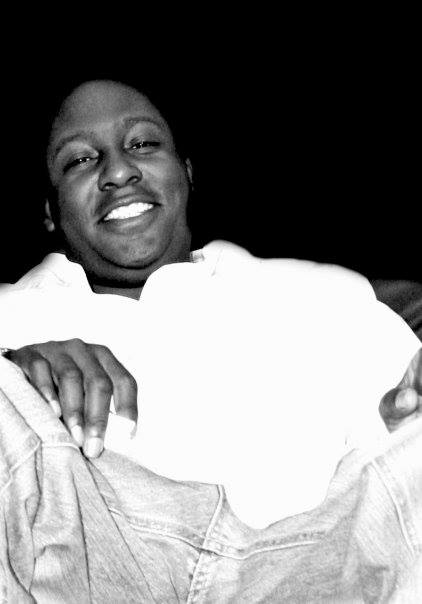
Christopher L. Ellis, filmmaker
1Q: Tell us a little about the origins of HOPES IDENTITY, from concept to financing.
The concept of Hopes Identity came about because a family member of mine was having problems in his inter-racial relationship and it inspired me to make a film for the new generation of young adults that would guide them in the right direction of love and faith. It took me about 6 months to write the script and then we did auditions to find a cast, once we found our cast it was all about them gelling together as a family. The film was financed by myself and Royal Regiment Entertainment, a 50/50 partnership.
2Q: Oakland International Film Festival is hosting the World Premiere of HOPES IDENTITY. Explain to us how it feels to bring this film before audiences for the first time, and what do you think their reaction will be to your film?
It feels great to bring Hopes Identity to the Oakland International Film Festival because it’s in front of people of all colors in my city where I was raised, I take great pride in that. I think the reaction that it will get could be anything from shock to inspirational, my goal was to educate people to the fact that it’s ok to love outside of your race as long as it’s true and honest.
3Q: What was your best and/or worst experience while making HOPES IDENTITY?
My best experience making Hopes Identity was the way it brought my whole cast and crew together as a family even after the cameras stopped rolling, we all still talk to each other a few times a week. The final day of production was the hardest because we knew it was all over and we wouldn’t see each other as much.
4Q: Festival audiences often have to make hard decisions about what to see, and the catalog descriptions sometimes run together. In your own words, why should people see your film?
People should see my film if they want to see the insides of a young inter-racial relationship in the present. The way it affects their friends, family and co-workers, you gotta be in the dirt to get dirty and I put you all in through a great script. The emotional rollercoaster ride I take you on will leave you rooting for love to come out victorious over racial ignorance.
5Q: Time to pre-plan: You just won the Oscar for HOPES IDENTITY. Give us your acceptance speech.
I’d like to thank my wonderful wife for the love and support she’s given me, also to the whole cast and crew of Hopes Identity I want to say you guys are the best, I couldn’t have done this without you. A very special thanks to the fans for making this movie as relevant as it has become, this is only the beginning.

See HOPES IDENTITY at Oakland International Film Festival!
“Like” them on Facebook!
Follow them on Twitter!
Follow Christopher on Twitter!
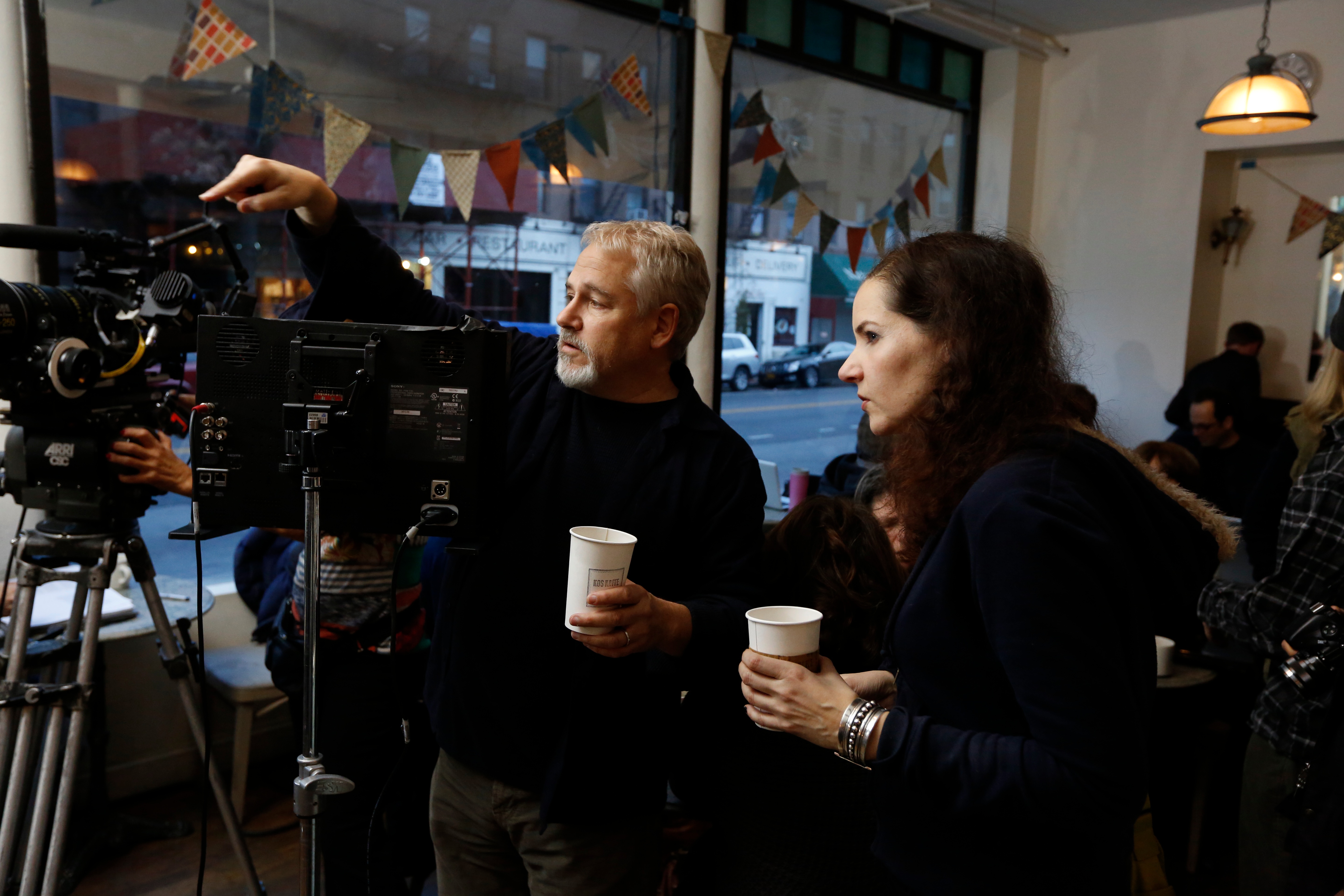
Michael Maren, Director
1Q: Tell us a little about the origins of A SHORT HISTORY OF DECAY, from concept to financing.
I’d been working as a screenwriter for about a decade (after 17 years as a journalist), and sold a lot of scripts to various studios. But, for reasons only Hollywood understands, the movies never got made. Just when you don’t think there’s another way for a film project to go up in smoke, they invent one. After the writers’ strike in 2008 it was clear to me that the business would never really be the same and I decided to stop doing studio work and make my own film. I set out to write a script that could be shot for less than $1 million, and I wanted to write something personal. And I decided to direct. The script came quickly to me when I visited with my mom, who has Alzheimer’s. I looked at her and thought, I can either wallow in this tragedy or see the humor in it. The decision to see the humor, became the genesis of the film.
The thing that sent it on its way was when director Milos Forman read it and agreed to executive produce. His imprimatur on the script sent it to the top of piles at various talent agencies. Legendary producer Michael Hausman came aboard and we began putting the project together. At the same time we began auditioning actors for various roles, I was out raising money. I’m a writer, and raising money is very far outside my comfort zone, but I forced myself to ask everyone I knew to invest in the project. Of course, most people said “no” but we (with me producing partner Alfred Sapse) pulled together the money from a number of sources. By April of 2012 we were in pre-production in Sarasota, Florida.
2Q: A SHORT HISTORY OF DECAY has played at least two festivals now. What has been the reaction to your film? Do you ever stop being nervous at screenings?
I always sit or stand in the back by myself. I don’t want anyone near me. And I wait for the first few laugh lines in the film. The humor is subtle, and when audiences get it, they get it. If I get those first few laughs, I can relax. There are a lot of people who really really love this film, and that has been very encouraging. I’m usually mobbed after screenings by people who are inspired by it to tell me their own stories, which is really what you want art to do — elicit that instinct in an audience. I’m sure there are people who don’t get the movie or are indifferent to it. I didn’t set out to make a crowd pleaser, and parts of this film are certainly challenging. I would say that my favorite reactions are from people who’ve seen it multiple times and have told me that it gets better for them with each viewing.
3Q: What was your best and/or worst experience while making A SHORT HISTORY OF DECAY?
The worst experience was when a big chunk of our financing fell out while we were in pre-production in Florida. We’d already opened an office and moved some people down there. Already spent some money. I had gone to Massachusetts for a funeral and got the call from Alfred moments after we put my aunt in the ground. We immediately pulled the plug on Florida and then Alfred and I drank a lot of Scotch.
But…. then Alfred came to me and said he thought we could make the film in Wilmington, NC for the money we had left. We went there and were back up and running in two months. We ended up with a completely different cast, and I can’t imagine the film without the cast we have now. The best moment was one I had about three days into shooting and I was overcome with the feeling that I was doing exactly what I was meant to be doing in life.
4Q: Festival audiences often have to make hard decisions about what to see, and the catalog descriptions sometimes run together. In your own words, why should people see your film?
A Short History of Decay is about a place in life where we will all find ourselves one day. And when we get there, we’d better have a sense of humor about it. Yes, you’ll laugh and you’ll cry and you’ll see some great actors at the very tops of their games.
5Q: Time to pre-plan: You just won the Best Director Oscar for A SHORT HISTORY OF DECAY. Give us your acceptance speech.
I’d like to start by thanking the people who wrote the checks that launched this project. You forked over real money to an untested director who came to you with a script and a plan. Your faith that we’d actually come out of this maelstrom with a movie in hand has been rewarded. This Academy Award means you might even get your investment back. Maybe not.
And I’d like to thank all the people who worked their asses off and didn’t complain (too much) about the hours and the pay. I hope this makes you feel better about all that. Milos Forman, you are a genius. And Mom and Dad, thanks for the raw material.
Oh… and my wife. Dani Shapiro. I can’t forget to thank my wife. Because if I did, I would never hear the end of it.
See A SHORT HISTORY OF DECAY at Cinequest!
“Like” them on Facebook!
Follow them on Twitter!
Visit their website!

Max Ya, Director

Paul Lazarus, Director
Silicon Valley may know Dean Kamen as the inventor of the Segway. But he is an amazing inventor and trying to use his genius to help solve the world’s clean water problem. We don’t worry much about water here other than our perpetual drought, but we have it good in the USA – our water is clean for the most part. 50 percent of all human illness is the result of water borne pathogens. Dean Kamen has invented an energy efficient vapor-compression distiller that can turn any unfit source of water into potable, safe water. Paul Lazarus directed this important documentary.
1Q: Tell us a little about the origins of SLINGSHOT, from concept to financing.
We have been working on this movie for seven years. When inventor, Dean Kamen told me about his work on providing the world with clean, safe water, I thought it was potentially the most important challenge he’d ever tackled and I suggested we make a movie about it. We have covered the development of the machine at Dean’s research company, in Ghana, Paraguay and all across the United States.
2Q: Cinequest is hosting the World Premiere of SLINGSHOT. Explain to us how it feels to bring this film before audiences for the first time, and what do you think their reaction will be to your film?
After all this time, it’s a little frightening to bring the film before the public. We want so badly for the film to succeed and help tell the story of this lifesaving technology and help spread this amazing technology all over the planet. It feels like so much is at stake. But, as Dean Kamen says, the safest place for a ship is in the harbor, it just doesn’t do any good there. We hope that the movie both inspires and entertains the people that see it.
3Q: What was your best and/or worst experience while making SLINGSHOT?
Best was going to Ghana two times and meeting incredible people like Lydia Odum, the headmistress of a small school 90-minutes north of Accra. And the kids, who always seemed happy to see us. Worst was trying to raise the money to make the film.
4Q: Festival audiences often have to make hard decisions about what to see, and the catalog descriptions sometimes run together. In your own words, why should people see your film?
Too often, especially with issue documentaries, you leave the theater feeling helpless and hopeless. We believe that people who take the time to see SlingShot will leave the theater hopeful, energized and feeling like they might be able to make a difference.
5Q: Time to pre-plan: You just won the Best Picture Oscar for SLINGSHOT. Give us your acceptance speech.
Thank you to the hundreds of people who helped create this film. I hope in some small way it will make you think about the world’s safe water crisis. I want to quote a man who has devoted over 15 years of his life trying to create a machine that can turn any form of bad, unclean water into safe, pure water: “We could empty half of all beds in all the hospitals in the world by just giving people clean water.”
See SLINGSHOT at Cinequest!
“Like” them on Facebook!
Follow them on Twitter!


Vanessa Kirby in INSOMNIACS
INSOMNIACS is fantastic short film currently playing in the Cinequest Shorts Program 1: States of Mind. Two London insomniacs meet on the roof of a building at 4am. This 15 minute film has several comedic moments, but also shows just how unfunny it is to be without sleep for several days. Vanessa Kirby, as Jade, especially infuses her character with the palpable frustration and insanity of the chronic sleepless. But though 4am is the loneliest time of day or night, finding one person who shares your anguish can sometimes help to bring peace.
I was lucky enough to interview director/writer Charles Chintzer Lai.

Charles Chintzer Lai
1Q: Tell us a little about the origins of INSOMNIACS, from concept to financing.
I have struggled with insomnia my entire life. It’s a problem that has been exacerbated by a busy lifestyle in big cities. At the time of writing, I was reflecting on a past relationship I was in with a girl who also struggled with sleep deprivation. It’s an intense dynamic when you put two insomniacs in the same room at night — we had a lot of 3 AM conversations and at that time, you’re only thinking about your deepest concerns and fears. So from that experience, I had this vision of a romantic drama exploring a connection between two people that couldn’t sleep.
The film was self-financed on a very low budget.
2Q: Although short films are my favorite, they often have little chance of being seen by a wide audience, and an even smaller chance of gaining you fame and fortune. This is your third short. Why do you choose this format?
I made this short as a way of working on my craft. I am relatively new to filmmaking – these 3 shorts are my only experience in directing narrative. I knew I was not ready to make a feature, and that I needed an opportunity to experiment with new things aesthetically. Particularly visually, I wanted to show a very romantic eye, to create a dreamy, seductive mood. We experimented with reflections, lens filters that softened the image, atmospheric lighting. The experience helped me build confidence in my visual aesthetic, and I now feel prepared to take the next step to features.
3Q: Now you are in the “easy” stage of filmmaking, the high of showing your film to an audience. Do you ever stop being nervous when presenting a film? How do you think audiences will respond to INSOMNIACS?
I just hope that audiences have an emotional response to the film. Particularly anyone who has ever struggled with insomnia, I hope this film is faithful in communicating that experience. What I wanted to articulate is that insomnia is not a disease, it’s not something that can be easily cured; it’s symptomatic of broader mental health problems. And through these characters, I hope audiences can gain an understanding of the problems that can lead to insomnia.
4Q: What was your best and/or worst experience while making INSOMNIACS?
My best experience was shooting the scene where Theo is watching Jade from across the apartment complex. It was the most complicated scene I have directed. Particularly whilst shooting Jade. Vanessa Kirby, who played Jade, was stationed in an apartment on the other side of the complex. We communicated via walkie-talkies. To see Vanessa through the window, she had to be positioned very precisely—so via the walkie-talkie, I would adjust her position throughout the scene. We shot on very long lenses, 600 mm and 135 mm, which enabled us to see Vanessa and gave it a voyeuristic feel.
Whilst shooting Theo’s side, I wanted to capture the feel of a man that was lonely and lovesick. Using a window reflection, we were able to catch the London skyline, a view of Vanessa’s apartment, and Henry Lloyd-Hughes (who played Theo) observing her with longing and desire. It was complicated to get the lighting just right to capture all these things in the same frame. I have to give alot of credit to my DP Simon Walton.
You can watch the scene here: https://vimeo.com/83180449
5Q: Time to pre-plan: You just won an Oscar for INSOMNIACS. Give us your acceptance speech.
I tend to keep my expectations in check, so would never prepare an acceptance speech in advance. So if this actually happened, it would be a spontaneous mess. That said, here it goes…
I want to thank my cast and crew. They really deserve all the credit. My amazing cast: Vanessa Kirby, Henry Lloyd-Hughes, Imogen Stubbs, Charlotte Hope. My producers Prudence Beecroft and Charlotte Wolf. My executive producers Nathan Silver, Fred Casella, Nuala O’Leary. My HODs Simon Walton, Jake Whitelee, Josh Ward, Rosalind Boulton. And everyone who gave their time and effort, and believed in this project.
And to anyone who has ever struggled with insomnia, I know how difficult it is, I understand what you go through, I know how you feel. This film goes out to all of you.
“Like” INSOMNIACS on Facebook!
Follow them on Twitter!
It really makes all this hard work worth it when I wake up and see the successes of all the wonderful filmmakers I interviewed. Even when I don’t like the films, I do know how much work and dedication and sacrifices were involved. All of the filmmakers are ALWAYS so interesting, and intelligent and amazing people, and when I’m the first person to interview them or review their film, I feel like they’re my children and I’m getting them ready for the world. Right now I’m the proud mama of another litter who are finally seeing what all their hard work accomplished.
I’m so proud of you, Cinequest filmmakers!!!


My interview with CONFESSIONS OF A WOMANIZER director Miguel Ali

My interview with THE DAVID DANCE director Don Scimé.

My interview with THE FRONT MAN director Paul Devlin.
I am perhaps proudest and happiest for KNOW HOW this year. Did you know they raised all the money to get ten of the foster care youth across country to Cinequest?

My interview with director Juan Carlos and another interview with writer/actor Gabrielle Garcia.
And finally: Yeah, click on that instagram link. Now THAT is a successful premiere night morning after!!

INERCIA
There are those who say that if it didn’t work out the first time, it was for a reason; don’t expect things to be different the second time around.
Those people should have been there for Lucia.
A dozen years ago Lucia and Felipe broke up, but Lucia vowed to continue loving him every day forever. One day while at the hospital with a friend she unexpectedly finds Felipe there with an unknown illness. Lucia feels this must be a sign of something, and sets aside her entire life: her job, her friends, her family and her giant fluffy dog, so that she can stay with Felipe while he is sick. Suddenly she is needed by her long lost love, and she is going to be there for him now.
And Felipe needs Lucia. Possibly acting through a paranoid delirium and possibly just being a jackass, he refuses to cooperate with doctors unless Lucia is there. And the doctors, having somehow never dealt with a belligerent patient before, insist that Lucia stay with Felipe for days on end.
But as Felipe gets sicker, and Lucia’s life is more and more neglected, things start falling apart quickly.
All I kept thinking through this film was “Honey, that giant fluffball of a dog you have at home will love you way more than this loser ever will.”
Does she make the same decision? I guess you’ll have to see it. But do I recommend it? Meh.
 Popcorn and Vodka